The American Kennel Club has recognized three new dog breeds: the fauve de Bretagne, Teddy Roosevelt terrier, and Russian tsvetnaya bolonka, expanding its roster to 205 breeds, amidst ongoing debates over dog breeding practices and animal welfare.
The Labrador retriever has become the most popular dog breed in the U.S. according to a recent U.S. News & World Report analysis, surpassing other breeds like Chihuahuas and Golden Retrievers, with trends showing rising popularity for Dachshunds and mixed breeds.
Researchers analyzed DNA from modern and ancient Greenland sled dogs, revealing they may be the world's oldest dog breed and providing insights into 1,000 years of Arctic human history, including migration patterns and genetic continuity, despite threats from climate change and modern technology.
A Golden Shepherd puppy named Bear, a mix of German Shepherd and Golden Retriever, is capturing hearts with his adorable and playful personality, showcasing a blend of protective instincts and goofy charm.
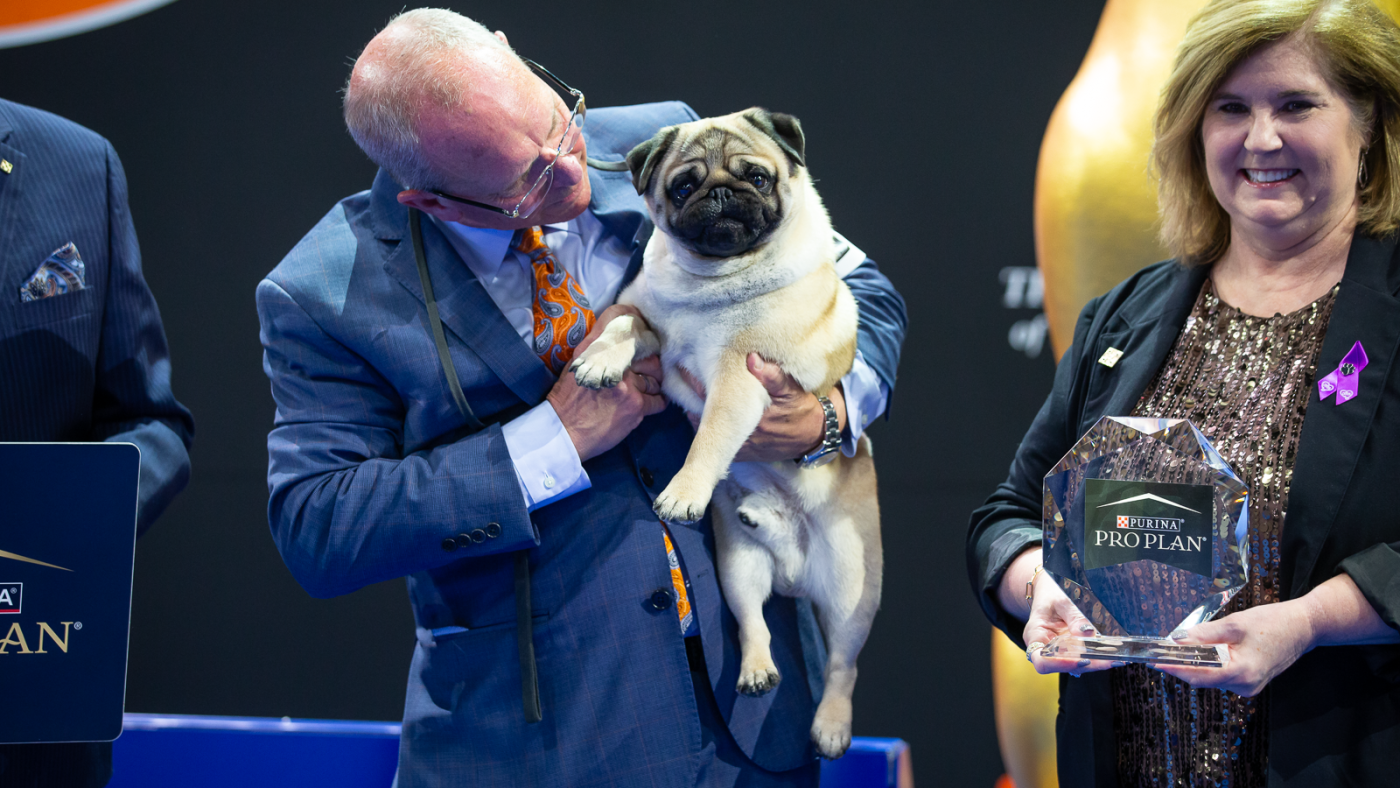
Vito, a pug from Chapel Hill, N.C., made history by becoming the first of his breed to win the Best in Show at the 2024 National Dog Show, beating over 1,900 dogs from more than 200 breeds. The event, hosted by the Kennel Club of Philadelphia and broadcast on Thanksgiving Day, saw Vito triumph over six other finalists, with a Welsh terrier named Verde taking the Reserve Best in Show. The show, a Thanksgiving tradition watched by millions, also featured the debut of the Lancashire heeler breed.
The National Dog Show, a Thanksgiving tradition since 2002, airs annually on NBC after the Macy's Thanksgiving Day Parade. Featuring 205 breeds, including the newly added Lancashire Heeler, the show awards the title of Best in Show based on breed standards. Originating in 1879, the event gained popularity after NBC's Jon Miller saw potential in broadcasting it following the success of the film 'Best in Show.' The show is co-hosted by John O'Hurley and David Frei and is available on NBC and Peacock.
French bulldogs remain the most popular purebred dog breed in the US, according to the American Kennel Club rankings, despite concerns from longtime fans about the breed's popularity leading to health and breeding issues. Other popular breeds include Labrador retrievers, golden retrievers, German shepherds, and poodles. The rankings also show a resurgence in dachshunds and the rise of the cane corso, while a new breed, the bracco Italiano, makes its debut. Despite the popularity of purebred dogs, animal shelters continue to have a large number of dogs available for adoption.
A new study suggests that certain dog breeds, such as flat-coated retrievers, Scottish terriers, Bernese mountain dogs, and bullmastiffs, have a higher risk of developing cancer. The research, based on data from the American Veterinary Medical Association, found that large dog breeds, though not the largest, might be more prone to the disease. Inbreeding and genetic diversity were also explored as factors impacting cancer risk, with inbreeding reducing genetic diversity and potentially increasing the risk of specific cancers in certain dog breeds.
A study published in The Royal Society suggests that certain dog breeds, such as flat-coated retrievers, Scottish terriers, Bernese mountain dogs, and bullmastiffs, have a higher risk of developing cancer. The research indicates that larger dog breeds, excluding the largest, may be more prone to the disease, with inbreeding and genetic diversity also impacting cancer risk. The study's lead researcher, Leonard Nunney, explained that while larger dogs have shorter lifespans, they actually have a reduced risk of cancer compared to medium-sized canines. The findings also highlight specific cancer risks for different breeds, such as sarcoma in flat-coated retrievers and bladder cancer in terriers, and suggest that the study's model can help identify potential increases in specific types of cancer in the future.
A study of over 584,000 dogs in the UK has revealed that canines with squished faces and small noses tend to have shorter life expectancies compared to those with longer faces and larger snouts. French Bulldogs, known for their smushed-in face and small nose, have one of the lowest life expectancies at 9.8 years, while breeds with longer faces like miniature dachshunds and Italian greyhounds live for an average of 14 years. The study suggests that the physical features of flat-faced dogs may lead to breathing issues and other health defects, urging potential dog owners to consider a breed with better chances of a long and healthy life.
A study of almost 600,000 British dogs from over 150 breeds revealed "spectacular" variations in lifespans, with small breeds generally living longer than larger ones. The Lancashire Heeler and Tibetan Spaniel were among the longest-lived, while the Caucasian Shepherd had the shortest lifespan. Contrary to previous findings, purebred dogs were found to live slightly longer than crossbred dogs on average. The study aims to help dog owners and welfare groups make informed decisions and improve the lives of canine companions, highlighting specific populations that need attention.
A study analyzing data from over half a million dogs has revealed that small, long-nosed female dogs tend to live the longest among pure breeds, with a median lifespan of 13.3 years, while flat-faced breeds have a median lifespan of 11.2 years and a 40% increased risk of shorter lives. The research also found that larger dogs tend to have shorter lives than smaller dogs, and that pure breeds generally live longer than crossbreeds. The study aims to spur further research into the risk factors behind these variations in lifespan and to improve the welfare of companion dogs.
A new study based on data from over half a million dogs in the UK has found that small dogs with long noses tend to live longer than large flat-faced breeds. The research aims to help potential dog owners choose a breed that will have a long and healthy life. The study revealed that breeds like whippets and miniature dachshunds have longer life expectancies compared to English bulldogs. It also highlighted the health and welfare crisis faced by popular flat-faced breeds due to breathing problems. The study found that Lancashire heelers have the longest life expectancy, and emphasized the importance of prioritizing health over appearance when choosing a dog breed.
A recent study published in Royal Society Open Science revealed that large dogs, but not the largest ones, are more likely to develop cancer, with breeds like West Highland white terriers, Bernese mountain dogs, and flat-coated retrievers being "most prone" to the disease. However, few dog breeds are overly predisposed to cancer, and genetic mutations, rather than size or inbreeding, are the primary cause. The study's researchers believe that dogs can serve as a model for understanding genetic changes that may increase susceptibility to specific diseases.
New research has identified specific dog breeds with a higher susceptibility to cancer, challenging the misconception that larger breeds face an increased risk. Large breeds such as Flat-Coated Retrievers, Bernese Mountain dogs, and Westies were found to have high cancer rates. The study also revealed that inbreeding within a breed may reduce lifespan but does not increase the risk of cancer, shedding light on genetic mutations contributing to cancer in dogs and providing a model for monitoring cancer susceptibility in specific breeds.