

Tag

Doacs

All articles tagged with #doacs

New Multisociety Guideline Uses Five Acute PE Categories to Guide Care
cardiology8 days ago

New Multisociety Guideline Uses Five Acute PE Categories to Guide Care

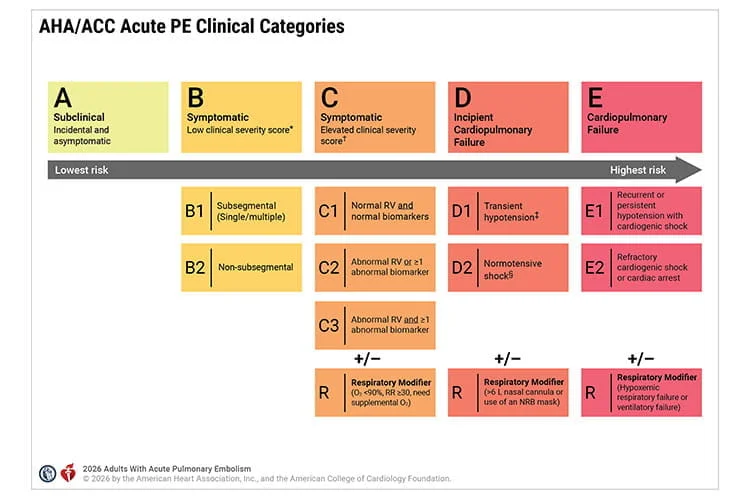
A new joint ACC/AHA/peer-society guideline for evaluating and managing acute pulmonary embolism in adults introduces five Acute PE Clinical Categories (A–E) to stratify severity and guide therapy across emergency, inpatient, and post-acute settings. It recommends low-molecular-weight heparin over unfractionated heparin for initial anticoagulation, favors direct oral anticoagulants over vitamin K antagonists when appropriate, and supports continuing anticoagulation beyond 3–6 months for selected patients; it also emphasizes PE response teams (PERTs) and notes future evidence gaps.

2026 Acute PE Guideline Introduces Five-Category Risk System to Guide Management
health9 days ago

2026 Acute PE Guideline Introduces Five-Category Risk System to Guide Management

The 2026 AHA/ACC guideline for acute PE introduces a five-category Acute PE Clinical Categories system (A–E) to sharpen risk stratification and guide therapy; patients with higher risk (categories C–E) or cardiopulmonary failure should be hospitalized, and for those eligible for oral anticoagulation, direct oral anticoagulants are preferred over vitamin K antagonists to prevent recurrent VTE and reduce major bleeding.

Blood Thinners: Lowering Dementia Risk in AFib Patients
health2 years ago

Blood Thinners: Lowering Dementia Risk in AFib Patients

The use of direct oral anticoagulants (DOACs) instead of warfarin, a traditional blood thinner, is associated with a significantly lower risk of dementia in Asian populations receiving treatment for atrial fibrillation (AFib), according to a new study. The risk of dementia in those treated with DOACs was 12% lower than in those treated with warfarin. However, this lower incidence of dementia did not apply to other populations. The study suggests that DOACs may help prevent vascular dementia caused by mini-blood clots in the brain. While DOACs offer advantages over warfarin, such as not requiring dietary restrictions or regular blood tests, they are more expensive and lack a readily accessible antidote. The study highlights the need for further research to determine the applicability of these findings to different populations.