Déjà vu is a normal brain glitch caused by temporary misfires in memory and perception, involving activity in the hippocampus and temporal lobe, and can be triggered by subconscious processing of familiar patterns or subtle sensory cues, rather than any supernatural phenomenon.
Psychologists have identified four distinct types of déjà vu experiences: jamais vu, where familiar situations feel unfamiliar; presque vu, the frustrating feeling of almost recalling something; déjà rêvé, the sensation of experiencing a current situation that feels like a memory from a dream; and déjà vécu, the feeling of reliving a past experience in vivid detail. These phenomena continue to baffle researchers, highlighting the mysterious nature of human cognition and perception.
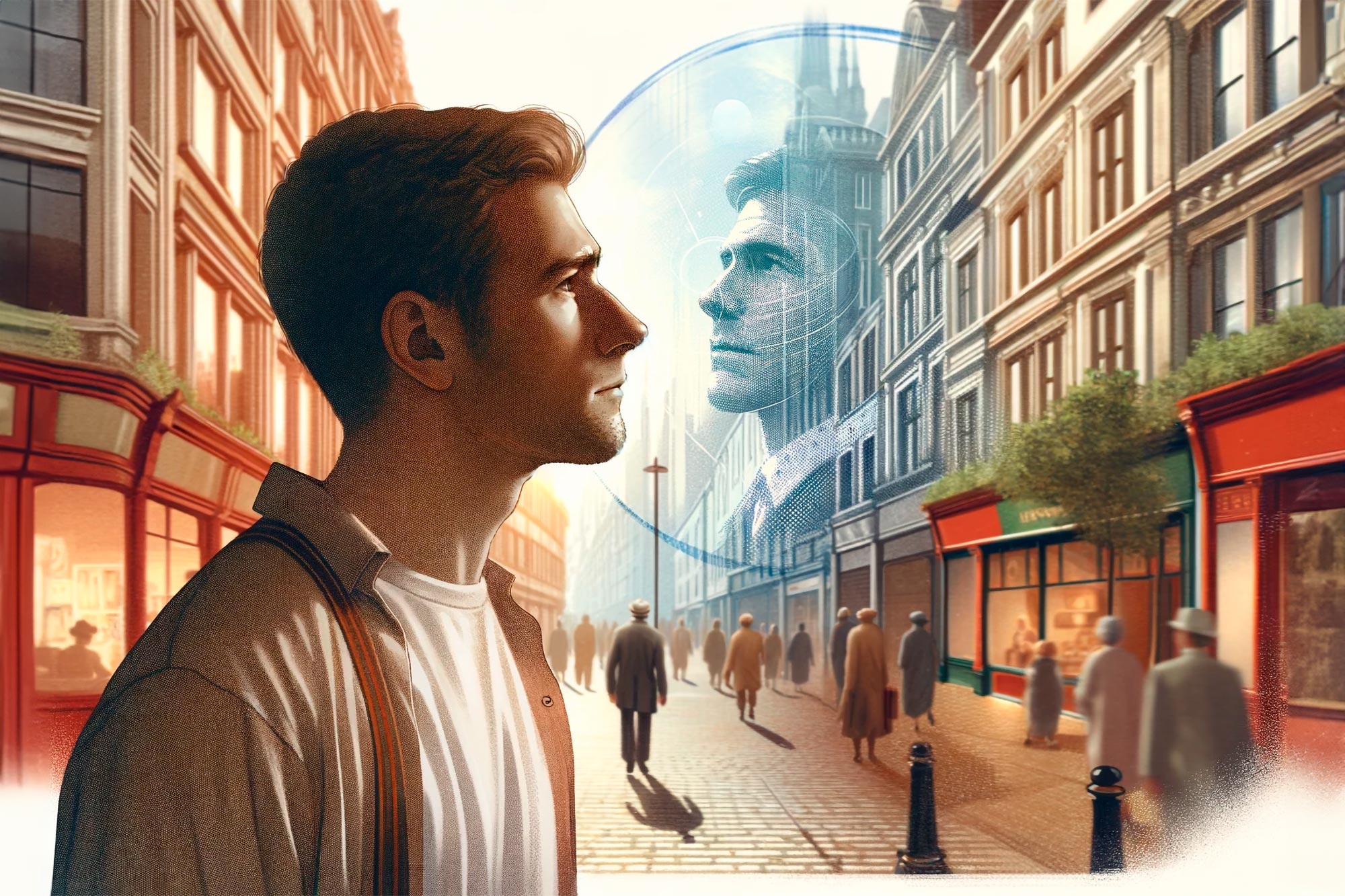
Déjà vu, the eerie feeling of reliving an experience, has intrigued scientists for years. Recent research suggests that déjà vu can be triggered by spatial similarities between a new scene and an unrecalled memory. Studies using virtual reality have shown that when people are placed in scenes with the same spatial arrangement as a previous scene they viewed but didn't recall, déjà vu is more likely to occur. While spatial resemblance is one contributing factor to déjà vu, there are likely many other factors at play in this mysterious phenomenon.
Déjà vu, the eerie feeling of familiarity, is a phenomenon that transcends visual recognition and spans various encounters. It is not a straightforward memory recall but operates in the realm of the 'as if,' where the present moment feels like it has unfolded previously. Psychologists offer diverse theories to explain déjà vu, including temporal lobe dysfunction, faulty tape recorder hypothesis, psychodynamic perspectives, and even parapsychological concepts. However, no single theory captures the complexity of déjà vu, leaving it as an enigma that challenges our understanding of memory, perception, and the human mind.
Déjà vu, the eerie sense of experiencing something new that has been experienced before, has long puzzled scientists and philosophers. Recent research suggests that déjà vu may be a mechanism for focusing attention and a possible adaptive mechanism for survival. Studies have shown that déjà vu is most commonly triggered by scenes, indicating the importance of scene-processing mechanisms in human memory. The use of virtual reality (VR) has allowed researchers to recreate and study the phenomenon, shedding light on the illusory sense of prediction and postdiction associated with déjà vu. While the exact mechanisms behind déjà vu are still not fully understood, these findings provide valuable insights into the nature of human memory and perception.
Researchers have been investigating the phenomenon of jamais vu, the opposite of déjà vu, where something familiar feels unreal or novel. In a lab setting, participants were asked to repeatedly write the same word, and 70% of them stopped because things began to feel strange or jamais vu. The study suggests that jamais vu serves as a signal that something has become too automatic or repetitive, helping us "snap out" of our current processing and providing a reality check.