Shares of Sidus Space surged 200% after being awarded a position in the US Missile Defense Agency’s SHIELD program, part of the broader Golden Dome missile defense strategy, which could lead to significant future contracts and validate the company's technology in defense systems.
Palantir's stock has fallen due to cybersecurity flaws in a military communication platform it co-developed, raising concerns about its reliability and overvaluation, with analysts advising caution before buying the dip.
A class action lawsuit was filed against Lockheed Martin alleging that the company and its officers misled investors by omitting critical information about internal control failures and program risks, which led to significant financial losses and a drop in stock price after disclosure of $1.6 billion in losses on classified programs.
The Pentagon will officially require defense contractors to comply with Cybersecurity Maturity Model Certification 2.0 (CMMC 2.0) standards in all contracts starting November 10, marking the culmination of a multi-year effort to enhance cybersecurity for defense data. The updated rule mandates that contractors handling sensitive information meet specific cybersecurity tiers, with some able to self-assess and others requiring third-party verification, to ensure the protection of Pentagon data from adversaries.
Palantir Technologies has launched 'Warp Speed for Warships' in collaboration with the U.S. Navy to digitally transform maritime supply chains and shipbuilding, potentially boosting its defense sector growth. The company's stock has surged nearly 94% in 2025, driven by strong earnings and expanding defense contracts, though analysts remain cautious about its high valuation. The initiative and recent contracts position Palantir as a key player in military technology innovation.
Palantir Technologies has received positive news from the Pentagon, with a significant increase in budget for its Maven Smart System, indicating rising demand for its AI-driven defense technology, driven by expanded military contracts and government support, positioning it as a leader in defense and AI markets.
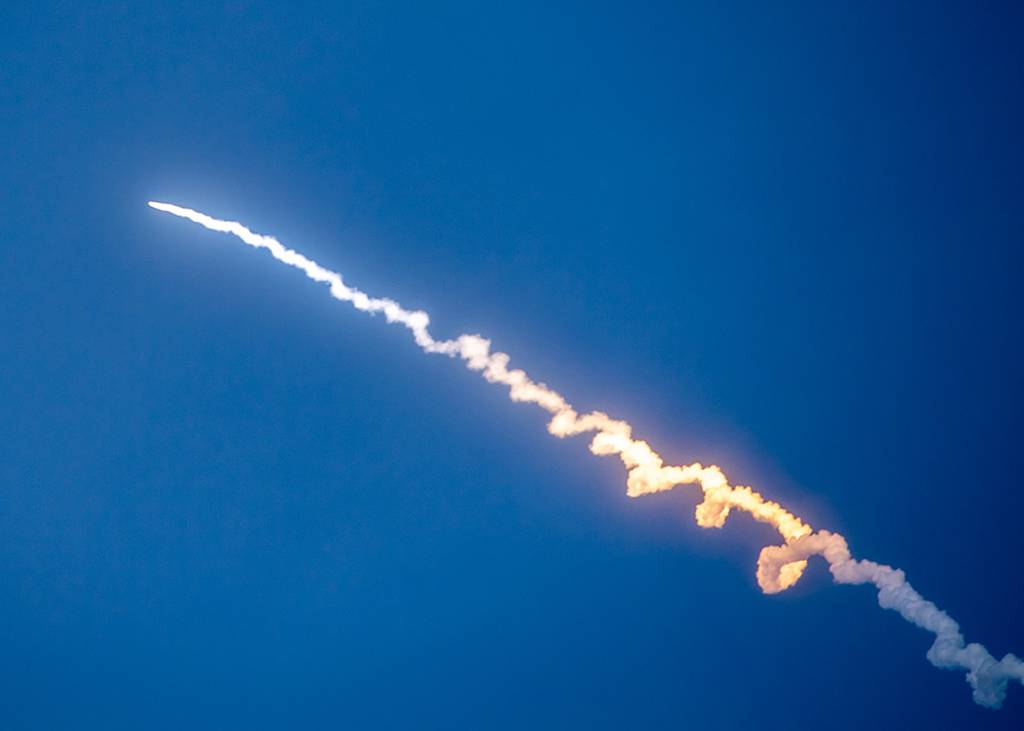
The Missile Defense Agency has chosen Lockheed Martin to develop the Next Generation Interceptor (NGI) over Northrop Grumman, with plans for initial operational capability by fiscal year 2028. This decision accelerates the timeline due to budget constraints and confidence in current data. The NGI program aims to replace the current Ground-Based Midcourse Defense interceptors, tailored to threats from countries like North Korea and Iran. However, concerns have been raised about the agency's rapid elimination of competing contractors and the potential impact on addressing threats in the long run.
The U.S. Missile Defense Agency has awarded Lockheed Martin a contract worth up to $4.1 billion to continue fielding, maintaining, and upgrading its battle command system, C2BMC, through 2034. The system, which connects various defense systems and radars, is being enhanced with 21st Century Security technology to enable faster, multi-domain coordinated responses to emerging threats. The upgrades will also involve integrating allies and partners, enhancing global integration, and providing greater Space Domain Awareness. This effort aligns with the Joint All-Domain Command and Control initiative, supporting the Pentagon's strategy to build a network for fighting advanced adversaries.
Virginia ranks first in defense spending, followed by Texas and California. Arizona replaced Washington in the top 10 states where the Pentagon spends the most on defense. However, if rankings were based on dollars spent relative to a state's gross domestic product, Virginia, Hawaii, and Connecticut would be the top three. The fiscal 2022 report tracks defense spending across all 50 states and the District of Columbia, totaling the amount of money spent per state on defense contracts and personnel.
The Space Development Agency (SDA) has awarded Northrop Grumman and Lockheed Martin a combined $1.5 billion contract to build and operate 72 satellites for the SDA's low Earth orbit (LEO) data relay constellation. The satellites, part of the Transport Layer, will enable high-speed, low-latency data transmission and communications. Northrop Grumman and Lockheed Martin will each supply 36 satellites, known as the "Beta variant," which will feature optical intersatellite links and a UHF Tactical Satellite Communications downlink. The Transport Layer is a key component of the Pentagon's Joint All Domain Command and Control plan, and the satellite constellation is part of the Proliferated Warfighter Space Architecture.
Russia is allocating millions of dollars to protect the Smolensk Nuclear Power Plant (NPP) near the Ukrainian border from potential drone attacks. Concerns have been growing after reports of Ukrainian troops attempting a missile attack on the site. Dmitry Medvedev, the deputy chairman of the Russian Security Council, warned of a possible simultaneous strike on nuclear sites in Ukraine and facilities in Eastern Europe if an attack on the NPP is confirmed. The anti-drone system, which will detect, intercept, and jam drone signals, is expected to be operational by early September. The contractor for the project is the Special Technology Center company, known for manufacturing Orlan drones used by Moscow in the war in Ukraine.
The Biden administration's proposed rule change would grant approval authority over large U.S. defense contracts to a recently incorporated British environmental group called the Science Based Targets Initiative (SBTi). Critics argue that this move would give SBTi significant veto power over American defense contracts and access to potentially sensitive data. The group's foreign status and murky financial background, along with its connection to the Democratic Party's dark money network, raise concerns about the outsourcing of the vetting process. The proposed rule change is expected to impact numerous federal contractors and funnel millions of dollars in fees to SBTi annually. Lawmakers and U.S. businesses have raised objections to the lack of transparency and potential conflicts of interest associated with SBTi's role in the process.
The US Department of Defense has awarded several contracts, including a $1.4bn contract to Lockheed Martin for the continued development of F-35 warfighting capabilities, a $72.8m contract to BAE Systems for the development of navigation and control technologies for 155mm projectiles, and a $14.6m contract modification to MITRE Corp. for support to the Air Force. Other contracts were awarded to General Dynamics, Enviremedial Services, and Federated Maritime LLC.
The US Department of Defense has awarded several contracts to companies including Raytheon Technologies, Boeing, Lockheed Martin, and BAE Systems Ordnance Systems for research and development, logistics support, and workplace safety improvements. The contracts also include the provision of explosives and subject matter expertise for the Department of Defense High Performance Computing Modernization Program. The Defense Logistics Agency has awarded a contract to Boeing for the F/A-18 depot option program. The US Navy has awarded contracts to Lockheed Martin and Viasat for the provision of depot tooling and technical support, and software maintenance and technical support respectively.
The US Department of Defense has awarded several contracts, including a $584m contract to L-3 Harris Technologies for the production, engineering services, and repair support of the Advanced Integrated Defensive Electronic Warfare Suite. The contracts also include a $8.7m modification to General Dynamics Land Systems for Abrams systems technical support, a $20.9m modification to Lockheed Martin Space for engineering and technical support services for the Fleet Ballistic Missile Program, and a $12.2m contract to Viasat Inc. for software maintenance and technical support for the Viasat LinkWay and Enhanced Broadband Efficient Modem waveforms. Vigor Marine LLC was awarded a $10.3m modification for the procurement of 14 out-of-scope work specifications for repair, maintenance, and modernization in support of the USS John Paul Jones.