Research from Michigan State University reveals that while isoprene helps plants like soybeans defend against pests and stress, its release may worsen air pollution, raising questions about balancing agricultural benefits with environmental health.
Scientists have uncovered the atomic secrets of photosynthesis, using an advanced microscopy method called cryo-EM to explore the process of chloroplast RNA polymerase transcription. This breakthrough provides insights into plant growth mechanisms and offers potential for improving crop resilience. The study, published in Cell, presents a model and resources for further fundamental discoveries in this field, aiming to aid in the development of more robust crops.
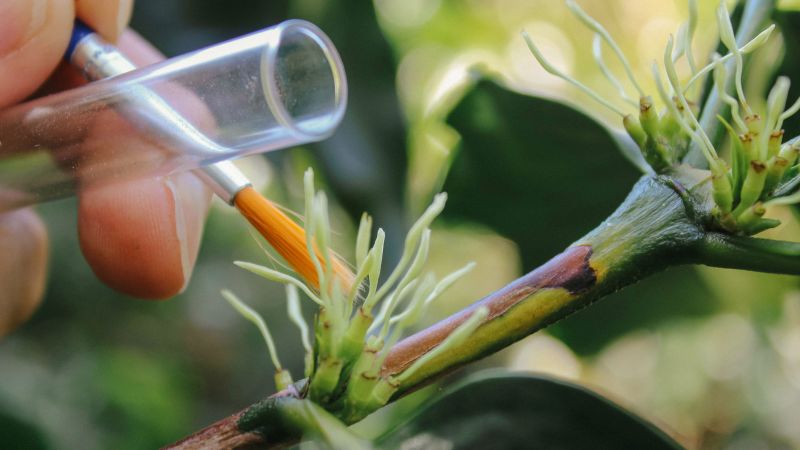
Starbucks, which purchases about 3% of the world's coffee, is developing new arabica coffee varietals that are specifically bred to withstand the challenges of climate change. The company has identified six varieties that meet its taste and flavor standards and are more resilient to rising temperatures and coffee leaf rust. Starbucks aims to increase coffee production and support its suppliers, who are struggling to adapt to global warming. Climate change poses a significant threat to the coffee industry, particularly arabica coffee, and developing climate-resistant varieties is crucial for its sustainability. However, experts caution that there is no single solution to climate change, and a shift towards sustainable farming practices is necessary to promote a healthy ecosystem.
The European Union is considering relaxing its legislation on genetically modified organisms (GMOs) and genetic engineering in order to promote the development of more resistant crops and ensure food security. The proposed draft legislation would classify certain genetically modified plants produced with new genomic techniques (NGTs) as NGT-1, exempting them from existing regulations on GMOs if they do not contain genetic material from other organisms and do not differ significantly from conventionally bred plant varieties. The legislation aims to differentiate between plants grown using new techniques and those grown with classic plant-breeding methods. Experts have expressed mostly positive opinions on the draft legislation, although some have raised concerns about the scientific basis and practicality of the proposed criteria. The legislation would exclude herbicide-resistant NGT plants from exemptions, which would continue to be regulated under existing GMO laws.