Tag

Computational Tools

All articles tagged with #computational tools

"Revolutionizing Avian Evolution: Computational Tools and AI Algorithm Unveil New Bird Family Tree"

Originally Published 1 year ago — by Phys.org

Featured image for "Revolutionizing Avian Evolution: Computational Tools and AI Algorithm Unveil New Bird Family Tree"
Source: Phys.org

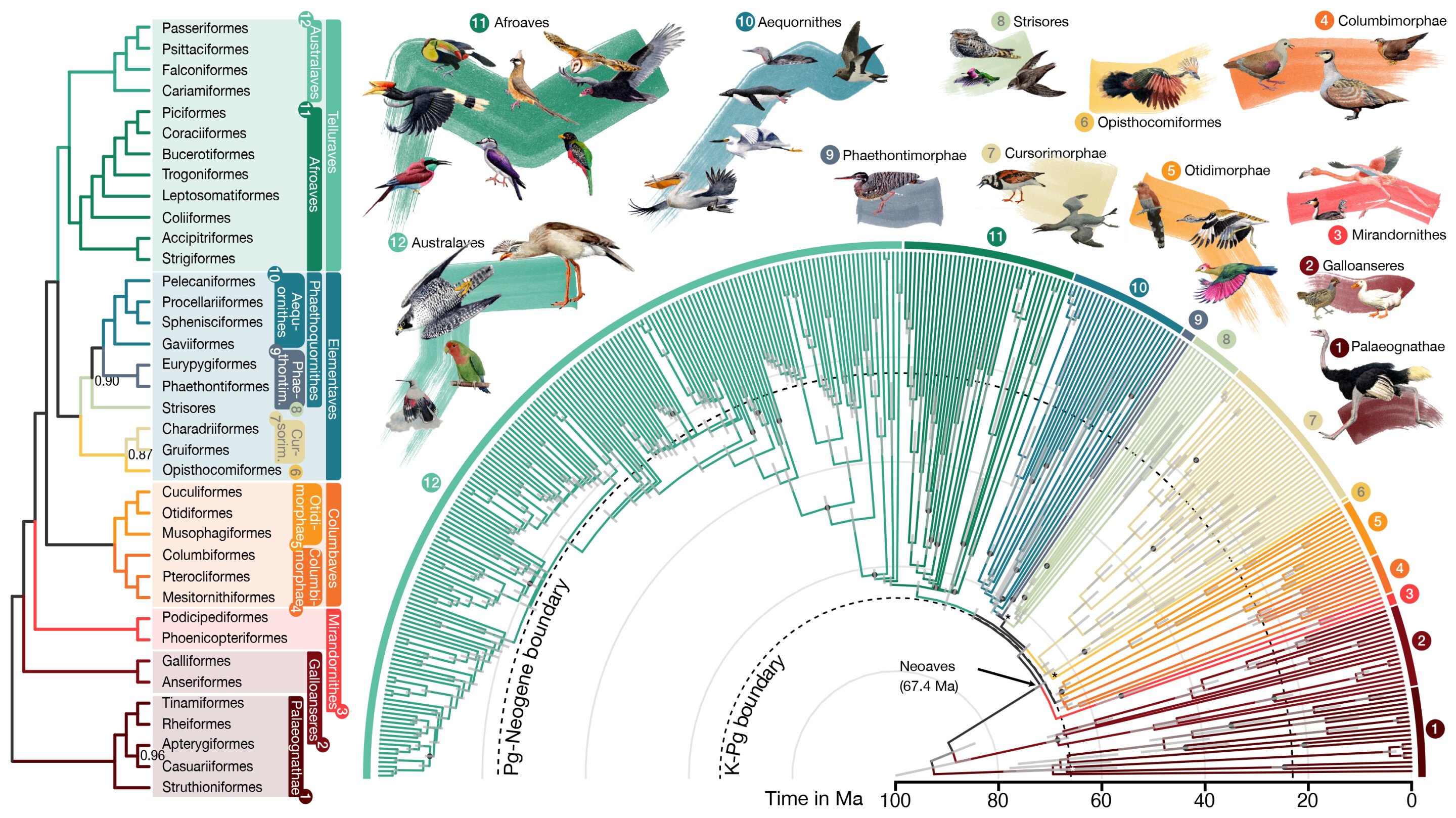
An international team of scientists has reconstructed the largest and most detailed bird family tree to date, delineating 93 million years of evolutionary relationships between 363 bird species using cutting-edge computational methods. The study, published in Nature and PNAS, revealed insights into avian diversification following the mass extinction event that wiped out the dinosaurs, and corrected previous misconceptions about the evolutionary relationships between bird species. The advanced computational tools developed by engineers at the University of California San Diego played a crucial role in analyzing vast amounts of genomic data with high accuracy and speed, paving the way for the construction of the most comprehensive bird family tree ever assembled.


Unveiling the Hidden Threat: Tackling AI's Digital "Dark Matter" Challenge

Originally Published 2 years ago — by SciTechDaily

Featured image for Unveiling the Hidden Threat: Tackling AI's Digital "Dark Matter" Challenge
Source: SciTechDaily

Scientists have discovered that popular computational tools used to interpret AI predictions in DNA analysis are picking up excessive "noise" or extraneous information, similar to encountering digital "dark matter." This noise hinders the identification of crucial DNA features. However, researchers at Cold Spring Harbor Laboratory have developed a solution by introducing a few lines of code that enable more reliable explanations from deep neural networks. By reducing the noise, scientists can better identify important DNA signals, potentially leading to breakthroughs in health and medicine. This computational correction may also have broader applications in other computational processes involving similar types of data.

"Revolutionary Genetic Analysis Tool Simplifies Complex Regions"

Originally Published 2 years ago — by News-Medical.Net

Featured image for "Revolutionary Genetic Analysis Tool Simplifies Complex Regions"
Source: News-Medical.Net

GeneDx has developed a new computational tool called the PanGenome Research-Tool Kit (PGR-TK) for analyzing complex and clinically relevant genes that were previously difficult to study. The PGR-TK overcomes limitations of other visualization graphs and enables the visualization of complex genetic structures and variations. In testing, the PGR-TK successfully accessed and interpreted 395 challenging genes associated with male infertility and eye disorders. The software package allows for scalable analysis of genetic sequences with large-scale structural variations, facilitating exploratory analysis and potentially aiding in the understanding of serious genetic diseases.

Neanderthal DNA Continues to Impact Modern Humans, UCLA Study Shows.

Originally Published 2 years ago — by UCLA Samueli School of Engineering Newsroom

Featured image for Neanderthal DNA Continues to Impact Modern Humans, UCLA Study Shows.
Source: UCLA Samueli School of Engineering Newsroom

A UCLA-led team has developed a new suite of computational genetic tools to address the genetic effects of interbreeding between non-African humans and Neanderthals that took place some 50,000 years ago. The researchers discovered that some Neanderthal genes are responsible for certain traits in modern humans, including several with a significant influence on the immune system. However, the study shows that modern human genes are winning out over successive generations. The new computational methods developed by the team could offer a path forward in gleaning evolutionary insights from other large databases to delve deeper into archaic humans’ genetic influences on modern humans.

Unveiling the Properties of Hydrogen at Extreme Pressures.

Originally Published 2 years ago — by Phys.org

Featured image for Unveiling the Properties of Hydrogen at Extreme Pressures.
Source: Phys.org

Researchers have created a highly accurate phase diagram of high-pressure hydrogen using advanced computational tools, which could inform ongoing efforts aimed at creating atomic metallic hydrogen. The study suggests that hydrogen starts acquiring metallic properties progressively as the pressure rises and shows why previous experiments may have been unsuccessful in attaining atomic metallic hydrogen. The researchers also presented a complete and exhaustive spectroscopic characterization of hydrogen, which could inform future research efforts aimed at observing hydrogen in its atomic metallic phase.