Tag

Computational Methods

All articles tagged with #computational methods

science4 months ago

New Computational Tools May Reveal What Existed Before the Big Bang

A new study suggests that advanced computer simulations using numerical relativity could help answer fundamental questions about the origins of the universe, including what happened before the Big Bang, the nature of cosmic inflation, and the possibility of a multiverse or cyclic universes, by overcoming the limitations of traditional analytical methods in extreme gravitational environments.
science-and-technology1 year ago

Revolutionary Math Model Accelerates Crystal Structure Prediction

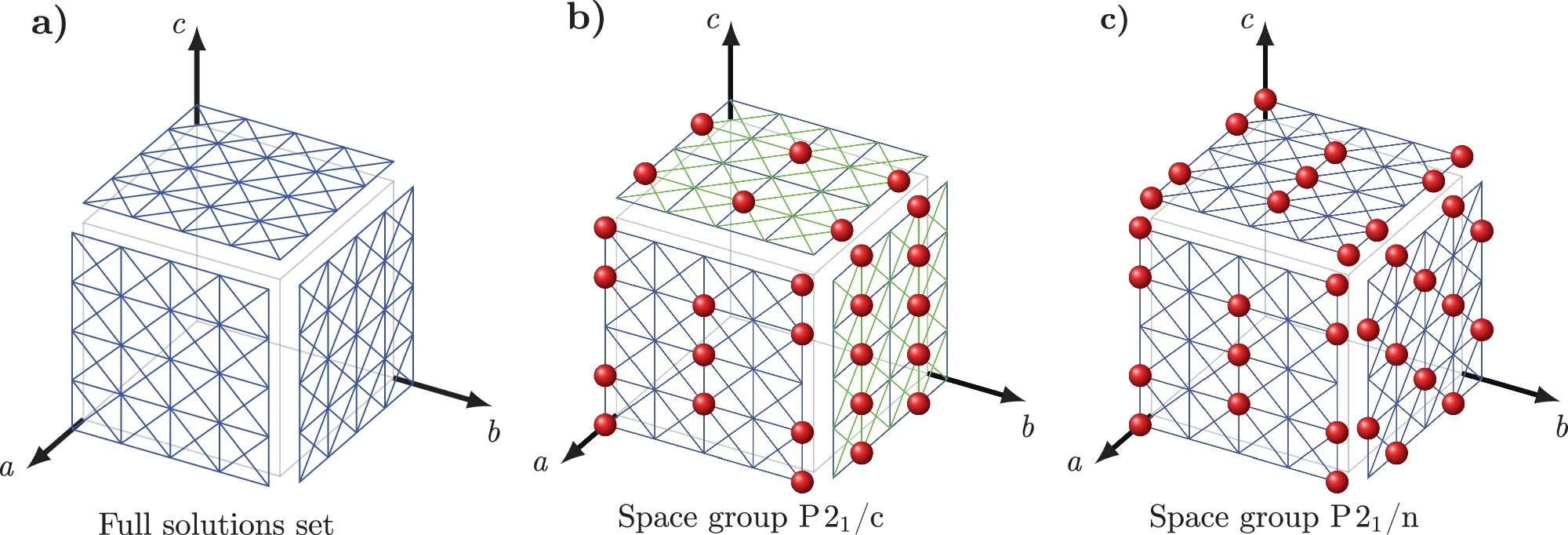
Researchers at New York University have developed a mathematical approach called "Crystal Math" to predict crystal structures in hours using a laptop, a process that previously required supercomputers and took weeks or months. This method, which relies on mathematical rules and simple physical descriptors, addresses the limitations of physics-based methods and has shown high accuracy in predicting structures of complex molecular crystals. The approach holds promise for the pharmaceutical industry and the development of new compounds.

science-and-technology1 year ago

"Revolutionary Protein Dynamics Prediction Technique Set to Transform Drug Discovery"

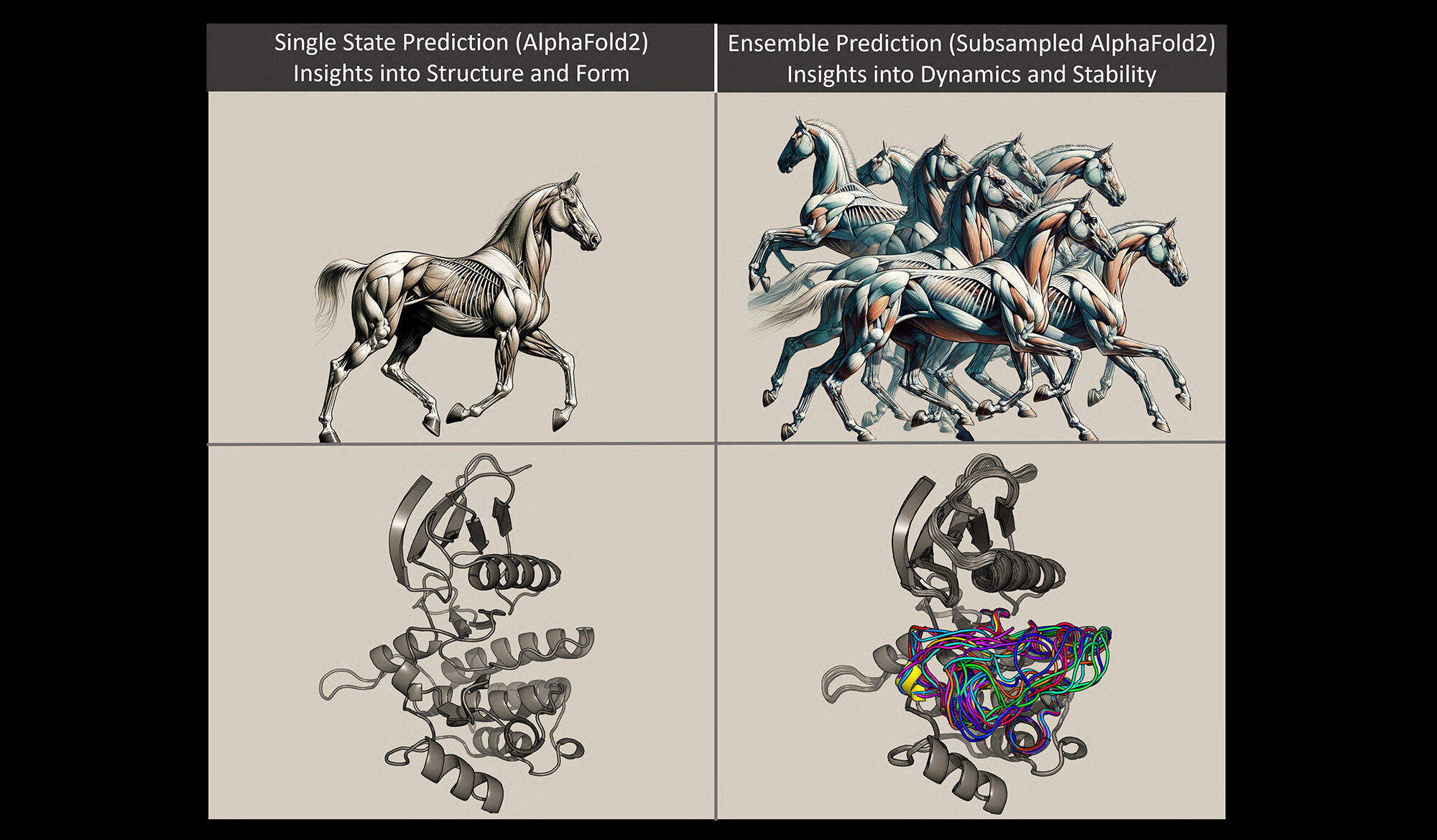
Researchers at Brown University have developed a machine learning technique to predict multiple protein configurations, allowing for a better understanding of protein dynamics and functions. This approach has the potential to revolutionize drug discovery by uncovering more targets for new treatments, particularly in targeted cancer therapy. The new method, which rapidly predicts multiple protein conformations, is accurate, fast, cost-effective, and could significantly accelerate the discovery time for understanding protein dynamics and conformations.

science-and-technology2 years ago

The Value of User-Friendly Computational Methods

Making computational methods accessible to others is crucial for scientific progress. Jean Fan, an assistant professor at Johns Hopkins University, developed a method called STdeconvolve to analyze spatial transcriptomics data. She made the code available on GitHub and simplified installation through Bioconductor. She also shared a video of herself live-coding a spatial transcriptomics data analysis on YouTube and shared blog posts and tutorials to support students. By increasing accessibility, STdeconvolve is easier to maintain and use, and students can provide feedback and build communities.