NOAA has launched new AI-driven global weather prediction models, including AIGFS, AIGEFS, and HGEFS, which significantly improve forecast speed, accuracy, and resource efficiency, marking a major advancement in meteorological technology and forecasting capabilities.
A study by MIT researchers shows that simpler, physics-based models can outperform complex deep-learning models in climate prediction, especially for regional temperature estimates, highlighting the importance of appropriate benchmarking and problem-specific modeling approaches in climate science.
New research analyzing the last ice age suggests a decrease in the likelihood of the worst-case global warming scenarios, refining our understanding of climate sensitivity and predicting future warming under rising CO2. While the best-case and most likely warming estimates remain unchanged, the absolute worst-case scenario for doubling CO2 has been reduced from 5 to 4 degrees Celsius. By studying ancient climate conditions, researchers have narrowed the estimate of climate sensitivity, providing more confident predictions and indicating that the most extreme warming scenario is less likely.
The National Weather Service Climate Prediction Center forecasts a transition from El Nino to a neutral pattern by April through June, with increasing odds of a La Nina developing between June and August. La Nina events typically bring below normal temperatures and slightly increased chances of above normal precipitation to the upper Midwest, following strong El Nino events.
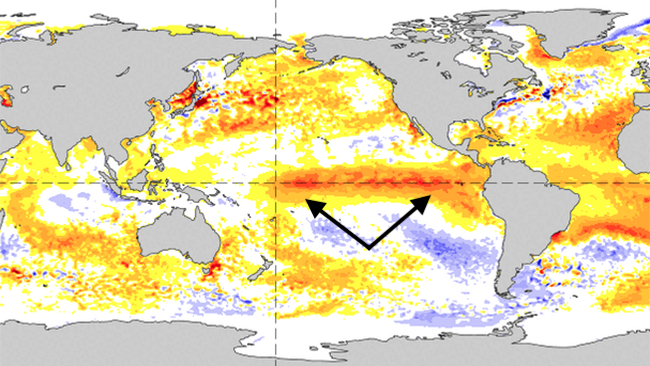
The latest update from NOAA's Climate Prediction Center indicates that a strong El Niño is currently in place and is expected to persist through winter. There is a 54% chance that it could intensify into a rare "super" El Niño during the November-January period. However, this El Niño may behave differently than past strong El Niños, with indications that it could resemble the 2009-10 event. El Niño can influence weather patterns globally, with the potential for wetter conditions in the southern US and a warmer winter in the northern US. It is expected to transition to neutral conditions by late spring or summer.
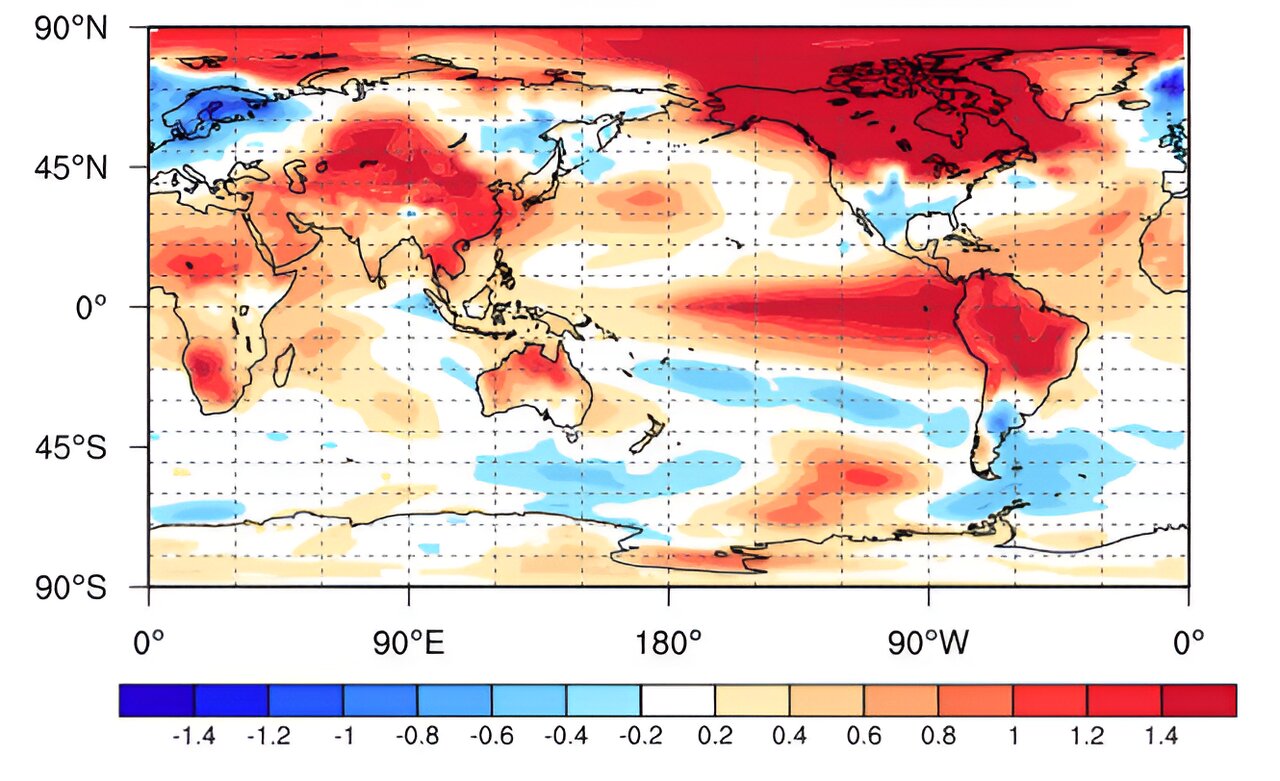
Researchers predict that the winter of 2023/24 could be record-breaking in terms of warmth, following a summer and autumn marked by extreme temperatures and a consistent global warming trend. The global average temperature from June to October 2023 surpassed historical averages, with August and September setting new records. The re-emergence of the El Niño phenomenon after seven years is expected to trigger anomalous anticyclone activity in the Northwest Pacific, influencing the winter climates of East Asia and North America. There is a 95% chance that the global average surface temperature for the upcoming winter will set a new historical record, with regions in Eurasia and the Americas likely to experience exceptionally warm conditions.
Mud libraries, such as the Lamont-Doherty Core Repository, hold marine sediment cores that contain Earth's history and serve as the backbone of climate science. These cores provide key information about the Earth's climate going back hundreds of thousands of years, helping scientists understand the impact of changing temperatures and greenhouse gases. However, funding cuts threaten the availability of new cores, limiting scientists' ability to predict future climate changes. By studying the composition of foraminifera and minerals in the cores, researchers can piece together a comprehensive picture of the Earth's climate over time. The loss of the JOIDES Resolution, a ship equipped for drilling high-quality cores, further hampers our understanding of Earth's history.
Forecasters predict a high likelihood of an El Niño winter, which could bring significant changes to weather conditions. While the impact of El Niño events can vary, historically, the northern US and Canada experience drier and warmer conditions, while the Gulf Coast and Southeast see increased rainfall and a higher risk of flooding. In the Chicago area, residents can expect warmer temperatures and below-average precipitation during the upcoming winter, aligning with typical El Niño patterns. However, forecasters caution that each El Niño event is unique, and other factors can influence local weather conditions.
The World Meteorological Organization (WMO) has warned that global temperatures are now more likely than not to breach 1.5 degrees Celsius of warming within the next five years, with a 66% chance of temporarily reaching 1.5C by 2027. This is the first time in history that it's more likely than not that we will exceed 1.5C. The El Niño weather pattern expected to develop in the coming months will combine with human-induced climate change to push global temperatures into uncharted territory. The WMO also found a 98% chance that one of the next five years will be the hottest on record, surpassing 2016 which saw global temperature impacted by about 1.3C of warming.