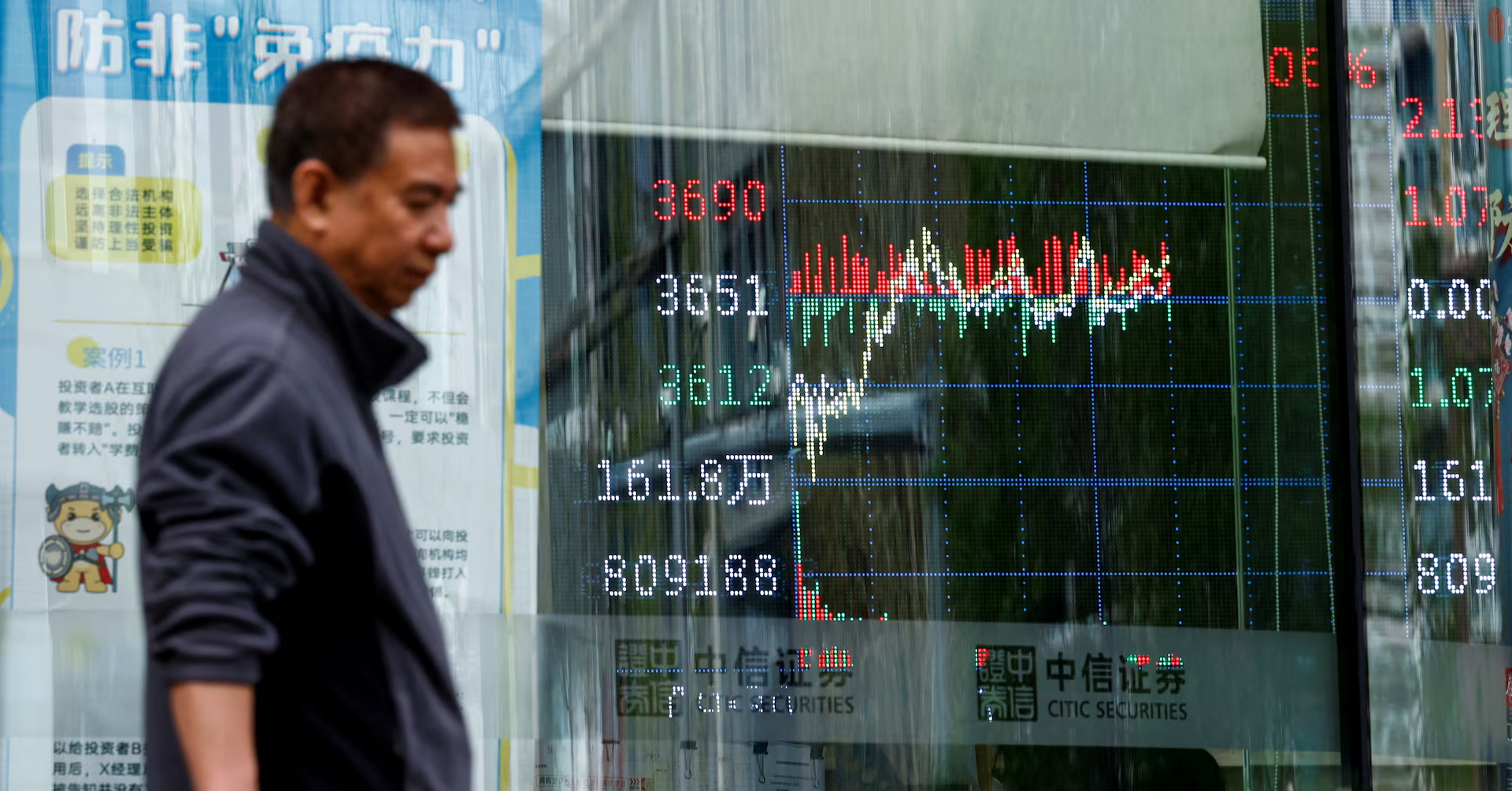
Asian stocks declined due to weak Chinese economic data and falling copper prices, while the yen strengthened after the Bank of Japan raised its inflation forecast and kept rates steady, hinting at a possible rate hike later in the year amid cautious optimism about Japan's trade prospects.
Asia-Pacific markets mostly rose amid escalating Israel-Iran tensions and Chinese economic data, with oil and gold prices increasing as investors seek safe havens; Chinese retail sales and industrial output showed mixed growth, while markets in Japan, South Korea, and Australia experienced modest gains or remained flat.
Asian stocks rose as investors analyzed China's economic data and awaited upcoming US-China trade negotiations, amid signs of easing tensions and positive economic indicators in the region, leading to gains across major markets including China, Japan, South Korea, and Hong Kong.
Most Asian stocks rose amid optimism over upcoming China-U.S. trade talks, with Chinese and Hong Kong markets gaining, despite weak Chinese inflation data weighing on sentiment. Japan's GDP revision showed resilience, and regional markets were cautiously optimistic ahead of key trade negotiations and U.S. economic data. Investors are hopeful for de-escalation in trade tensions, but economic indicators suggest mixed signals.
World shares rose as Chinese data exceeded expectations, with Asian stock markets and European stocks ticking up. Multiple central banks, including those in the US, Japan, UK, and Switzerland, are set to meet this week, potentially signaling the end of free money in Japan and a slower pace of US rate cuts. The Bank of Japan may end its negative interest rates, while the Federal Reserve is expected to maintain rates but could signal a higher-for-longer outlook on policy. The market has reduced expectations for rate cuts, and the Bank of England is expected to keep rates steady. The dollar and yields rose, impacting gold prices, while oil prices improved after the International Energy Agency raised its 2024 oil demand view.
Asian shares slid after a decline on Wall Street and disappointing China growth data, with Japan's Nikkei hitting a 30-year high before reverting lower, while Hong Kong's Hang Seng tumbled 4% and China's Shanghai Composite shed 2%. Wall Street slipped in a lackluster return to trading, with the S&P 500 falling 0.4%, the Dow dropping 0.6%, and the Nasdaq sinking 0.2%. Expectations for interest rate cuts by the Federal Reserve have helped the S&P 500 rally, while Treasury yields have sunk on expectations for upcoming cuts. Traders are anticipating more rate cuts through 2024 than the Fed has indicated, leading to potential market swings around each Fed official's speech or economic report.
Asia-Pacific markets are poised for gains as Wall Street continues to rally after the U.S. Federal Reserve's decision to hold rates and provide a roadmap for future cuts. Investors are focusing on key economic data from China, including house prices, industrial output, and retail sales. Australia's S&P/ASX 200 and Japan's Nikkei 225 rebounded, while South Korea's Kospi and Kosdaq advanced. In Australia, private sector activity contracted at a slower pace in December, according to flash estimates. A fund manager remains bullish on solar stocks, citing their long-term prospects. Goldman Sachs added several stocks to its top picks lists, and Deutsche Bank suggests rate cuts may come earlier than expected. Mega cap tech companies underperformed, while oil prices settled higher on a weaker dollar and an upgrade in demand growth. The 10-year Treasury yield dropped below 4% as traders bet on Fed rate cuts for 2024.
Asian stocks surged to two-month highs as investors anticipated stimulus measures in China and an end to rate hikes in the United States. The dollar nursed steep losses following a benign U.S. inflation report. Bond markets in Australia and South Korea saw their strongest gains since March. U.S. consumer prices remained flat in October, below expectations, leading to speculation of rate cuts. Strong industrial output and retail sales data in China, along with plans for low-cost financing to boost the housing market, added to market optimism. Japan's economy contracted in July-September, dampening rate hike expectations.
Hong Kong stocks, led by the Hang Seng index and the Hang Seng Tech index, surged after positive economic data from China and a soft U.S. inflation report. Mainland China's CSI 300 index also rose, while Japan's Nikkei 225 and South Korea's Kospi recorded gains. Chinese electric vehicle stocks, including BYD, Nio, Xpeng, and Li Auto, saw an increase in share prices. Additionally, China reported better-than-expected retail sales and industrial data for October. Meanwhile, Japan's economy shrank more than expected in Q3, and oil prices remained steady as traders assessed Middle East tensions and stronger demand forecasts. Chicago Fed President Austan Goolsbee noted that inflation is cooling at a near-record pace, but further progress is needed. Market participants are optimistic and anticipate a year-end rally.
Asian markets are expected to continue with a positive risk sentiment this week, driven by confidence in the US economic 'soft landing' and easing financial conditions. China's upcoming 'data dump' including import and export figures, bank lending, credit, money supply, and inflation data will provide insights into the country's economic performance in the fourth quarter. Other key indicators to watch include consumer inflation readings from Thailand, the Philippines, and Taiwan, as well as GDP figures from the Philippines, Hong Kong, and Indonesia. The Reserve Bank of Australia's rate decision, Bank of Korea's policy meeting minutes, and Bank of Japan's summary of board members' opinions will also be closely monitored. Emerging and Asian markets may have room to catch up and potentially outperform after underperforming their US and global peers last week.
In the week ahead, investors will be closely watching the earnings season, with major U.S. companies such as Tesla, Bank of America, and Goldman Sachs reporting their results. U.S. retail sales data for September will provide insight into consumer spending, while Federal Reserve Chairman Jerome Powell's speech and appearances by several regional Fed presidents will be closely monitored. Oil prices surged due to escalating conflict in the Middle East and U.S. sanctions on Russian oil shipments. Economic data from China will shed light on the country's recovery, and the U.K. will release inflation and jobs reports ahead of the Bank of England's November meeting.
Hong Kong stocks fell over 2%, leading losses in the wider Asia-Pacific region, as investors digested China's inflation and trade data for September. China's consumer price index remained flat, lower than expected, while the producer price index saw a decline. The Hang Seng Index was dragged down by the consumer cyclicals sector, with e-commerce giant JD.com experiencing a significant slump. Meanwhile, Singapore's GDP grew faster than expected in the third quarter, and India's inflation eased to a three-month low.
European stocks retreated for the fifth consecutive day following disappointing data from China, which raised concerns about the country's fragile economic recovery. The Stoxx 600 dropped 0.7%, while futures on US equities also declined. China's services sector experienced its slowest growth this year in August, indicating a loss of momentum in the economic recovery and dampening earlier optimism over government stimulus measures. The MSCI Asia Pacific Index also fell, with Hong Kong shares leading the declines. Traders are now focusing on euro area PMI data and ECB President Christine Lagarde's speech for further market direction.
Asian stocks started the week cautiously as investors awaited China's industrial and retail data and a host of US Federal Reserve officials to speak to vindicate market pricing of rate cuts this year. The Turkish lira sank to a two-month low after weekend elections looked headed for a runoff, while the Thai baht rallied almost 1% after Thailand's opposition routed military-allied parties also in weekend polls. The US dollar was hovering around a five-week high against major peers on Monday, extending its best weekly rise since September from the week before. Investors are also concerned about lifting the US debt ceiling and the return of bank worries.
The US dollar rebounded last week after hawkish comments from the US Federal Reserve and still-elevated inflation raised doubts on whether the US central bank will pause at its next meeting in June. Global equity markets slipped on more evidence of weakness in the post-Covid recovery in China, worries regarding the US debt ceiling, and lingering US regional banking concerns. A spate of Fed speeches is scheduled through the coming week, including Fed Chair Jerome Powell on Friday. Key market focus in the coming week includes China industrial output and retail sales data, minutes of the recent Reserve Bank of Australia’s meeting, Germany ZEW sentiment index, UK jobs, and US industrial output and retail sales data.