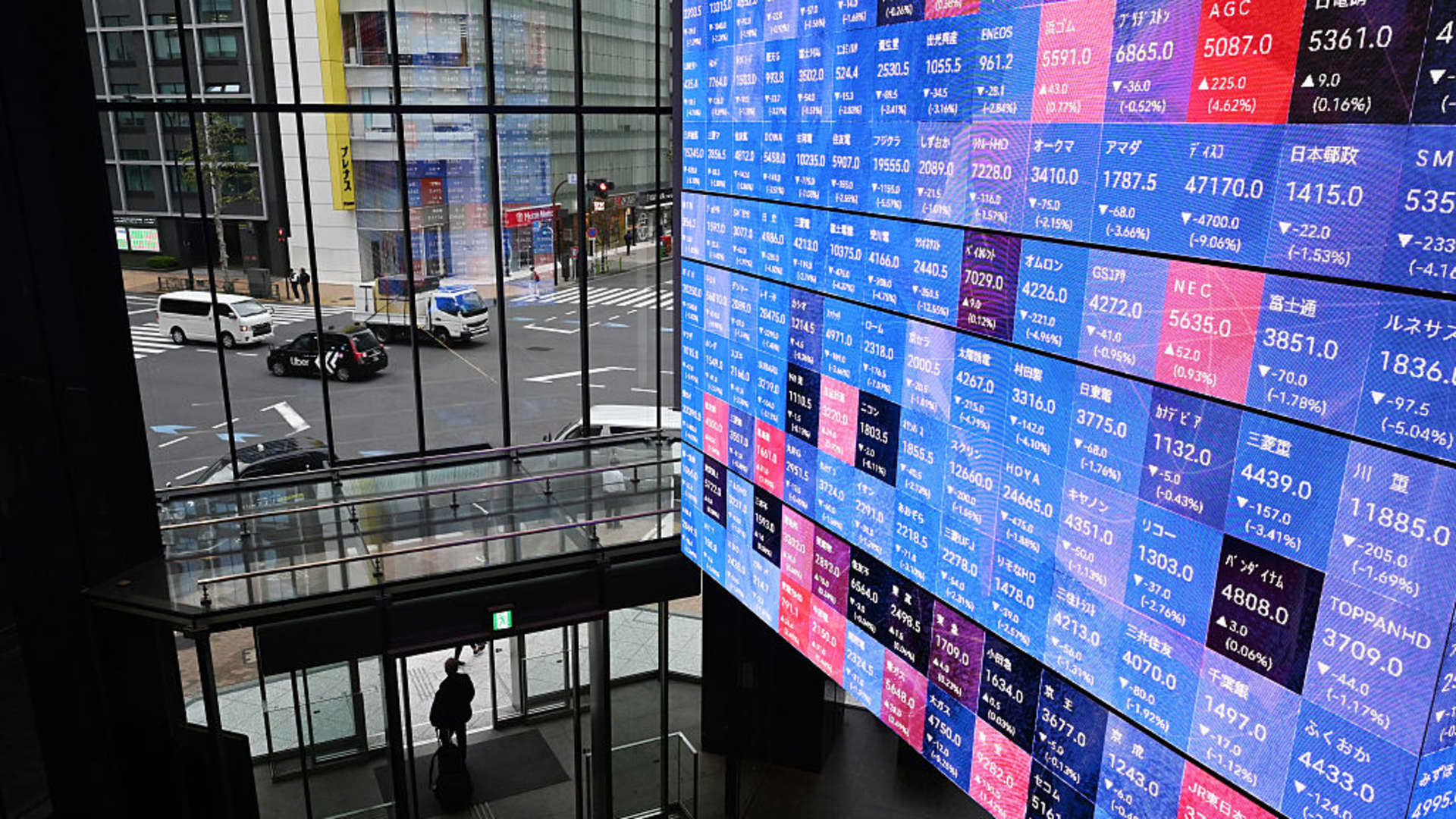
Asian markets rose following the U.S. operation that captured Venezuelan President Maduro, leading to gains in defense stocks and a slight decline in oil prices amid geopolitical tensions.

Asia-Pacific markets declined on the last trading day of the year amid holiday closures, with China’s factory activity expanding in December for the first time since March, signaling a potential economic rebound. Meanwhile, U.S. markets experienced modest declines, influenced by tech stock losses, with the MSCI All Country World Index reaching a record high for the year.
Most Asia-Pacific markets declined amid ongoing tech sell-offs driven by AI bubble concerns, with notable movements in Japan, Australia, South Korea, and Hong Kong, while U.S. markets also fell slightly; investors are watching China's military drills around Taiwan and upcoming U.S. economic data.
Asia-Pacific markets mostly rose following gains on Wall Street driven by AI-related trade news, with notable increases in tech stocks like Nvidia and Micron, and mixed performances across regional indices amid upcoming inflation data from Singapore.
Asia-Pacific markets rose ahead of China's key lending rate decisions, with major indices in Japan, South Korea, and Hong Kong gaining, while US stocks also increased driven by AI-related gains and corporate news.
Asia-Pacific markets declined as investors reacted to Wall Street's drop and awaited key Chinese economic data, with South Korea leading losses and mixed signals from Japan's business sentiment and Chinese retail and industrial figures.
Asia-Pacific markets declined on Tuesday, diverging from Wall Street's gains driven by renewed optimism in AI and US political developments, with notable movements in Japanese, South Korean, and Chinese stocks, while US indices rose significantly.
Asia-Pacific markets rose following Wall Street's gains, driven by AI stocks rebound after AMD's earnings beat; Japanese and Hong Kong markets led gains, while Chinese autonomous vehicle firms faced declines in their Hong Kong IPOs.
Asia-Pacific markets traded mixed with South Korea's Kospi falling 1.29% after a recent rally, while other markets like Japan's Nikkei and Hong Kong's Hang Seng saw slight gains, amid global tech sector optimism and awaiting Australia's monetary policy decision.
Asia-Pacific markets showed mixed performance as China's manufacturing PMI for October missed expectations, indicating a slowdown, with Hong Kong and Australia slightly down, while South Korea's Kospi led gains, reflecting cautious investor sentiment amid economic data and upcoming monetary policy decisions.
U.S. stock futures declined slightly ahead of a busy earnings week, with major indices closing higher Monday driven by Apple and optimism over a potential US-China trade deal. Investors are awaiting key earnings reports from Netflix, Coca-Cola, and Tesla, while economic data on inflation and Treasury yields are also in focus. Asian markets rose, buoyed by Japan's new prime minister and regional economic optimism.
Asia-Pacific markets mostly rose despite declines on Wall Street, with investors selling tech stocks like Nvidia and Oracle amid concerns over AI industry risks, while Chinese and South Korean stocks gained on positive corporate news and IPOs. US futures were steady ahead of jobless claims data, with major US indices falling overnight.
Asia-Pacific markets rose ahead of China's decision on its loan prime rate, with major indices in Japan, South Korea, and Australia gaining, while U.S. markets hit new highs following the Federal Reserve's rate cut, and investors await China's monetary policy move.
Asia-Pacific markets mostly rose following a tech rally on Wall Street, with Japan's Nikkei leading gains, while concerns over the economy persisted. Australia's market advanced after strong household spending data, and bond markets showed rising long-term yields globally. Hong Kong and China experienced declines amid volatile trading, and US markets closed mixed despite tech optimism.
Asia-Pacific markets traded mixed on Friday, diverging from Wall Street, with Japan's Nikkei and South Korea's Kospi declining amid regional economic data and political issues, while Hong Kong and mainland China markets gained; overnight, US markets closed higher with record highs in the S&P 500 and Dow Jones.