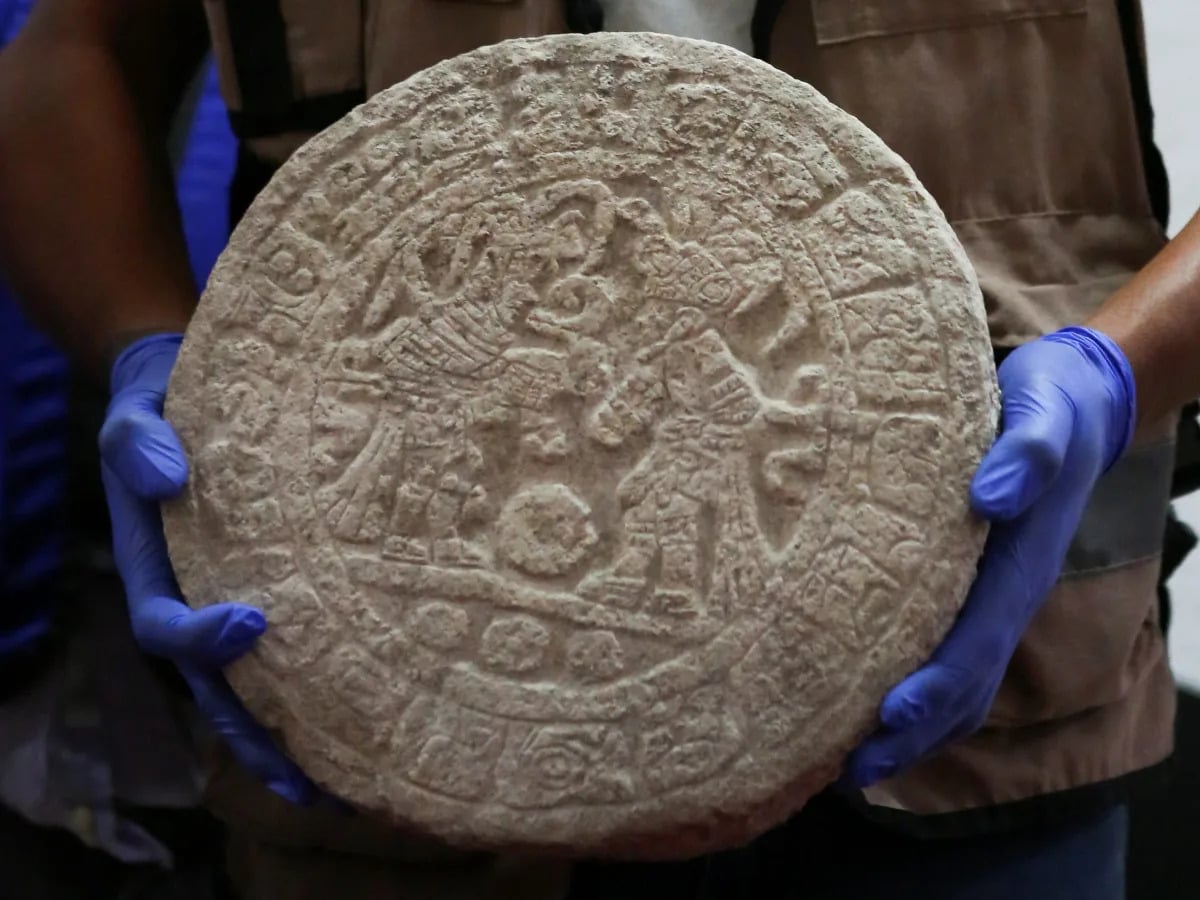
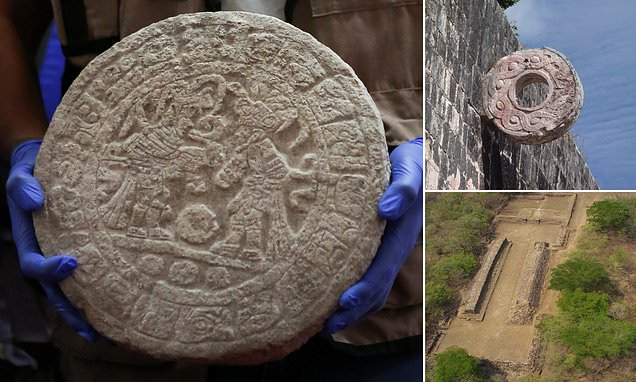
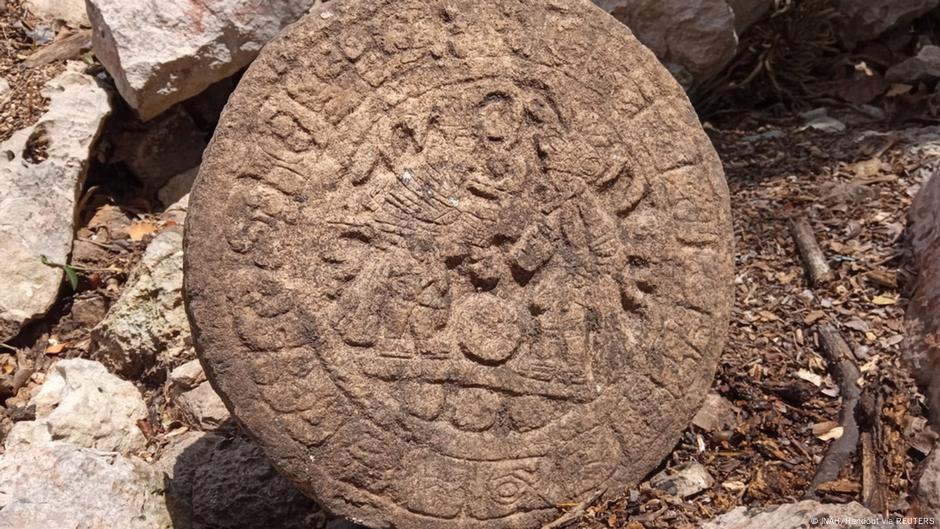
A 1,000-year-old Mayan "scoreboard" depicting two figures playing an ancient soccer-like ball game was discovered at the Mayan Chichen Itza site in Mexico's Yucatan peninsula. The circular stone's diameter was just over 32 centimeters and it weighed 40 kilograms. Experts identified the two figures on the stone as playing the ball game "pelota" - a team game played with a heavy rubber ball, which is thought to have had ritual connotations. The Chichen Itza is a historical center of Mayan civilization and a UNESCO World Heritage Site.
A 1,000-year-old Mayan "scoreboard" depicting two figures playing an ancient soccer-like ball game was discovered at the Mayan Chichen Itza site in Mexico's Yucatan peninsula. The circular stone's diameter was just over 32 centimeters and it weighed 40 kilograms. Experts identified the two figures on the stone as playing the ball game "pelota" - a team game played with a heavy rubber ball, which is thought to have had ritual connotations. The Chichen Itza is a historical center of Mayan civilization and a UNESCO World Heritage Site.
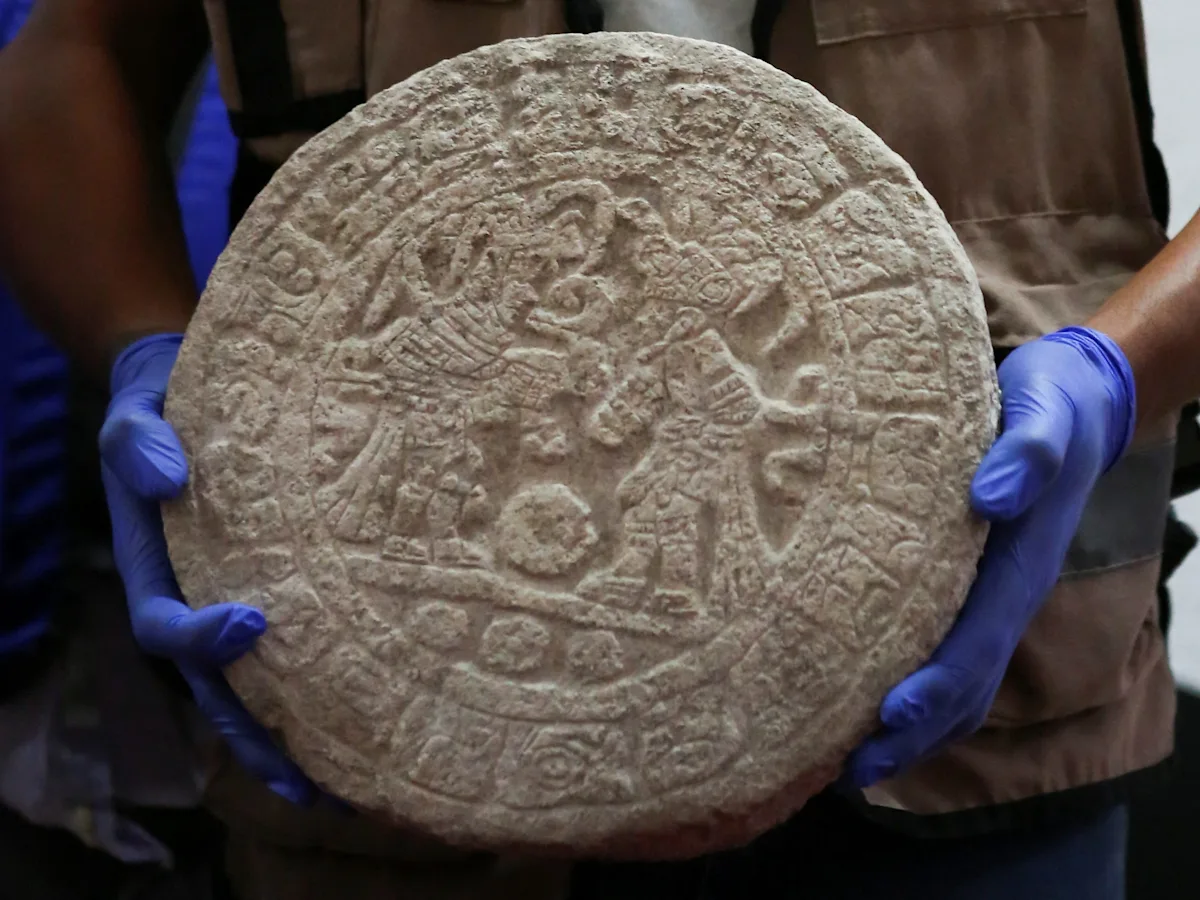
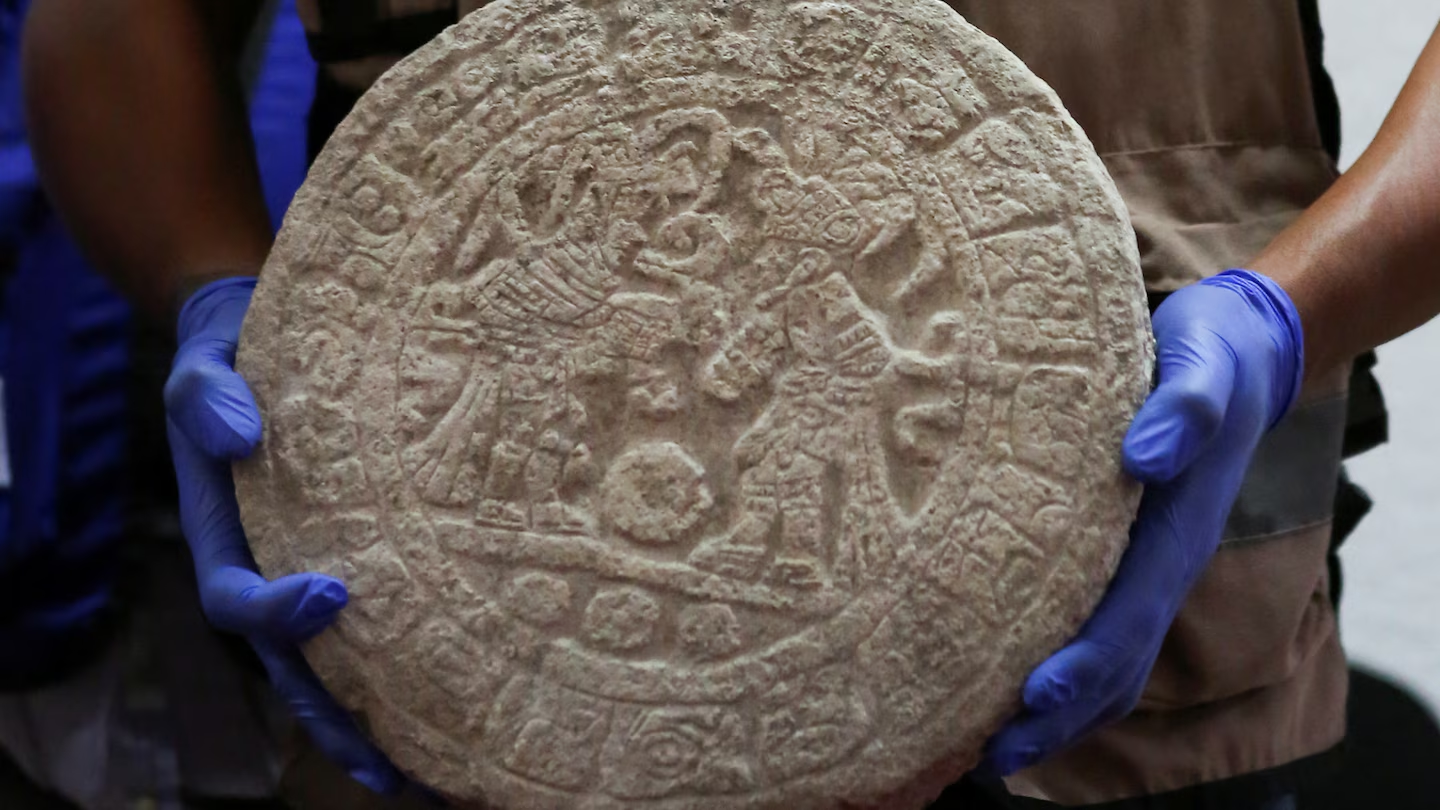
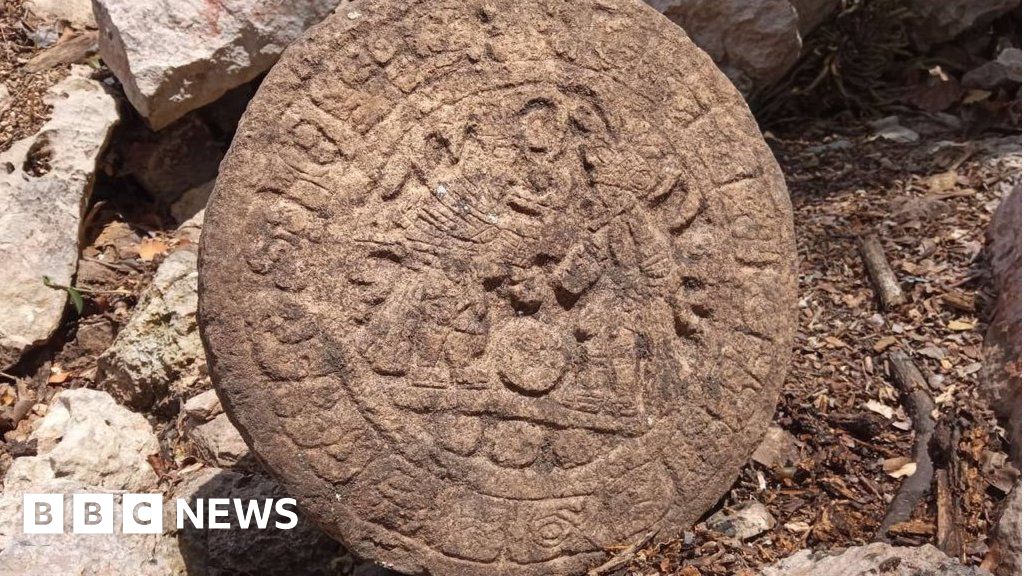
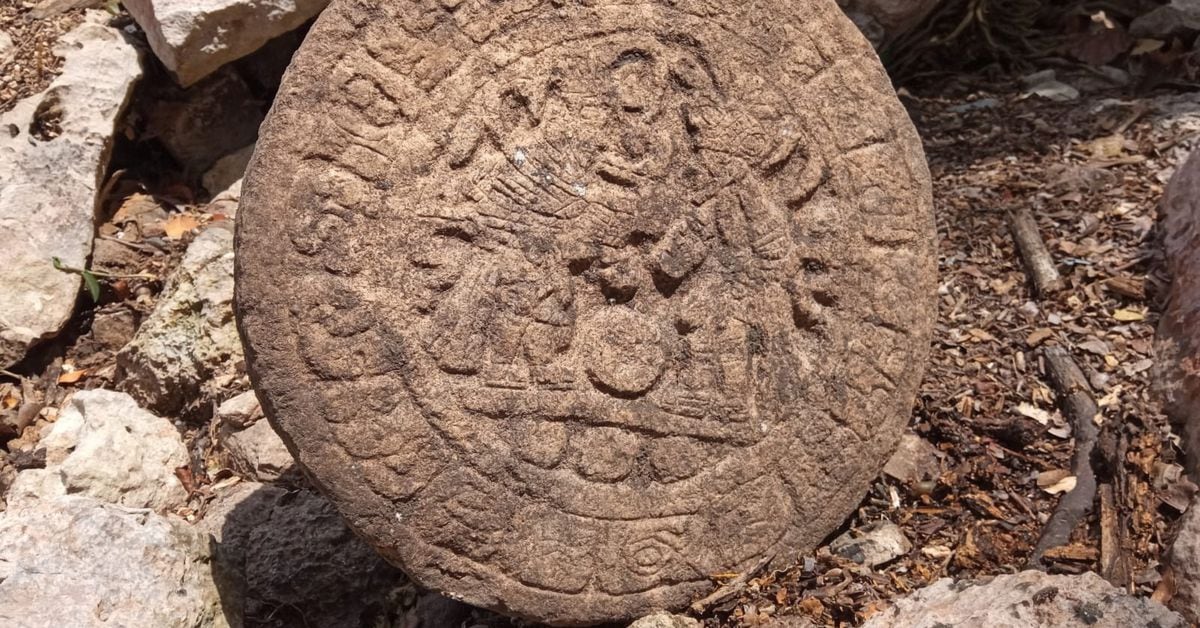
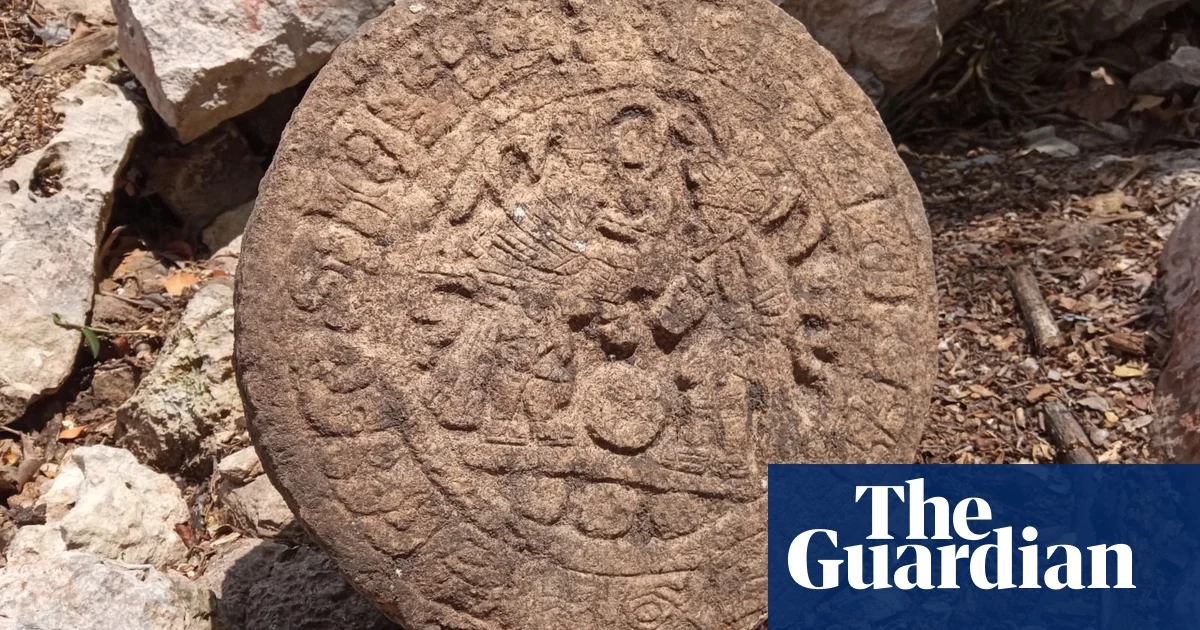
An ancient stone marker used in a Mayan ballgame was discovered at the Chichén Itzá archaeological site in Mexico's Yucatán Peninsula. The intricately carved circular piece displays hieroglyphic writings around two players at its center standing next to a ball. The stone is believed to date back to the 11th century and is the first discovery in over 11 years of an object with hieroglyphic writing at Chichén Itzá. The Mayan ballgame dates back over 3,000 years and is considered one of the first organized sporting games.
Archaeologists in Mexico have discovered a 1,000-year-old stone scoreboard used in the Mayan 'pelota' game, which was played with a ball containing the ashes of dead rulers. The carved, circular stone was found in the Mayan Chichén Itzá archaeological site and displays hieroglyphic writing surrounding two players standing next to a ball. The artifact, named the 'Disk of the Pelota Players', is inscribed with a reference to a date in the Mayan calendar that is equivalent to the year 894 AD. The game is thought to have been played for ceremonial purposes, possibly commemorating important members of society.
Archaeologists have discovered a stone scoreboard at the Chichen Itza archaeological site in Mexico's Yucatan, which displays Mayan hieroglyphic writing surrounding two players standing next to a ball. The piece dates from between A.D. 800 and 900 and weighs around 90 pounds. The discovery could provide new information on pre-Columbian Mayan society. The Chichen Itza complex has been declared a World Heritage Site by UNESCO and is one of the main archaeological centers of the Mayan civilization in the Yucatan Peninsula.
Archaeologists have discovered a 1,000-year-old Mayan scoreboard at the Chichen Itza archaeological site in Mexico's Yucatan peninsula. The circular stone piece, believed to be a scoreboard for a soccer-like ball game, displays hieroglyphic writing and dates back to between 800 AD and 900 AD. The ball game was a traditional practice of Mesoamerican peoples and is believed to have had ritual undertones. The Chichen Itza complex is one of the main archaeological centers of the Mayan civilization in the Yucatan Peninsula.
Archaeologists in Mexico have discovered a 1,200-year-old intricately carved stone believed to be a scoreboard for the Maya ball game, pelota. The 40kg-stone was found at the Chichen Itza archaeological site and features two players in elaborate headgear surrounded by hieroglyphic writing. Experts are analyzing the writing to decipher its possible meaning. The stone is a rare find as it contains hieroglyphic writing, and it is even rarer to find a complete text.
Archaeologists have discovered a stone scoreboard used in an ancient soccer-like ball game at the Mayan Chichen Itza archaeological site in Mexico's Yucatan peninsula. The circular piece, believed to date from between 800 AD and 900 AD, displays hieroglyphic writing surrounding two players standing next to a ball. The ball game was a traditional practice of Mesoamerican peoples and is believed to have had ritual undertones. The Chichen Itza complex is one of the main archaeological centers of the Mayan civilization in the Yucatan Peninsula.
A stone scoreboard believed to be over 1,000 years old and used in an ancient ritual ball game has been discovered at the Mayan Chichén Itzá archaeological site in Mexico. The circular piece displays hieroglyphic writing surrounding two players standing next to a ball and is believed to date from between AD800 and AD900. The game, played with a heavy rubber ball, was a traditional practice of Mesoamerican peoples and is believed to have had ritual undertones.