Tag

Charles Darwin

All articles tagged with #charles darwin

science1 year ago

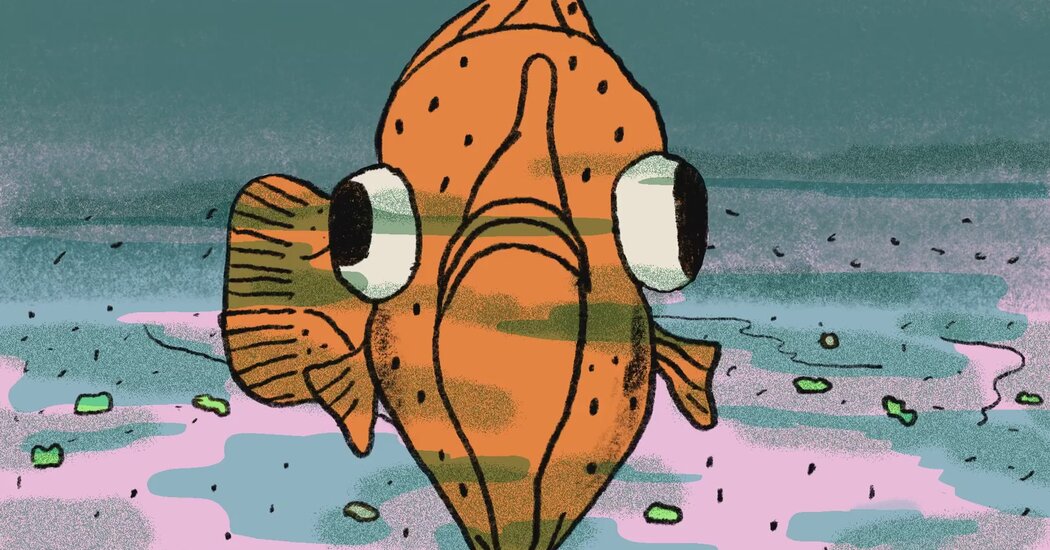
"Flounder's Iconic Side-Eye: The Story Behind the Look"

The article explores the evolutionary puzzle of how flounders and other flatfish developed their unique anatomy, with both eyes on one side of their head. This adaptation, which allows them to lie flat on the sea floor and ambush prey, has long puzzled biologists and was even used by critics of Darwin's theory of evolution as evidence against natural selection.

science2 years ago

Darwin's Prediction Fulfilled: The Remarkable Discovery of Wallace's Sphinx Moth

Wallace's sphinx moth, also known as Xanthopan praedicta, was predicted by Charles Darwin and Alfred Russel Wallace in the 19th century. They hypothesized that a long-tongued moth would be the pollinator of the Madagascan orchid, Angraecum sesquipedale. Their prediction was confirmed in 1903 when the moth was discovered. In 2019, it was found that the moth has the longest insect tongue ever recorded, measuring 28.5 cm (11.2 inches). A recent taxonomic study classified the moth as its own species, Xanthopan praedicta.

science2 years ago

Unveiling the Universal "Missing Law" of Evolution

Scientists and philosophers propose a new "law of nature" that expands on Charles Darwin's theory of evolution. They argue that evolution is a universal process that applies to various systems, both living and non-living, at different scales. The proposed law, called "the law of increasing functional information," states that evolving systems form from interacting building blocks and create diverse combinations. Evolution occurs when these combinations are selected for useful functions or purposes. The scientists highlight examples from the formation of elements in stars to the development of traits in organisms. The new law aims to explain why the universe becomes more diverse and complex over time.

science2 years ago

Cracking Darwin's Mystery: Decoding Species Abundance

A study led by researchers from the German Centre for Integrative Biodiversity Research, Martin Luther University Halle-Wittenberg, and the University of Florida has shed light on the global species abundance distribution (gSAD), a pattern that reveals how many species are common, rare, or fall in between. By analyzing data from the Global Biodiversity Information Facility, the researchers found that most species are rare but not extremely so, with only a few species being highly common. However, the veil of understanding remains partially lifted for many species groups, such as insects. The findings highlight the importance of biodiversity monitoring and provide insights into the ecological and evolutionary mechanisms that govern species abundance.

science2 years ago

Cracking Darwin's Paradox: Corals' Vegetarian Side Unveiled

Scientists from the University of Southampton have solved Darwin's Paradox of Coral Reefs by discovering that corals feed on their photosynthetic symbionts, microscopic algae that live inside their cells. This vegetarian diet allows corals to access a previously thought unavailable nutrient source, explaining how they thrive in nutrient-poor waters. The researchers found that corals digest some of their symbiont population to obtain nitrogen and phosphorus, which are essential for their growth. This mechanism enables corals to grow quickly even without additional food. The findings have important implications for understanding coral reef ecosystems and their response to nutrient availability and global warming.

science2 years ago

Teenagers Unintentionally Crack Charles Darwin's Toughest Puzzle

Two teenage discoveries in the 1950s led to the identification of Precambrian fossils, challenging Charles Darwin's theory of evolution. Tina Negus and Roger Mason stumbled upon a curious fern-like imprint on a rock face in Charnwood Forest, UK. Geologist Trevor Ford confirmed it as a Precambrian fossil, leading to the discovery of other similar fossils worldwide. These findings revealed the existence of complex life forms before the Cambrian explosion, shedding new light on the origins of biodiversity. The discoveries highlight the importance of considering new possibilities and the potential insights that can be gained from the innocent eyes of children.