China's digital yuan will start earning interest from January 1 under a new framework, making it the world's first interest-bearing central bank digital currency, aimed at increasing adoption and expanding its usage scenarios.
Republican lawmakers are in a standoff over cryptocurrency policy, with disagreements on merging a bipartisan crypto market structure bill with a CBDC ban, causing delays in the House. Meanwhile, other political developments include Sen. Tina Smith's hospitalization, immigration bill discussions, and Senate debates on funding cuts, all amidst ongoing partisan negotiations and legislative efforts.
House Republican hard-liners, defying Trump and Speaker Johnson, blocked a key procedural vote on a crypto package, highlighting intra-party disagreements and concerns over a CBDC ban, amidst Trump's strong support for crypto industry initiatives.
The U.S. House of Representatives has designated the week of July 14th as 'Crypto Week' to advance key legislation including the CLARITY Act, Anti-CBDC Surveillance State Act, and the Senate’s GENIUS Act, aiming to establish a clear regulatory framework for digital assets, promote innovation, and prevent the creation of a Central Bank Digital Currency to protect Americans' financial privacy.
The U.S. House of Representatives passed the CBDC Anti-Surveillance State Act, reflecting a significant shift in the digital assets landscape as both the Biden administration and former President Trump show increased acceptance of cryptocurrencies. The bill, backed by Republicans, faced sparse attendance and criticism over its drafting, but it highlights growing concerns over CBDCs potentially threatening financial freedom. Concurrently, the Financial Innovation and Technology for the 21st Century Act was also passed, despite opposition from President Biden. These developments come as Europe prepares to introduce its own digital currency, the Digital Euro.
The U.S. House of Representatives passed the CBDC Anti-Surveillance State Act to prevent the Federal Reserve from developing a central bank digital currency, citing concerns over potential control over Americans. The vote was largely along party lines, with Republicans in favor and Democrats opposed. The bill's future in the Senate remains uncertain.
The House passed a bill preventing the Federal Reserve from issuing a central bank digital currency (CBDC) without explicit congressional authorization, with a 216-192 vote largely along partisan lines. The bill, introduced by House Majority Whip Tom Emmer, reflects Republican concerns about potential government misuse of a CBDC, despite the Fed's lack of current plans to issue one. Democrats argue that the bill threatens U.S. dollar primacy and stifles innovation.
The U.S. House passed Rep. Tom Emmer's bill to prevent the Federal Reserve from issuing a Central Bank Digital Currency (CBDC) without Congressional approval, aiming to protect American privacy and prevent government surveillance. The bill received strong Republican support and limited Democratic backing, reflecting broader debates on the role and risks of CBDCs in the U.S. financial system.
Former President Donald Trump pledged to prevent the creation of a U.S. central bank digital currency (CBDC) if reelected, citing it as a threat to freedom and government control over individuals' money. This marks a shift from his previous skepticism towards cryptocurrencies as he seeks to attract pro-crypto voters, and aligns with the views of other Republican candidates, including Florida Governor Ron DeSantis, who has pledged to "end Biden's war on Bitcoin" and banned CBDCs in the state.
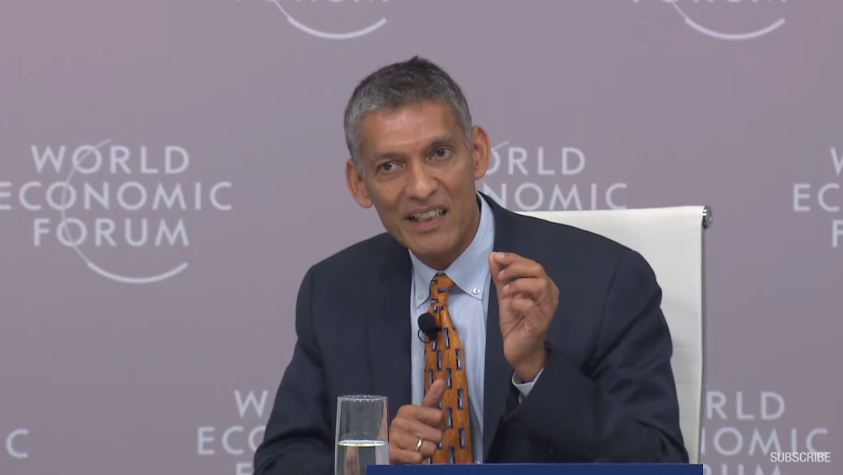
Governments discussed at the World Economic Forum "Summer Davos" meeting in China the potential for programmable Central Bank Digital Currencies (CBDCs) that could have expiry dates and restrictions on certain purchases deemed undesirable by the government, such as ammunition, drugs, or pornography. While some experts see the benefits of programmability, others express concerns about the potential dangers and impact on the integrity and independence of central banks. While central banks like the European Central Bank have stated that programmability would be left to commercial banks, some countries, like India and Nigeria, are exploring programmable CBDCs with different features and limitations. Programmability remains a key feature of CBDCs, offering governments and banks control over the use and flow of digital currency.
Brazil's central bank has authorized the largest local crypto exchange, Mercado Bitcoin, to participate in the pilot of the digital real, the country's central bank digital currency (CBDC). The consortium led by Mercado Bitcoin counts Mastercard, broker Genial, registrar Cerc, and financial software fintech Sinqia as partners. The CBDC is slated to be rolled out by 2024 by the central bank, which sees a digital currency as a way of increasing participation in the financial system.
Bernstein estimates that the tokenization opportunity could be as much as $5 trillion over the next five years, led by stablecoins and central bank digital currencies (CBDC), private market funds, securities and real estate. Currency tokenization, via stablecoins and CBDC, will see application in on-chain deposits and payments, with about 2% of global money supply to be tokenized over the next five years, which is about $3 trillion.
Tobias Adrian, a financial counselor at the International Monetary Fund (IMF), has proposed a trusted ledger system that works with central bank digital currencies (CBDCs) to enhance cross-border and domestic payments. The system would involve a trusted ledger to provide a secure and reliable electronic system where property rights can be recorded. The IMF suggests developing distinct and standardized digital representations for fiat currencies, allowing for interchangeability. The IMF’s XC platforms would instead allow users to freely select the currencies involved, while central banks maintain control over reserve allocation.
The International Monetary Fund (IMF) is developing a platform for digital central bank currencies (CBDCs) to enable transactions between countries. Meanwhile, the XRP army has discovered an IMF report from March 2023 in which Ripple is considered a potential problem solver. The report presents a model for a global marketplace for more efficient cross-border exchange of tokenized money, with Ripple's XRP being one of the three conceivable models for a marketplace. Ripple Labs' collaboration with the IMF goes back a few years, and the XRP army has dug up several videos in which Ripple was allowed to speak at IMF conferences in the past years.
The European Commission is set to propose a draft law on June 28 that would ban paying interest or surcharges for using a digital euro. The proposed central bank digital currency (CBDC) would have to be available for offline payments from day one, and users shouldn’t be able to program it to limit onward use. The level of privacy for offline, face-to-face use should be “comparable” to withdrawing banknotes at an ATM. The EU is one of several jurisdictions worldwide considering whether to issue fiat currency in digital form.