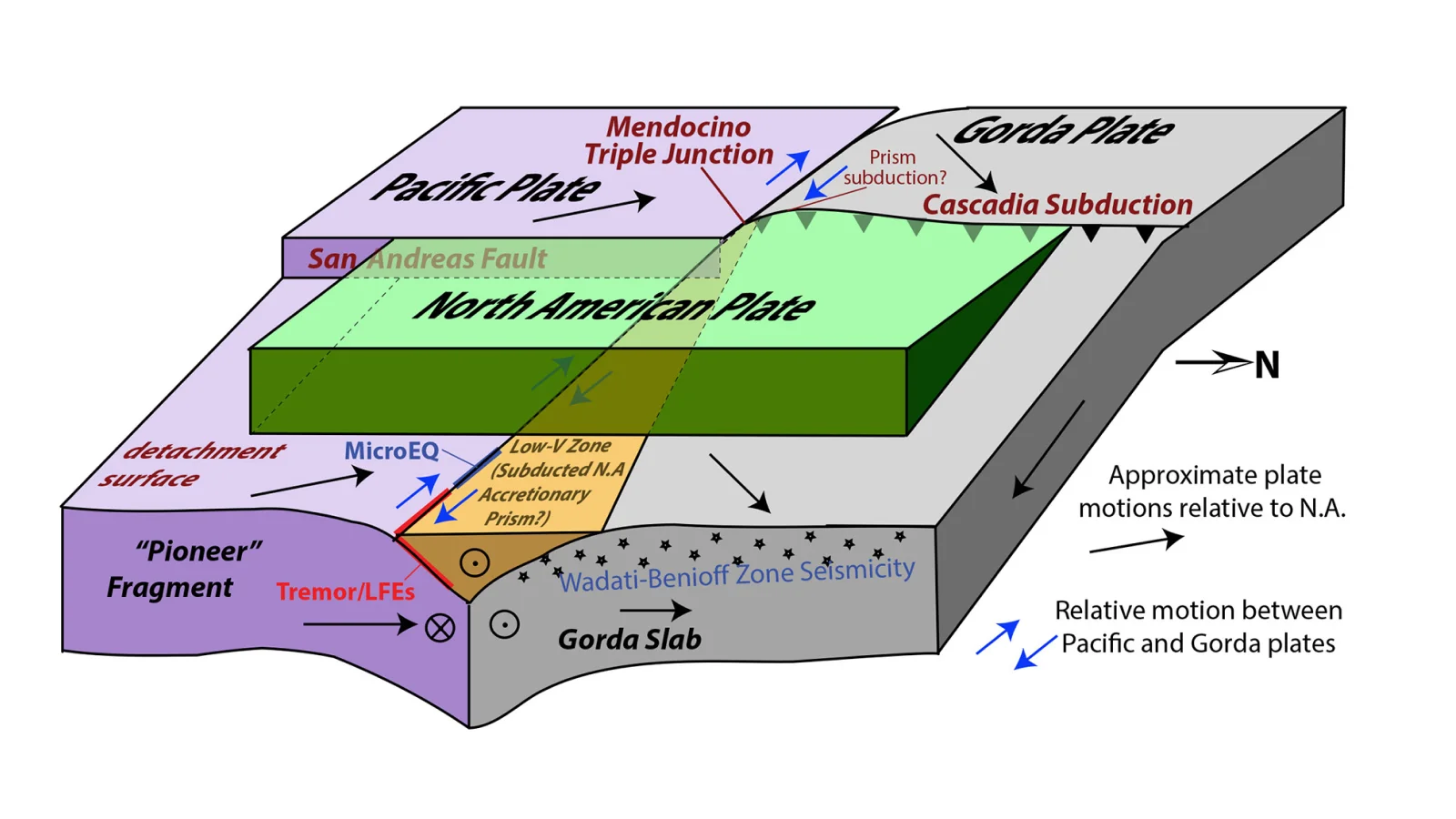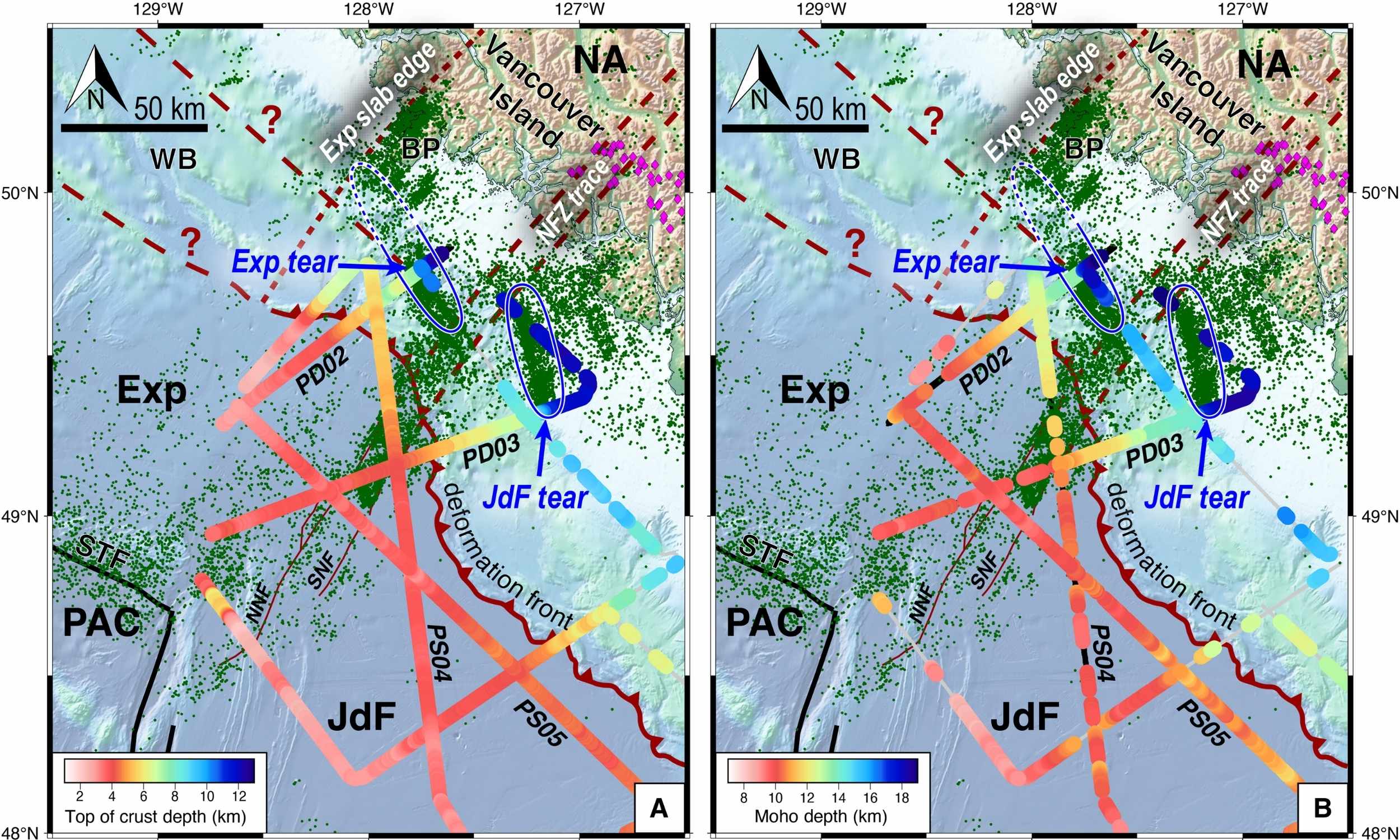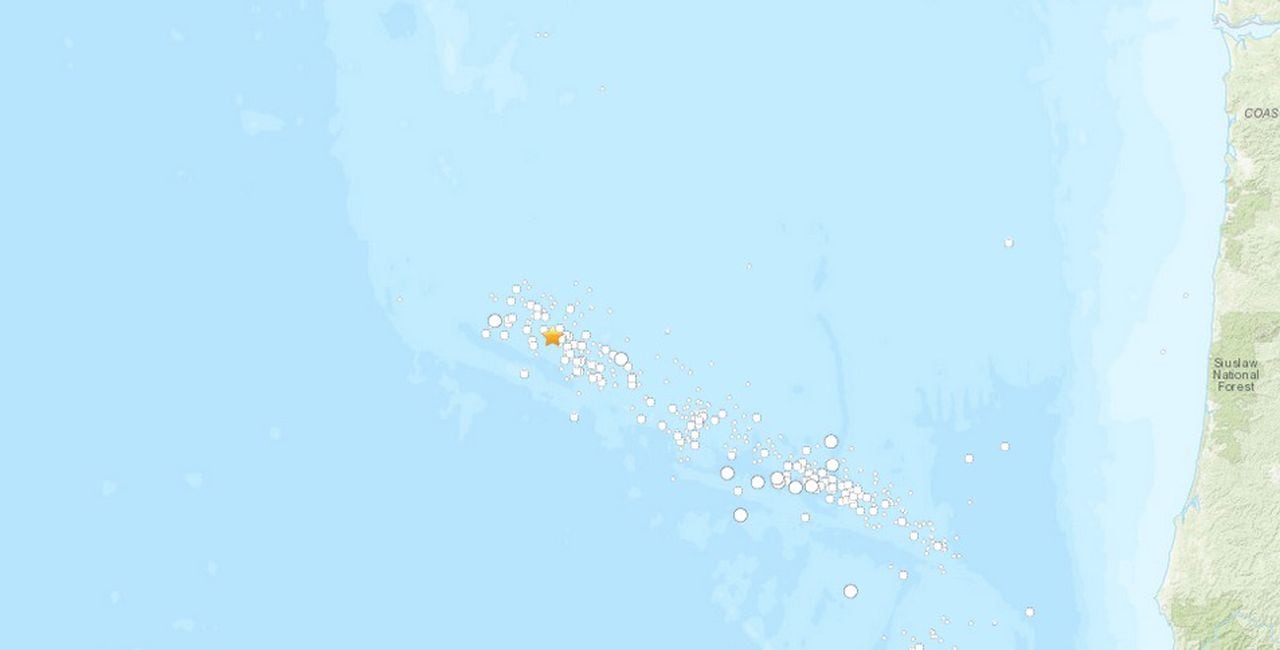
Scientists have mapped a deep tear forming beneath the seafloor off Vancouver Island in the Nootka Fault Zone, indicating a potential end to subduction in that region, which could alter seismic activity and the geological landscape of the Cascadia margin.
Scientists have discovered that a section of the oceanic crust beneath Vancouver Island is gradually breaking apart, providing direct evidence that subduction zones can disintegrate progressively rather than collapsing suddenly, which may influence future seismic risk assessments and our understanding of Earth's geological processes.
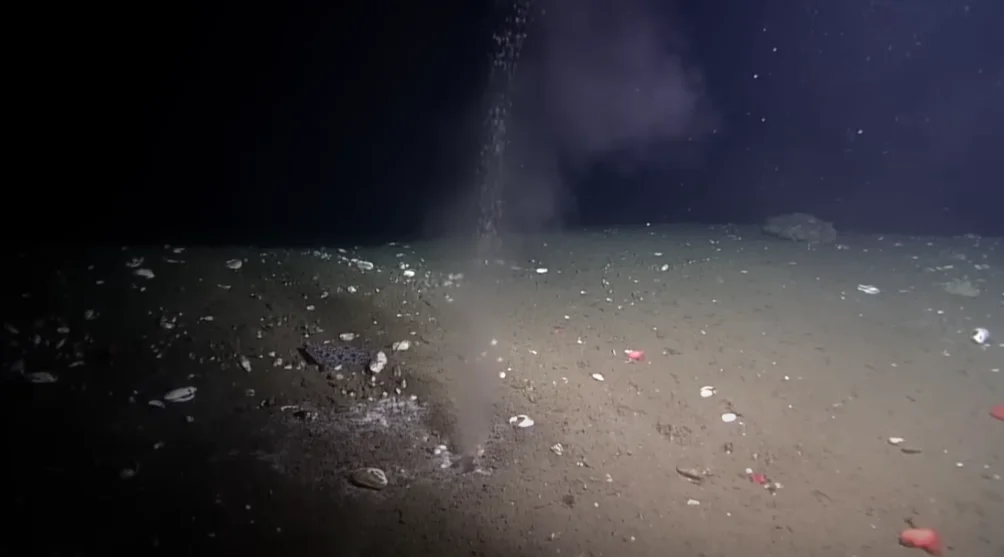
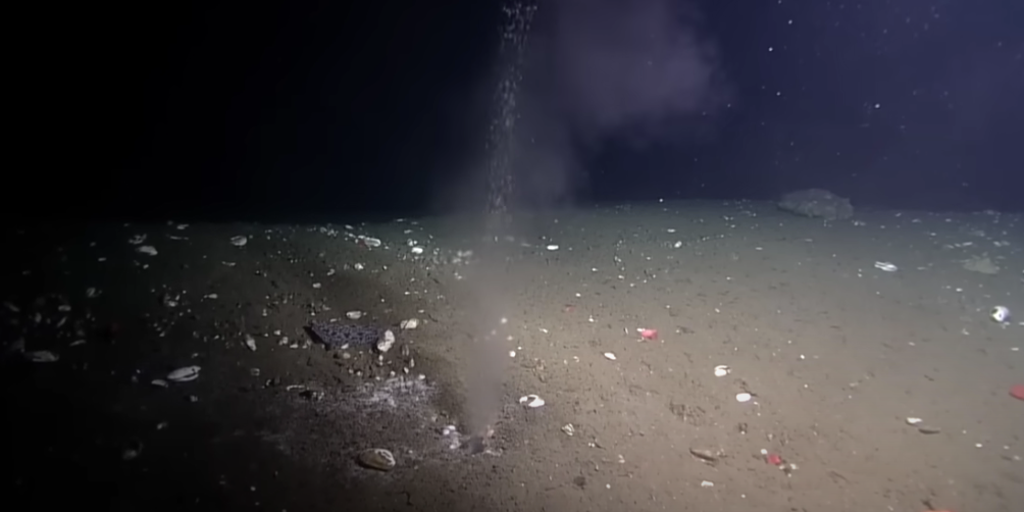
A spring called Pythia’s Oasis has been discovered off the Pacific Northwest coast, leaking water from beneath the seafloor through the Cascadia Subduction Zone, which could influence earthquake risk by acting as a lubricant between tectonic plates. Monitoring this leak is crucial for understanding and preparing for potential large earthquakes in the region.
Scientists have captured detailed seismic images revealing that the Cascadia subduction zone off Vancouver Island is gradually breaking apart in a step-by-step process, creating microplates and shedding light on how subduction zones end, which has implications for earthquake hazards in the Pacific Northwest.
A 1954 magnitude 6.5 earthquake in Northern California was likely caused by the Cascadia Subduction Zone, which is usually quiet but may rupture in segments, as suggested by new research analyzing old seismic records, helping to better understand regional earthquake hazards.
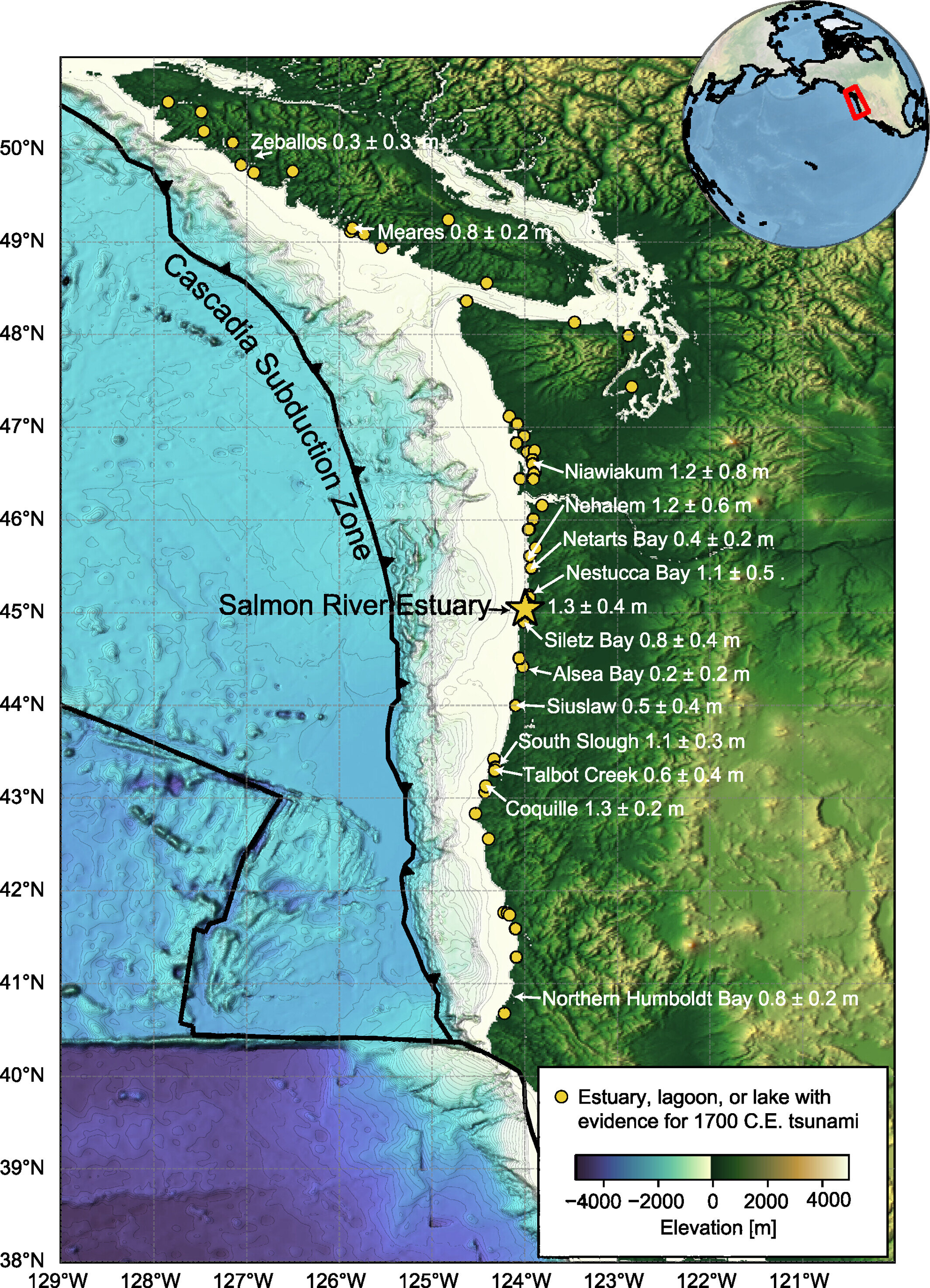
Scientists have used sediment cores and the Delft3D-FLOW model to test various earthquake models of the 1700 Cascadia event, finding that the earthquake likely caused at least 0.8 meters of subsidence and about 12 meters of fault slip. This study provides new constraints on the earthquake's size and offers insights into using tsunami deposit mapping and sediment transport models to better understand past and future seismic events.
The National Risk Index (NRI), a federal tool used to assess disaster risks and allocate funding, is failing to accurately account for the tsunami threat along the Cascadia Subduction Zone in the Pacific Northwest. The NRI assigns low or moderate tsunami risk ratings to areas that are projected to be severely impacted by tsunamis, putting vulnerable communities at risk. The index's flawed designations and data gaps have raised concerns among emergency managers and planners who rely on accurate risk assessments to prioritize disaster preparation and mitigation efforts. The discrepancies in the NRI's ratings highlight the need for improved tools and localized risk assessments to protect communities from the devastating impact of natural disasters.
Scientists have discovered warm liquid bubbling up from the seafloor about 50 miles off the Oregon coast, providing insight into the Cascadia Subduction Zone, a fault line known for producing massive quakes every several hundred years. The discovery gives scientists a better idea of how tectonic plates lock into place between large earthquakes and could improve earthquake forecasting down the line. The last major quake to strike the fault was on Jan. 27, 1700, and scientists determined entire forests died across hundreds of miles when the coasts of what are today Washington, Oregon and northern California suddenly dropped 4–6 feet, flooding the coastline with seawater amid an incredible tsunami.
Scientists have discovered warm liquid bubbling up from the seafloor about 50 miles off the Oregon coast, providing insight into the Cascadia Subduction Zone, a fault line known for producing massive quakes every several hundred years. The discovery gives scientists a better idea of how tectonic plates lock into place between large earthquakes and could improve earthquake forecasting down the line. While the discovery doesn't forebode an imminent quake, experts warn that the Pacific Coast could experience similar destructive impacts as the 9.0 quake that struck off the coast of Japan in 2011.
A warm liquid leak, called Pythia's Oasis, has been discovered by researchers from the University of Washington off the coast of Oregon in the Cascadia Subduction Zone, an area known for earthquakes and tsunamis. The fluid released from the fault zone is like a leaking lubricant, which could increase the chance of a damaging quake. However, the discovery could give researchers more insight into this unstable region.
University of Washington scientists have discovered that the Cascadia Subduction Zone, which runs along the Pacific coast from California to British Columbia, is leaking fluid, which is bad news for earthquake hazards. The fault is a 600-mile fault that is about 70-100 miles off the Pacific coast shoreline. It's been 232 years since the last large quake along the fault, and scientists say we're overdue. There is about a 37 percent chance that a megathrust earthquake of 7.1+ magnitude in this fault zone will occur in the next 50 years.
Scientists have discovered a leak in the ocean, named Pythia's Oasis, on top of the Cascadia Subduction Zone fault in the Pacific Northwest. The liquid spewing up from the leak could be a type of tectonic lubricant, and its loss could lead to friction between the oceanic and continental tectonic plates, causing them to lock and resulting in earthquakes. The Cascadia Subduction Zone is known for one of the largest earthquakes the world has ever experienced, making scientists concerned about the leak and what it might mean for the megathrust found in this area.
A hole in a 600-mile-long fault line in the Pacific, known as the Cascadia Subduction Zone, could trigger a catastrophic earthquake that would decimate cities along the northwestern US. The hole spewing hot liquid sits 50 miles off the shoreline of Oregon and could be the fuel the fault needs to unleash a magnitude-9 earthquake. The chemically distinct liquid is 'fault lubricant,' which allows plates to move smoothly, but without it, 'stress can build to create a damaging quake.' The Cascadia megathrust spans several major metropolitan areas, including Seattle and Portland, Oregon, but also touches parts of Northern California and Vancouver Island in Canada.
A hole in a 600-mile-long fault line in the Pacific, known as the Cascadia Subduction Zone, could trigger a catastrophic earthquake that would decimate cities along the northwestern US. The hole spewing hot liquid sits 50 miles off the shoreline of Oregon and may be leaking 'fault lubricant' that reduces stress on two plates. The leak was first observed in 2015, but a new analysis led by the University of Washington suggests the chemically distinct liquid is 'fault lubricant.' The Cascadia subduction zone is capable of unleashing a magnitude-9 earthquake in the Pacific Northwest.
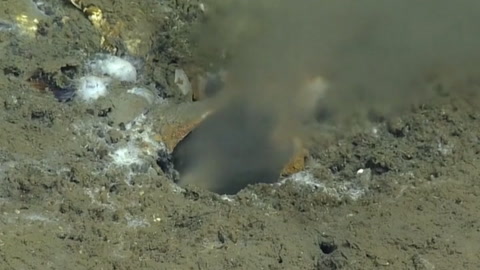
A hole in the seabed off the coast of Oregon, located on top of the Cascadia Subduction Zone fault, is leaking almost-fresh water that may be a sort of tectonic lubricant. Without it, the plate on which it sits could be in danger of shifting in a big way, potentially causing a major earthquake. This is the first known seafloor leak of its kind, though others could exist nearby without having been detected yet.