
Neuron-type aging clocks map vulnerability and unveil neuroprotective drug candidates
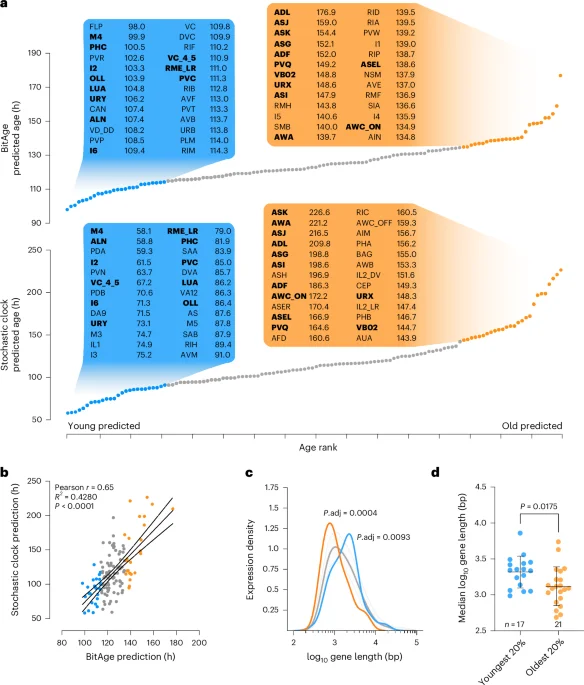
Aging clocks applied to single neuron types in C. elegans reveal neuron-type–specific biological ages, with environmentally exposed ciliated amphid neurons aging fastest and degenerating earlier. Reducing translation slows degeneration in fast-aging neurons, and neuronal aging patterns correlate with human brain aging while anticorrelating with known geroprotective interventions. An in silico CMAP screen identifies potential neuroprotective compounds, notably syringic acid and vanoxerine, while some agents (e.g., WAY-100635, Bay K8644) can be neurotoxic. The study suggests neuron-type aging trajectories can guide protective interventions and risk-factor identification for neurodegeneration across species.
Reading Insights
1
26
96 min
vs 97 min read
100%
19,249 → 88 words
Want the full story? Read the original article
Read on Nature