US stock indexes fell as investors reacted to Federal Reserve Chair Jerome Powell's comments, which reduced the likelihood of a December rate cut. Powell emphasized the strength of the US economy, leading to a drop in the probability of a 25-basis-point rate cut from 80% to less than 60%. Bond yields rose, with the 2-year yield increasing by 7 basis points. Economic data, including a rise in retail sales, also influenced market expectations. Major indexes were down, with the S&P 500, Dow Jones, and Nasdaq all experiencing declines.
The US stock market opened lower as the Dow Jones Industrial Average fell nearly 400 points and bond yields rose to 2024 highs, signaling concerns about interest rate cuts. Healthcare insurer stocks tumbled after US regulators failed to boost payments for private Medicare plans, with Humana and CVS shares dropping. Tesla stock stumbled after delivering fewer cars than expected in the first quarter. Rising gas prices are impacting consumer spending, with oil hitting a five-month high and gas prices up $0.16 per gallon from a month ago. Additionally, new data from the Bureau of Labor Statistics showed steady job openings in February while hiring picked up slightly.
U.S. Treasury yields surged following a report of stronger-than-expected job creation in December, reducing market expectations for Federal Reserve interest rate cuts. The two-year Treasury yield spiked nearly 10 basis points to approximately 4.48%, while the 10-year note increased by about 7 basis points to 4.07%. This rise in yields reflects a selloff in the bond market as investors adjust to the likelihood of a more hawkish Fed stance in response to robust employment data.
The Nasdaq Composite fell for the fifth consecutive day, and the S&P 500 also saw declines, continuing a weak start to 2024 despite a strong end to the previous quarter. Bond yields increased as new data indicated a strong labor market, with the 10-year U.S. Treasury note yield rising to 3.990%. Investors are anticipating the monthly nonfarm payrolls report for further market direction. Mixed performances were seen in overseas markets, and economic data showed higher-than-expected private sector job growth and low weekly jobless claims, suggesting a resilient labor market.
U.S. stocks declined and bond yields increased as expectations for rapid interest rate cuts diminished following new jobs data and ahead of the Federal Reserve meeting minutes. The Dow Jones, S&P 500, and Nasdaq all saw drops, with tech stocks being notably affected. Job openings in November fell to the lowest since March 2021, signaling a cooling labor market. Real estate and tech sectors were among the hardest hit, while oil prices surged due to supply concerns. Investors are now less confident in a March rate cut, with the CME FedWatch tool indicating a 75% chance, down from 90% a week earlier.
Apple's stock is experiencing a decline amidst rising bond yields and pressures within the technology sector. The company faces the challenge of demonstrating its competitiveness in the rapidly evolving field of artificial intelligence. Investors are closely watching Apple's strategic moves to overcome these industry headwinds and improve its stock performance.
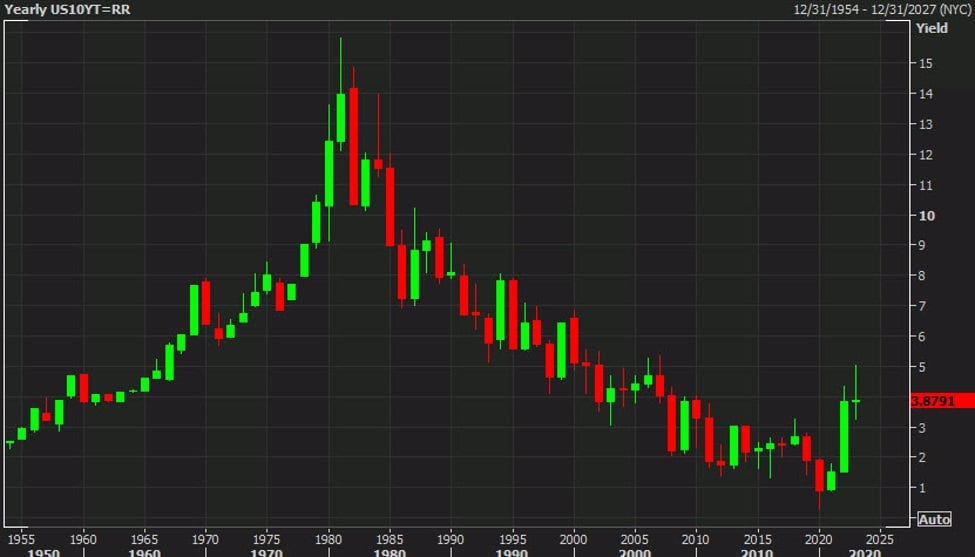
Despite a year marked by significant fluctuations, the US 10-year Treasury yield ended 2023 nearly where it started, closing at 3.87% compared to the previous year's 3.83%. The yield experienced a low of 3.25% during a regional banking crisis in the spring and a peak of 5.02% during an October debt rout, indicating potential volatility ahead. Other notable changes in the bond curve include a decrease in two-year yields by 11.3 basis points and an increase in 30-year yields by 9 basis points over the year.