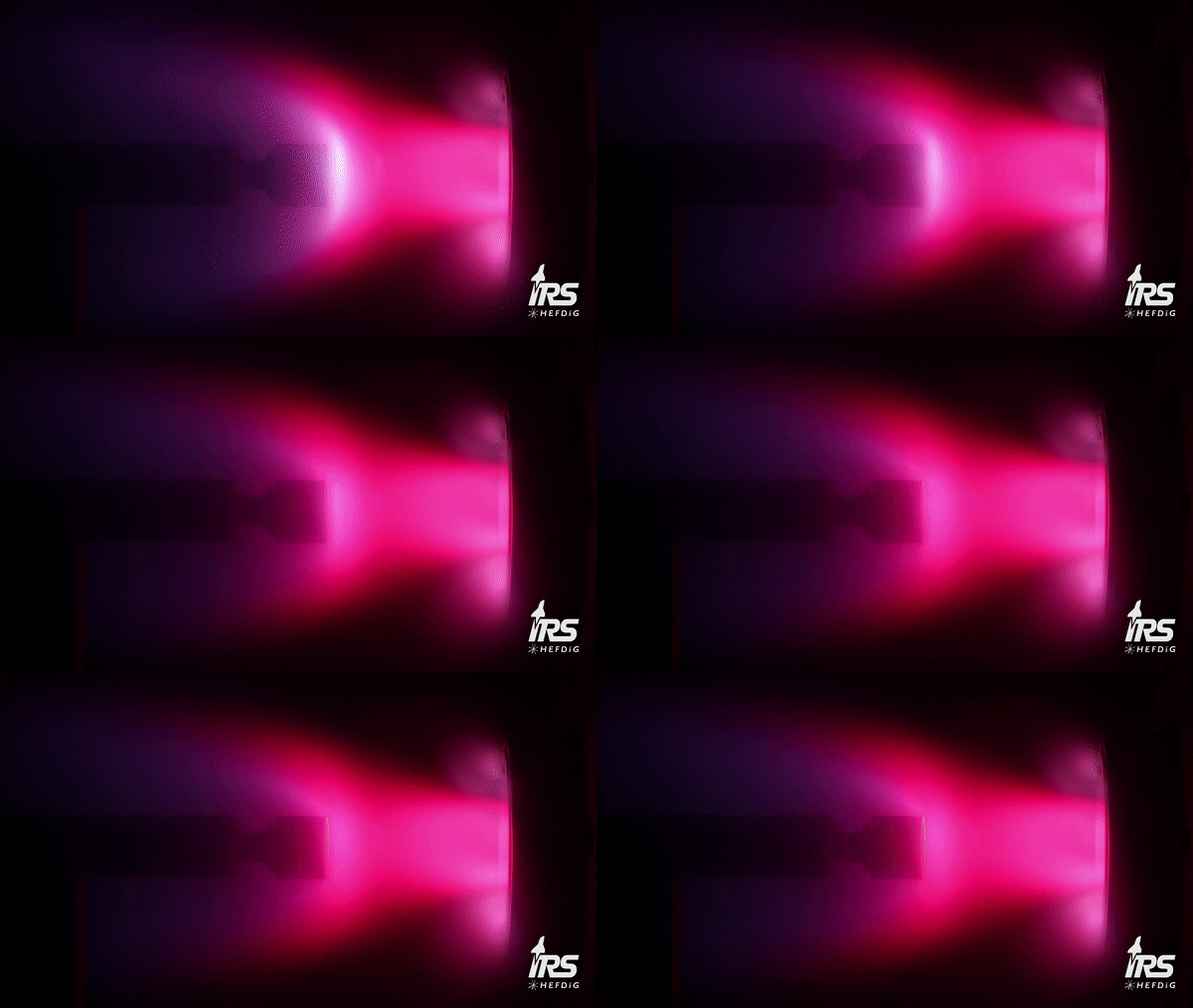
Scientists have simulated the atmospheric conditions of Uranus and Neptune using high-temperature plasma tunnels in order to design a probe that can withstand the extreme pressures and temperatures of these ice giants. The lack of exploration of Uranus and Neptune has left many knowledge gaps, and scientists are eager to send a mission to study these mysterious outer planets. By replicating the atmospheric compositions and velocities, researchers can develop sensors to measure the ice giants' atmospheres as they plunge into the depths of Uranus.
European researchers have successfully recreated the atmospheric compositions of Uranus and Neptune in order to simulate the flight of proposed atmospheric probes. The tests, conducted in the UK and Germany, achieved speeds of up to 19 km/s, but further work is needed to reach the actual velocities that probes would attain. Both NASA and ESA are considering future missions to these gas giants, and designing a high-performance thermal protection system is a key challenge due to the high pressures and temperatures involved. The project is a joint effort supported by the ESA's General Support Technology Programme.