Tag

Continental Formation

All articles tagged with #continental formation

science1 year ago

"Scientists Uncover Origins of Earth's Indestructible Continents"

Researchers at Penn State have discovered that ancient weathering processes played a crucial role in the formation and stabilization of Earth's cratons, the most indestructible parts of the planet's crust, during the Neoarchaean era. This weathering released heat-producing elements that, when buried and heated, led to the differentiation and stabilization of the continental crust, explaining the resilience of cratons and their importance in hosting valuable mineral deposits.

science1 year ago

"Discovery of 3.75 Billion Year Old Earth Crust Segment"

Researchers have discovered evidence of an ancient segment of Earth's crust, dating back 3.75 billion years, hidden in the mineral zircon found in a Finnish outcrop. This discovery suggests that the foundation of Denmark and Scandinavia originated from Greenland and sheds light on the unique presence of life on Earth compared to other planets. The study also challenges previous assumptions about the formation of continents and adds to the understanding of how continents evolved, providing important clues in the mystery of continental formation across the Earth.

science1 year ago

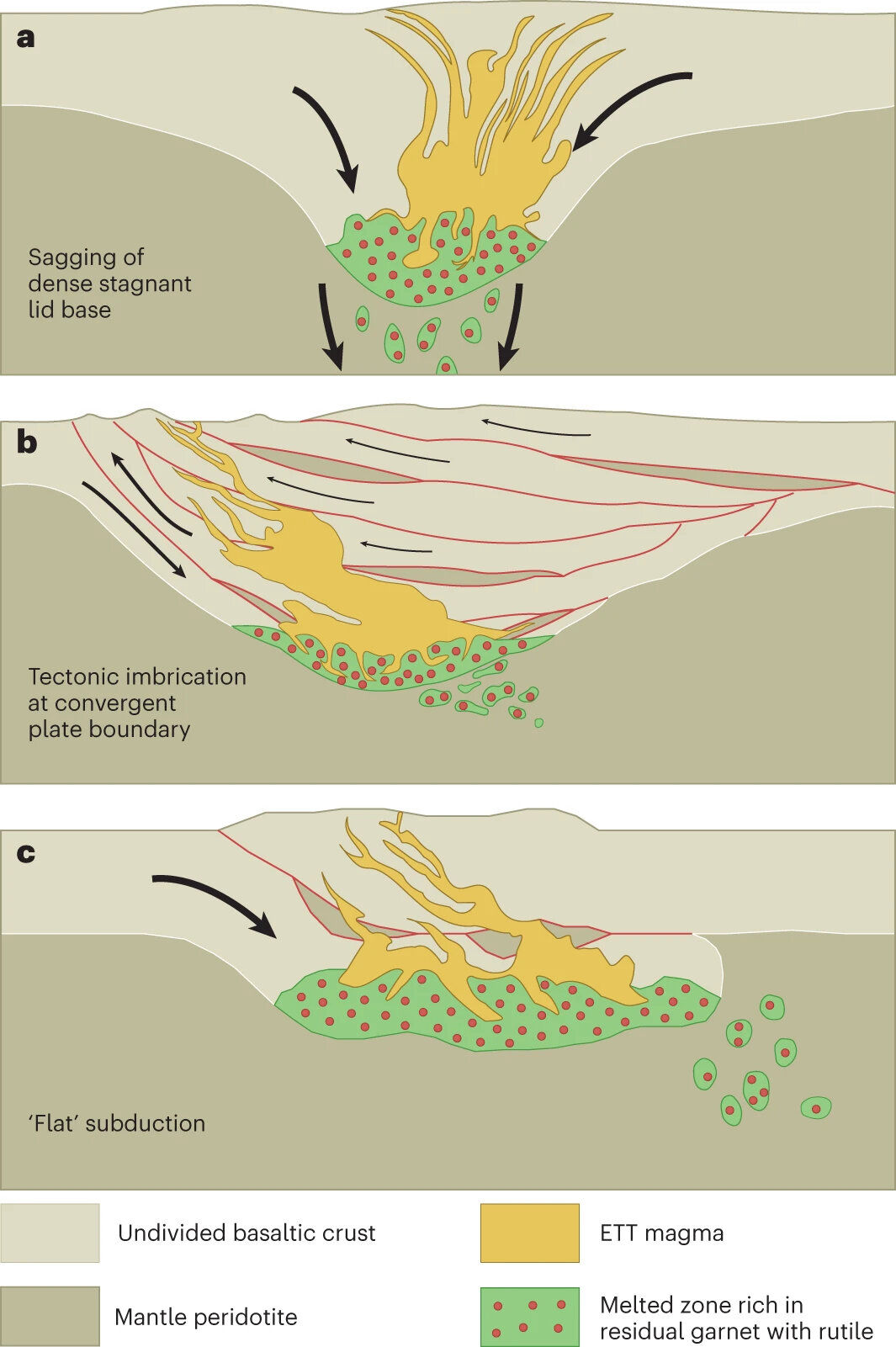
Unveiling the Surprising Origins of Earth's First Continents

A new study from the University of British Columbia suggests that the first continents formed through the magmatism of Earth’s current crust’s precursor, known as TTGs, ruling out the need for meteorites or subduction zones. The research indicates that TTG rocks formed from a slow burial, thickening, and melting of precursor crust, disproving the idea that they could’ve formed from subduction zones. This discovery sheds light on the mysterious origin of Earth’s continents during the Archean Eon, challenging previous theories and providing new insights into the formation of the planet's early land masses.

earth-science2 years ago

The Slow Formation of Earth's First Tectonic Plates: A Billion-Year Study

A new study from Pennsylvania State University challenges existing theories about the rapid formation of tectonic plates on Earth. By analyzing the chemical composition and ages of over 600,000 samples of the oldest known rocks, researchers developed a unique method to determine how igneous rocks were reworked and reformed over time. The study suggests that the formation of continents and tectonic plates started around 4 billion years ago and continued for one billion years, contradicting the idea of a sudden shift to tectonic activity 3 billion years ago. However, due to limited data covering the first billion years of Earth's history, further research is needed to fully understand crustal growth.

science2 years ago

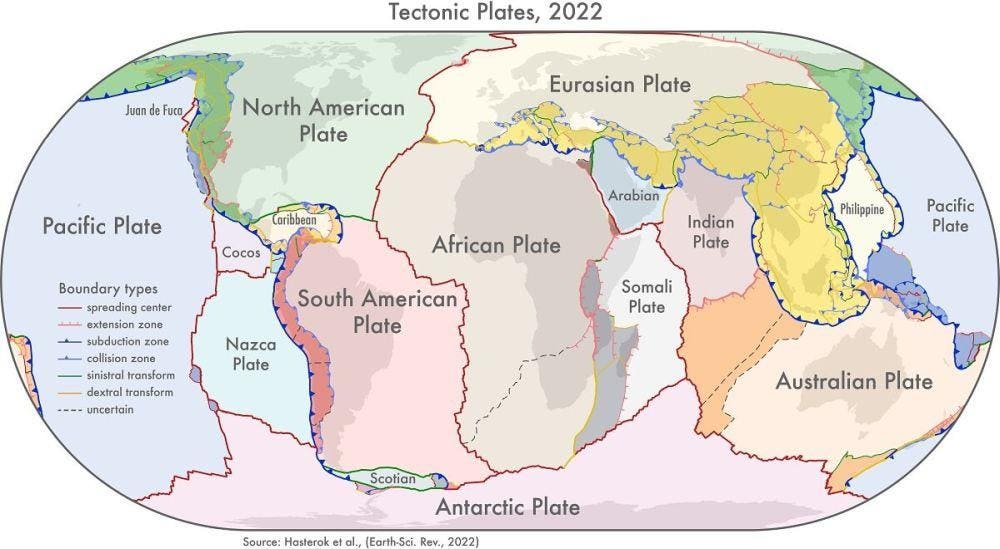
The Role of Plate Tectonics in the Formation of Earth's First Continents

New research suggests that plate tectonics, even in a primitive form, may have existed 4 billion years ago and played a role in the formation of Earth's continental crust. The study conducted high-pressure-temperature melting experiments on primitive oceanic plateau basalts and found that continental crust could not form at pressures below 1.4 GigaPascals (GPa), indicating that such magmas formed during convergent subduction zones. The researchers propose that gases released from volcanic activity during this time, such as carbon monoxide and methane, may have contributed to the initiation of life on Earth. This study also provides insights into the role of plate tectonics in the formation of continental crust on other planets.