New research confirms that tiny fossils of Liaoningosaurus paradoxus are of baby ankylosaurs, not miniature adults, providing rare insights into early armor development and growth in armored dinosaurs, including the discovery of the first hatchling ankylosaur.
A new study reveals that the ancient ankylosaur Spicomellus afer, dating over 165 million years, had unprecedented armor and tail weaponry, indicating complex evolution of defensive features earlier than previously thought, and highlighting the significance of African dinosaur fossils.
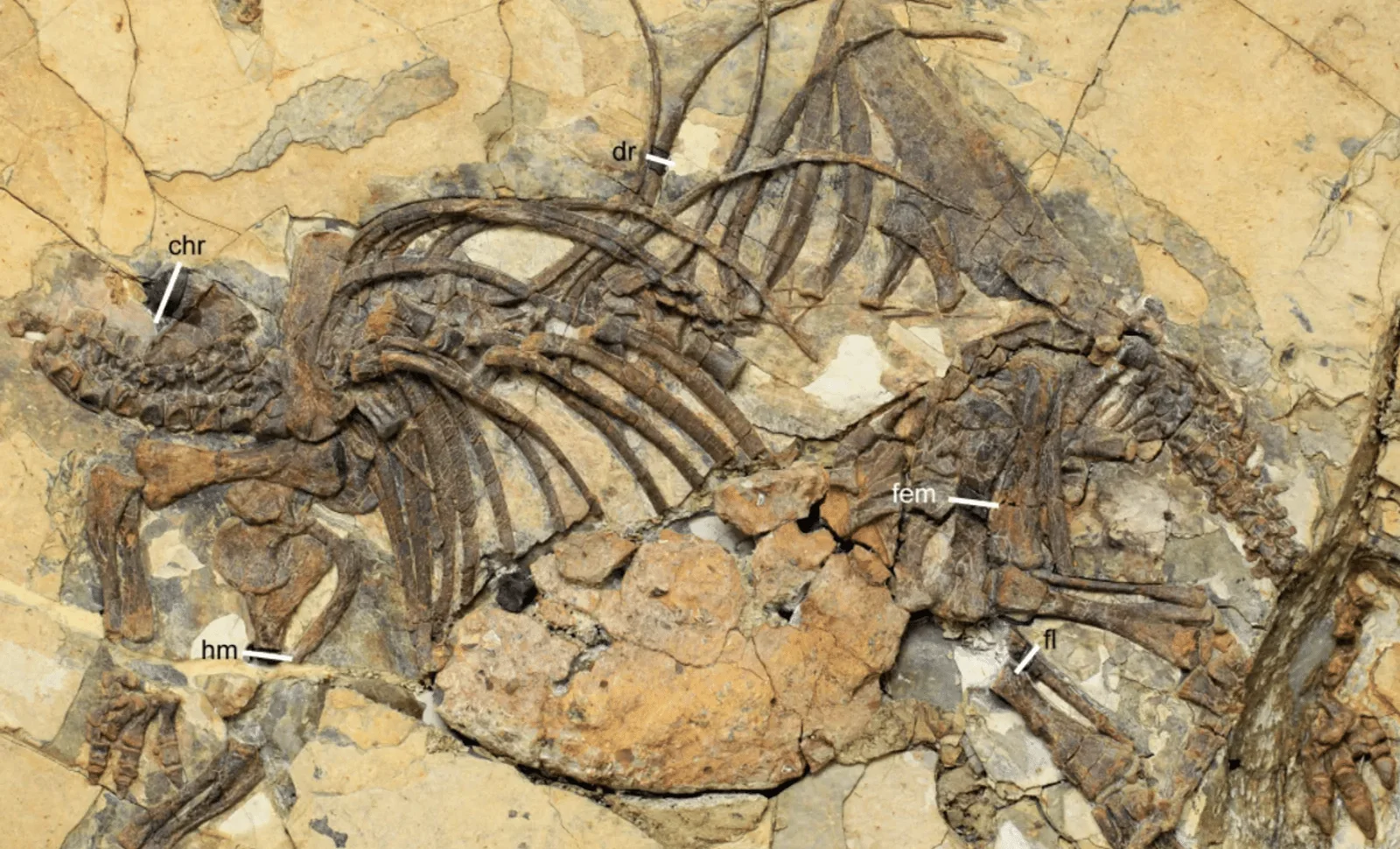
Scientists in China have discovered the first hatchling fossil of Liaoningosaurus paradoxus, a small ankylosaur, challenging previous beliefs about its size and development. The fossil provides new insights into the early life stages of armored dinosaurs, their growth patterns, and raises questions about their habitat and evolution.
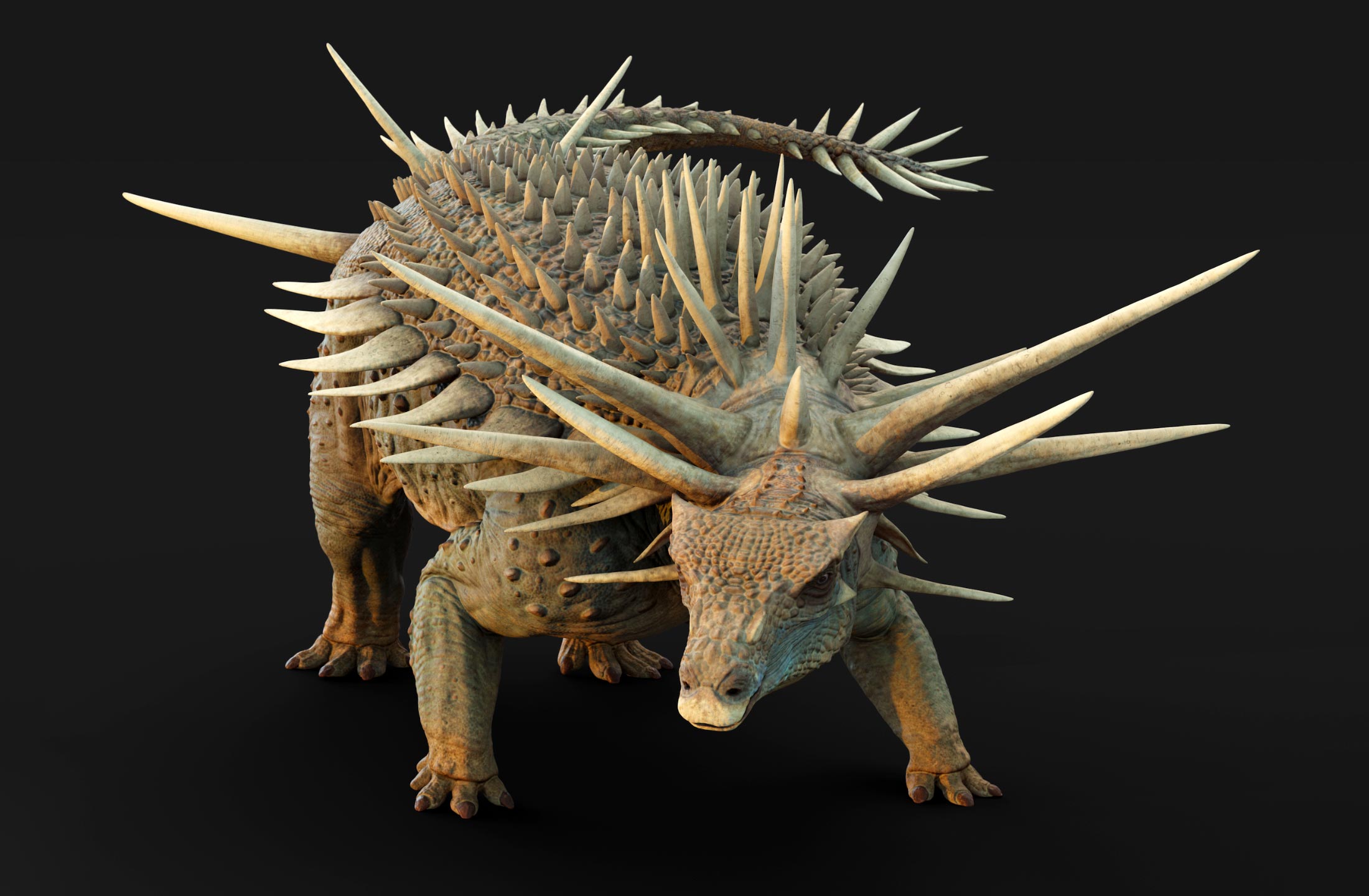
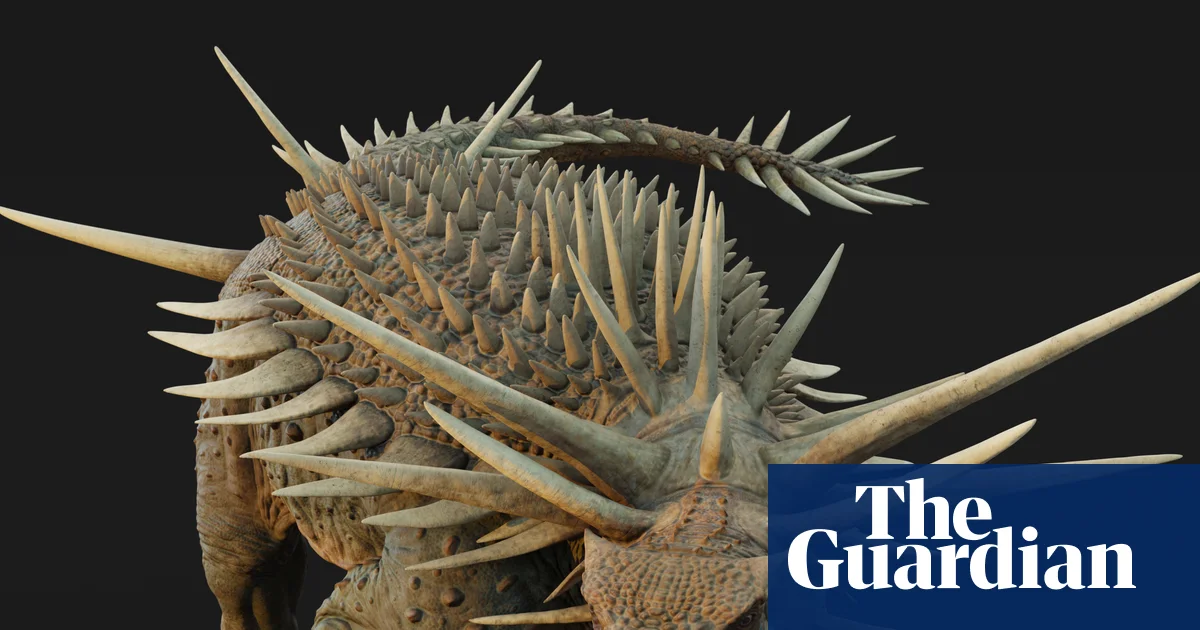
The oldest known ankylosaur fossil, Spicomellus afer, was discovered in Morocco, revealing an unusually spiked and elaborate armor that challenges existing theories of ankylosaur evolution, and suggesting tail weaponry evolved much earlier than previously thought.
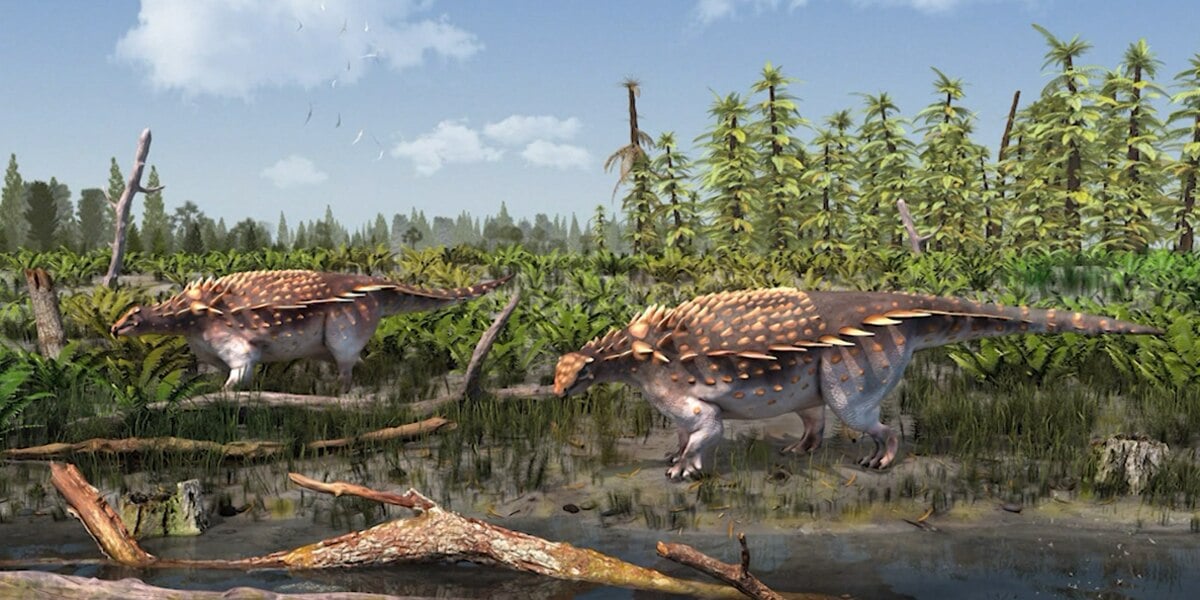
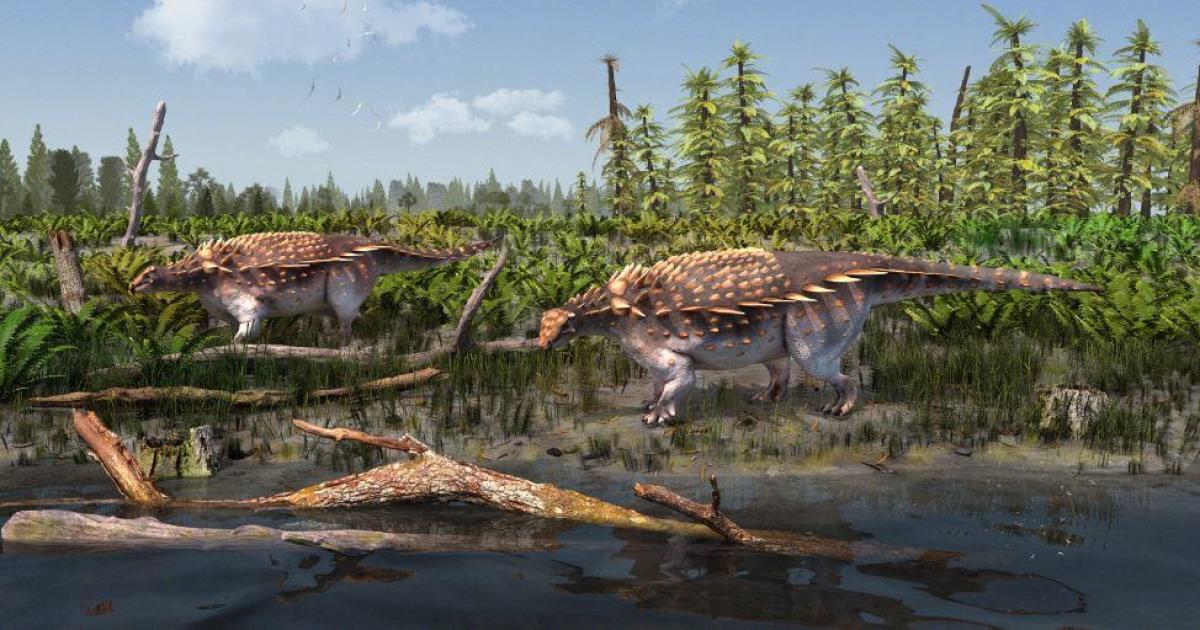
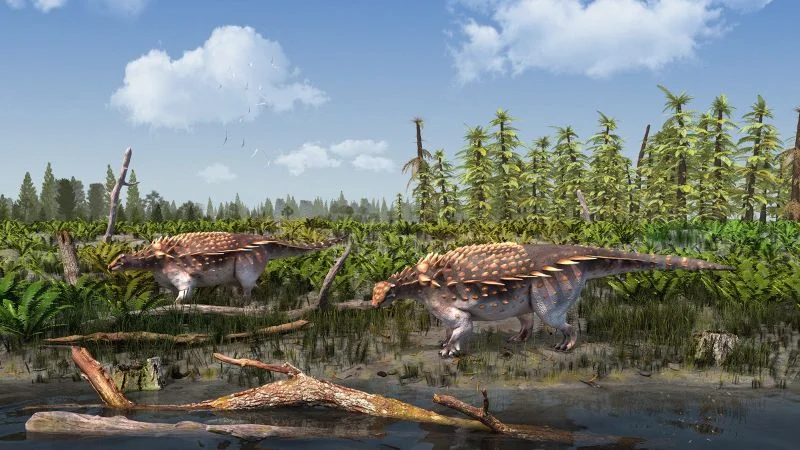
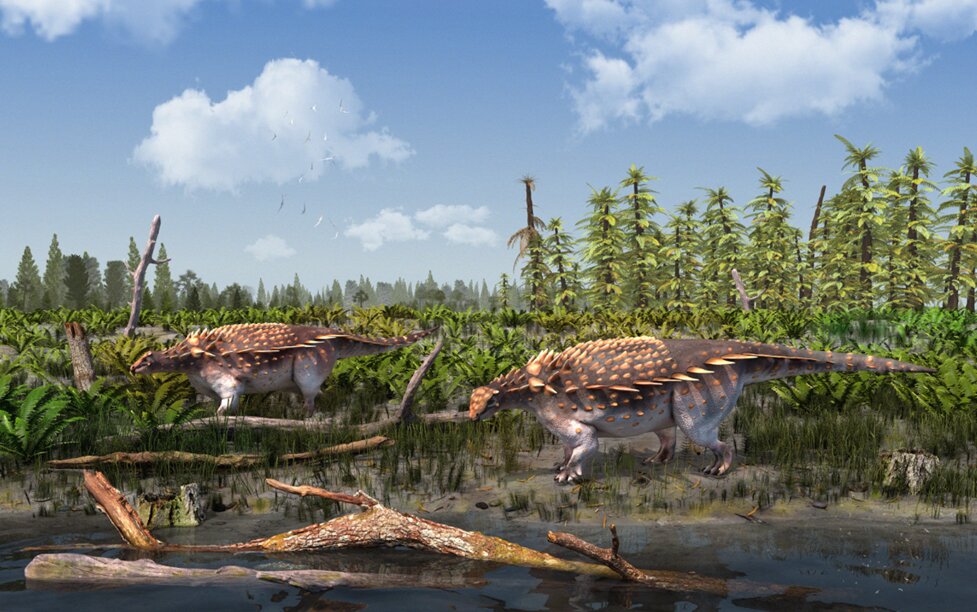
Scientists have discovered a new species of dinosaur, Vectipelta barretti, on the Isle of Wight, the first armored dinosaur to be found there in 142 years. The dinosaur belongs to the ankylosaur family and dates back to about 125 million years ago. The discovery broadens scientists' understanding of the diversity of species living in what is now the UK over a hundred million years ago. The partial remains of the dinosaur were excavated in the 1990s and brought to the Dinosaur Isle Museum where scientists began working on it.
A new species of armored dinosaur, named Vectipelta barretti, has been discovered on the Isle of Wight, off the coast of England. This is the first armored dinosaur found on the island in 142 years and is part of the Ankylosaur genus. The dinosaur would have been roaming the Earth during the early Cretaceous period and parts of its fossils will be displayed at the Dinosaur Isle Museum this summer.
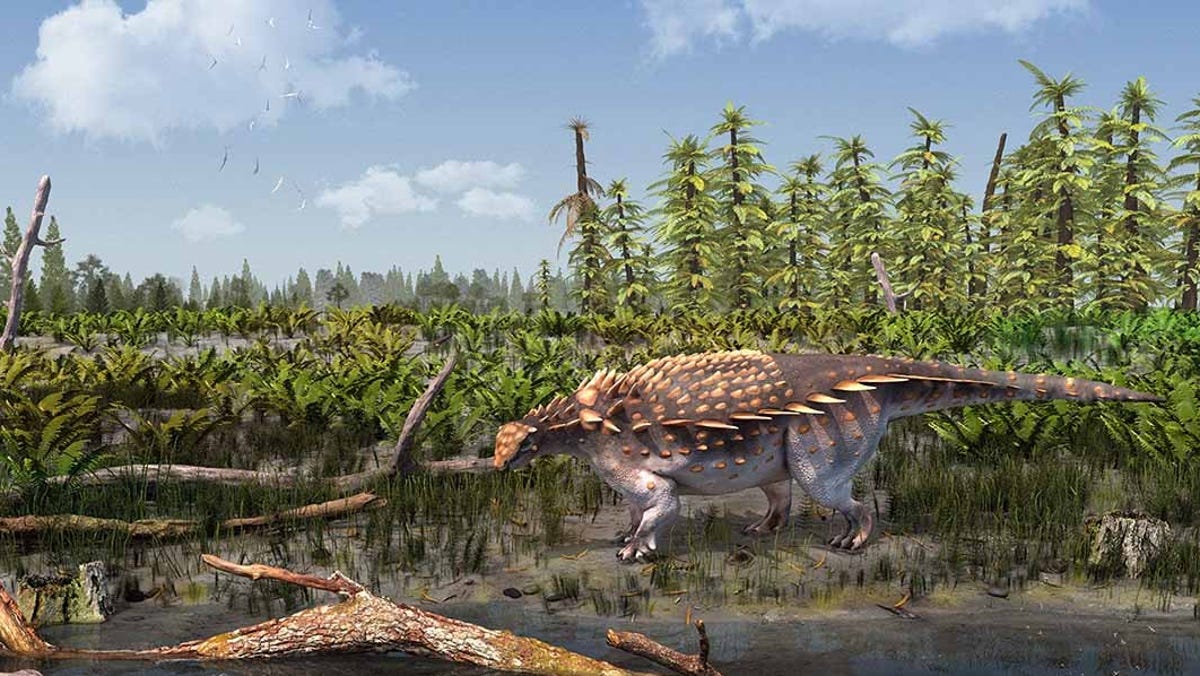
Fossils of a new species of dinosaur, named Vectipelta barretti, have been discovered on the Isle of Wight, UK. The herbivorous dinosaur had blade-like spiked armor and is the first armored dinosaur of the Ankylosaur family to be discovered on the island in 142 years. The discovery sheds new light on the diversity of species that lived in the region during the Jurassic period and may offer insight into how the dinosaurs went extinct. The fossils will be displayed at the Isle of Wight's dinosaur museum over the summer.
A new species of armored dinosaur, Vectipelta barretti, has been discovered on the Isle of Wight, the first in 142 years. The dinosaur lived during the Early Cretaceous period, and its discovery sheds light on ankylosaur diversity within the Wessex formation and Early Cretaceous England. The team's analysis showed that Vectipelta barretti is most closely related to Chinese ankylosaurs, suggesting dinosaurs were able to move between Asia and Europe in the Early Cretaceous. The dinosaur is named after Professor Paul Barrett, who has worked at the Natural History Museum for 20 years.
A new species of armored dinosaur, Vectipelta barretti, has been discovered on the Isle of Wight and named after Prof Paul Barrett of the Natural History Museum. The fossilized remains show differences from the previously known ankylosaur from the Isle of Wight, Polacanthus foxii, and suggest that dinosaurs moved freely from Asia to Europe in the Early Cretaceous. The discovery sheds light on ankylosaur diversity within the Wessex formation and Early Cretaceous England, which is crucial to understanding if a mass extinction occurred at the end of the Jurassic and how life recovered.
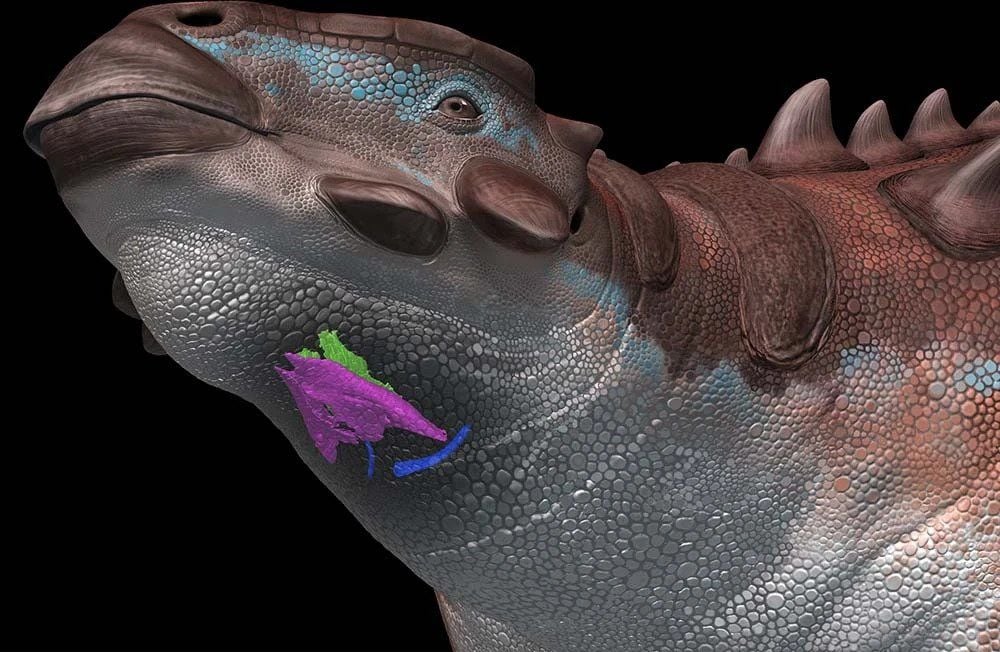
An 80 million-year-old fossilized voice box belonging to an armored dinosaur, Pinacosaurus grangeri, was discovered in Mongolia in 2005. A new analysis suggests that the creature's vocalizations may have been far more subtle and melodious than its previously assumed crocodilian grunts, hisses, rumbles, and roars. The researchers found that P. grangeri had a very large cricoid and two long bones that were used to adjust its size, turning the P. grangeri voice box into a vocal modifier. This anatomical setup likely meant that the ancient herbivore was capable of making a large array of sounds, including rumbles, grunts, roars, and possibly even chirps.