Tag

Amyloid Proteins

All articles tagged with #amyloid proteins

health1 year ago

"Potential Transmission of Alzheimer's Through Bone Marrow and Stem Cell Transplants"

A new study suggests that Alzheimer's disease may have systemic origins and can be accelerated through bone marrow transplants from donors with familial Alzheimer's to healthy mice. The research highlights the potential transmission of the disease via cellular therapies and emphasizes the need for screening donors for Alzheimer's markers to prevent inadvertent disease transfer. This systemic perspective on Alzheimer's disease underscores the importance of cautious screening in transplants and blood transfusions to avoid its potential transmission.

health-medicine1 year ago

"Setbacks in Alzheimer's Drug Approval: Understanding the Delay of a Promising Treatment"

The much-hyped Alzheimer's drug, donanemab, faces approval delays as the FDA requests further scrutiny of its safety and efficacy. While the drug showed a 35% cognitive and functional decline reduction in a clinical trial, concerns about potential side effects, including brain swelling and hemorrhaging, have arisen. Experts question the clinical relevance of the drug's effects and its high cost, while emphasizing the need for broader approaches to tackling Alzheimer's, including addressing modifiable risk factors and societal structures.

health2 years ago

"Promising Alzheimer's Vaccines Advance to Clinical Trials, Building on Success of Breakthrough Treatments"

Several Alzheimer's vaccines are entering clinical trials as breakthrough treatments that remove toxic proteins from the brain have shown success in fighting the disease. Clinical trials are underway or completed for at least seven vaccines designed to harness the immune system to rid the brain of disease-related proteins. The renewed interest in Alzheimer's vaccines follows a promising first attempt more than 20 years ago that was abandoned due to safety concerns. The success of recent treatments has revived interest in vaccines as a cheaper and easier-to-administer option for millions of people. While vaccines are still in the early stages and will require large trials, they could offer a respite from expensive infusion treatments and expand access to Alzheimer's treatment globally.

health2 years ago

Promising Safety Results for Grifols' Alzheimer's Vaccine in Phase II Study

An experimental Alzheimer's vaccine that targets amyloid proteins showed promising safety results in a Phase II study involving patients with mild cognitive impairment or mild Alzheimer's disease. After a year, the vaccine demonstrated a maximum 38% slowing of disease progression compared to placebo, as measured by the Mini-Mental State Examination. However, subsequent reviews at 18 and 24 months showed an 18% slowing of disease, which was not statistically significant. The vaccine's efficacy in treating Alzheimer's remains unclear.

health2 years ago

Intermittent Fasting: A Promising Approach to Fight Alzheimer's

A study conducted on mice by researchers at the University of California San Diego School of Medicine has found that time-restricted feeding, a form of intermittent fasting, can improve circadian disruptions associated with Alzheimer's disease. Mice following a time-restricted eating regimen showed improved memory and reduced accumulation of harmful amyloid proteins in the brain. These findings suggest that lifestyle changes, such as intermittent fasting, could offer a new care strategy for Alzheimer's patients. The researchers believe that targeting circadian disruptions could be a promising approach for Alzheimer's treatments, and they plan to conduct human clinical trials based on these findings.

health2 years ago

Blood Vessel Changes Linked to Alzheimer's Disease

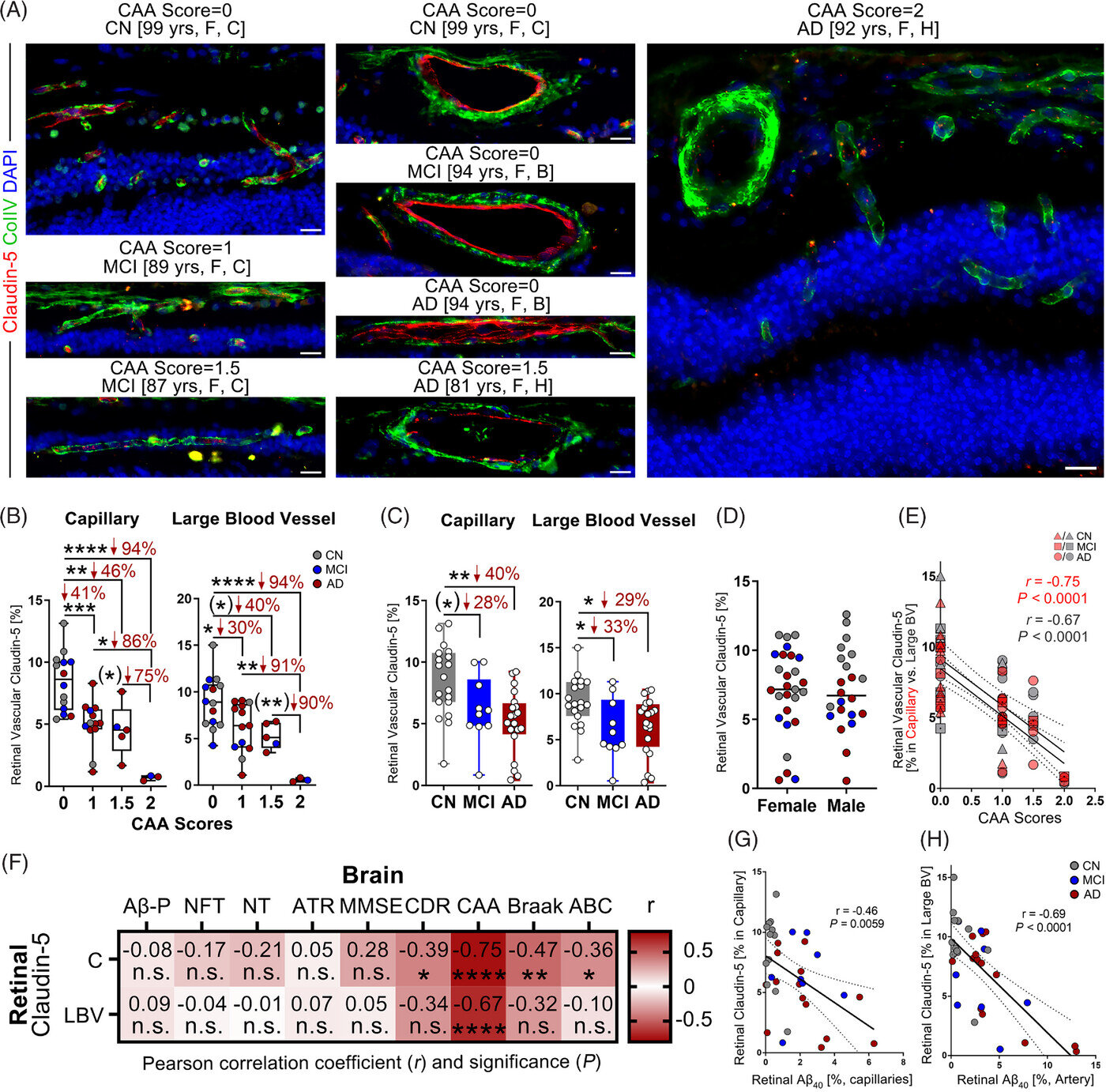
Blood vessel abnormalities in the eye are a major factor in the progression of Alzheimer's disease, according to research from Cedars-Sinai investigators. These changes correspond to changes in the brain, offering a new possibility for early diagnosis. Investigators compared blood vessels in retinas collected from 24 human donors with Alzheimer's disease, 10 donors with mild cognitive impairment and 27 with normal cognition. In patients with Alzheimer's disease and mild cognitive impairment, they found one of the earliest signs of Alzheimer's disease to date: disruption of the blood-retinal barrier, where tightly joined cells prevent harmful substances from entering the retinal tissue.