John Deere's profits and sales are declining due to tariff instability and the China-U.S. trade war, leading to layoffs and cautious customer spending, although potential benefits from recent tax breaks and domestic manufacturing resilience may offer some relief.
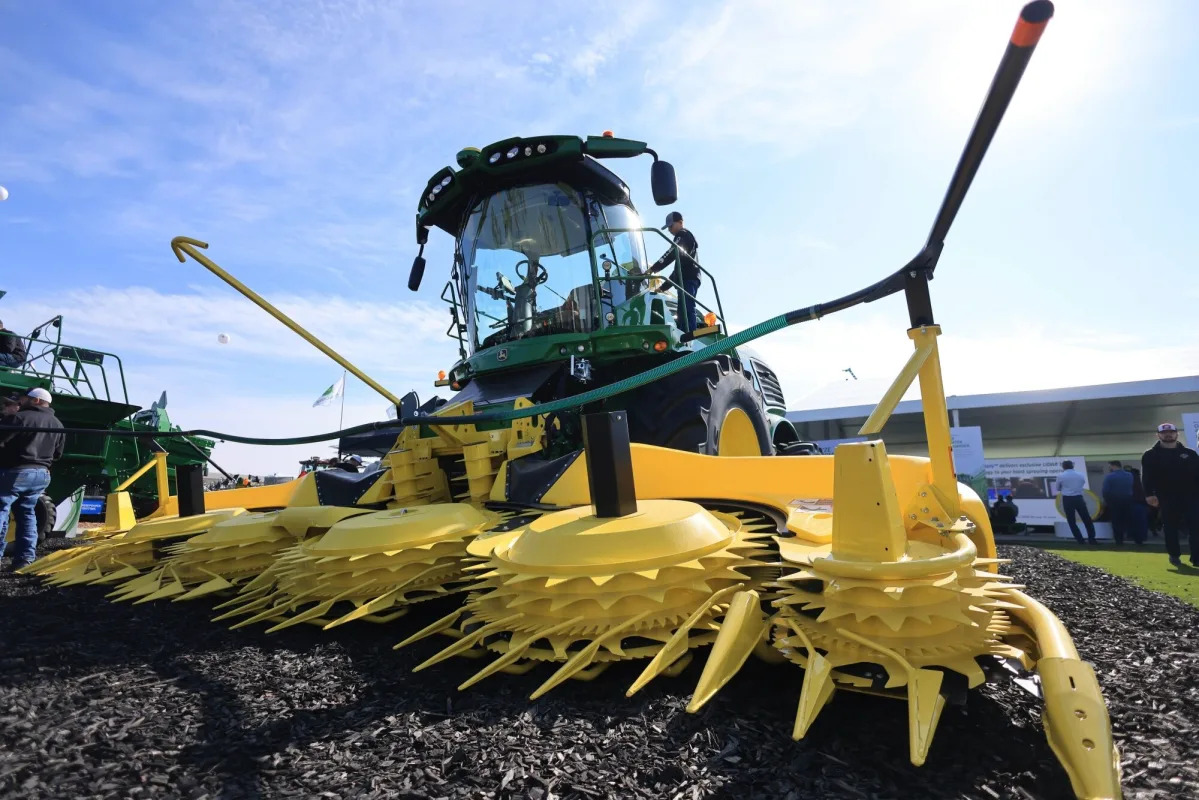
Deere & Co. has reduced its annual profit outlook due to falling crop prices, impacting farmers' ability to purchase equipment. The company's net income for the fiscal year is now expected to be between $7.5 billion and $7.75 billion, down from its initial outlook. Deere's shares fell as much as 5.5% following the announcement. The company cited weakening agricultural demand in Europe as a primary driver for the updated outlook and is counting on product advancements, such as AI-powered crop sprayers and autonomous tractors, to attract customers.
French farmers are planning to "siege the capital" of Paris, rejecting government concessions related to European Union climate measures and protesting against rising food prices due to the war in Ukraine. The farmers aim to paralyze the country and put pressure on the government, seeking better remuneration, less red tape, and protection against cheap imports. The movement has spread across France, with protesters using tractors to block highways and slow traffic, while also dumping agricultural waste at government offices. The protests reflect a global food crisis exacerbated by the war in Ukraine, with farmers facing higher costs and over-regulation in the massively subsidized farming sector.
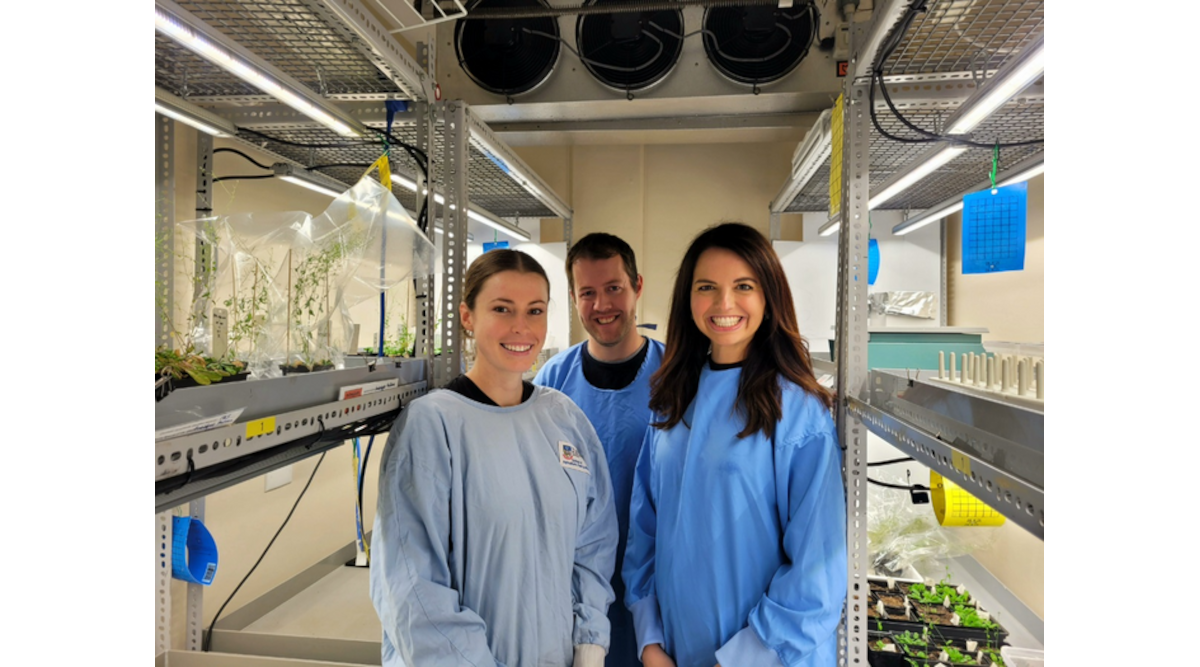
A molecule that was initially developed as an antibiotic to treat tuberculosis but failed to progress out of the lab is now showing promise as a powerful weed killer. Scientists at the University of Adelaide discovered that by tweaking its structure, the molecule became effective at killing two of the most problematic weeds in Australia, annual ryegrass and wild radish, without harming bacterial and human cells. Weeds cost the Australian agriculture industry more than $5 billion each year, and this discovery could lead to the development of new and safe herbicides to the market.
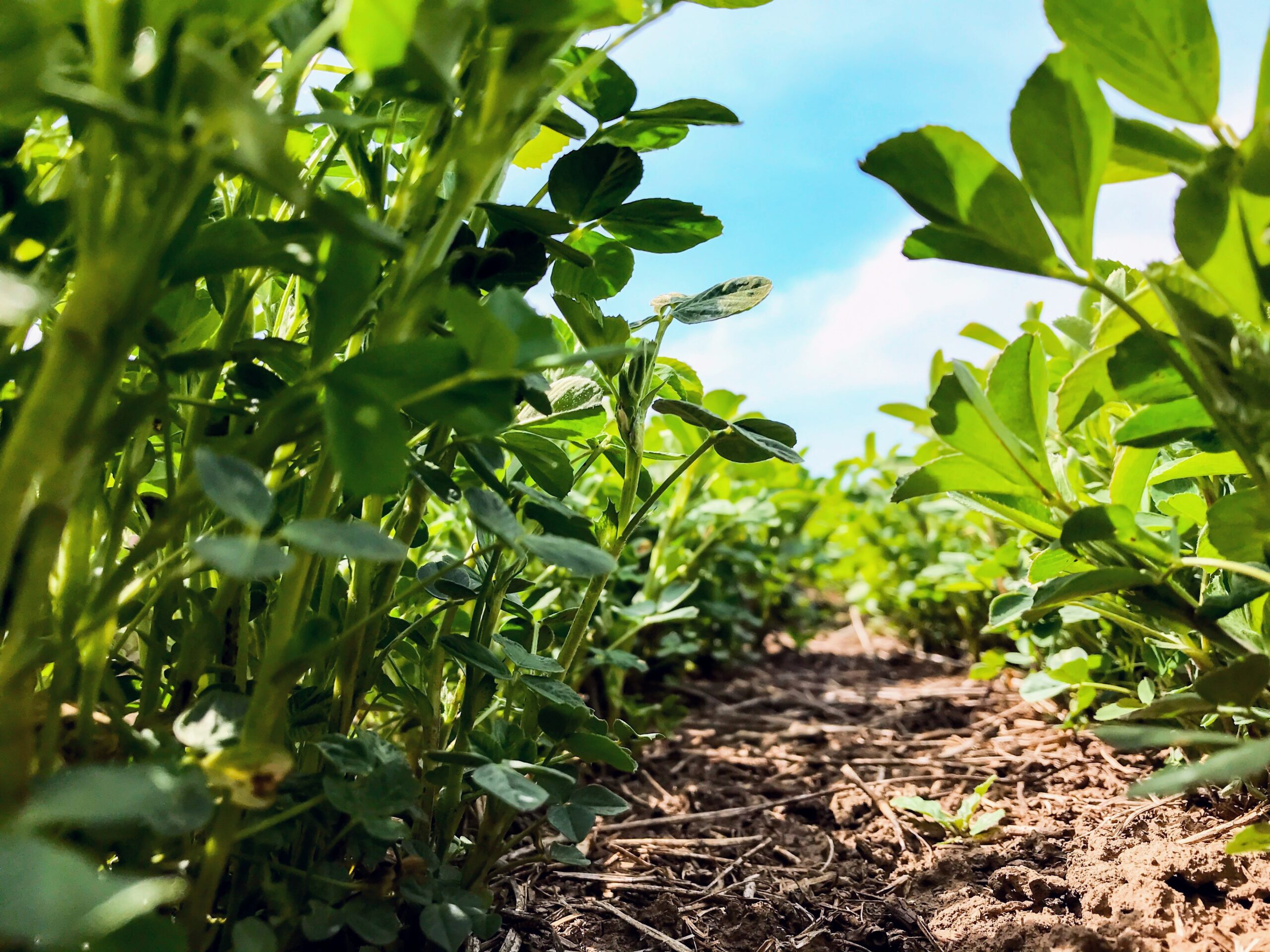
Scientists at China Agricultural University have used multispectral imaging technology to identify the characteristics of alfalfa hard seeds, which have low value and pose major challenges from an economic standpoint. The team found that alfalfa dormancy is structured by the PY+PD pattern, rather than the PY pattern alone, and that abscisic acid (ABA) responses played a key role in hard alfalfa seeds. The study provides a theoretical and technical framework for exploring alfalfa hard seed dormancy, which could guide the optimal processing of these seeds in the agriculture industry.