
"James Webb Space Telescope Reveals Neptune's Icy History and Potential for Life Beyond"
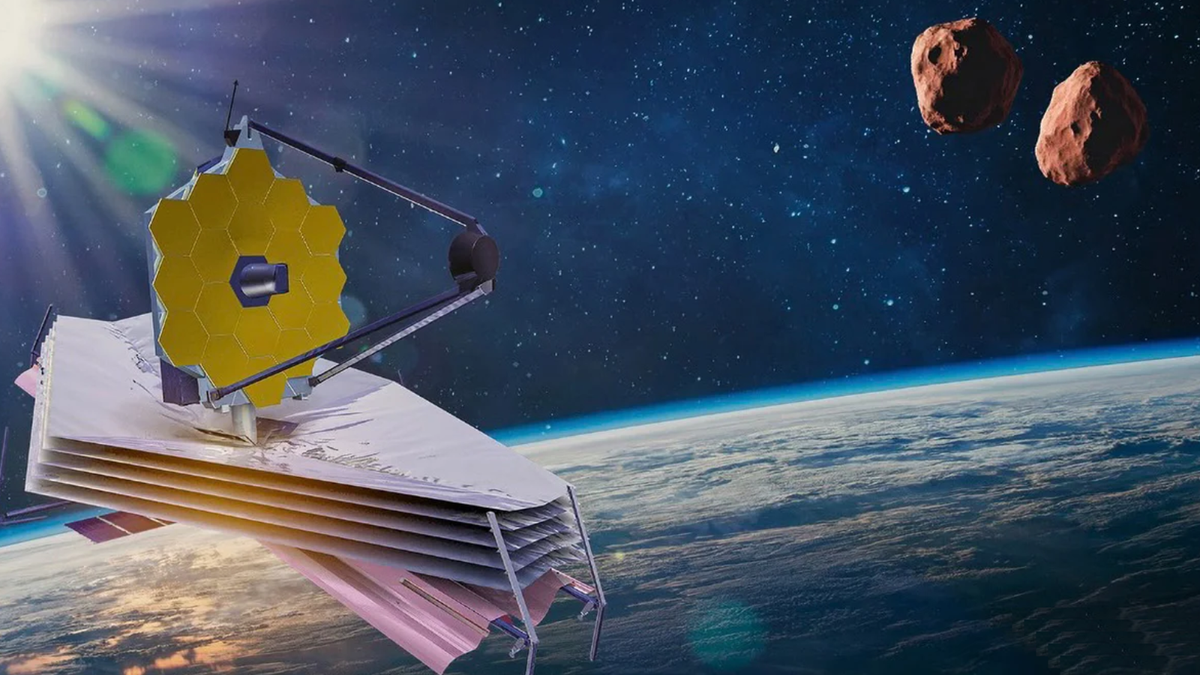
The James Webb Space Telescope has used its unprecedented spectral observation capabilities to study a pair of icy asteroids at the edge of the solar system, providing insights into the evolution of Neptune and the Kuiper Belt. This research represents the first time the surface composition of a small, binary pair of Trans-Neptunian Objects (TNOs) has been investigated, shedding light on the chemical compositions of these distant objects and their potential role in the distribution of molecules that gave birth to planets and life on Earth. The findings could also help track down how Neptune has migrated to reach its current orbit, and the team believes that the JWST will deliver even more information about objects in the Kuiper Belt and beyond Neptune in the future.
- Icy asteroids help the James Webb Space Telescope uncover Neptune's history Space.com
- Scientists use James Webb Space Telescope to uncover clues about Neptune's evolution Phys.org
- Geothermal activity on the icy dwarf planets… The Planetary Society
- Two dwarf planets beyond Neptune could harbour conditions for life, scientists explain why Yourweather.co.uk
- James Webb Space Telescope probes binary asteroid system Mors-Somnus in Kuiper Belt to know Neptune`s past WION
Reading Insights
0
7
3 min
vs 4 min read
84%
800 → 126 words
Want the full story? Read the original article
Read on Space.com