
Webb Telescope Reveals Turbulent Silicate Clouds on Exoplanet with Dual Suns
TL;DR Summary
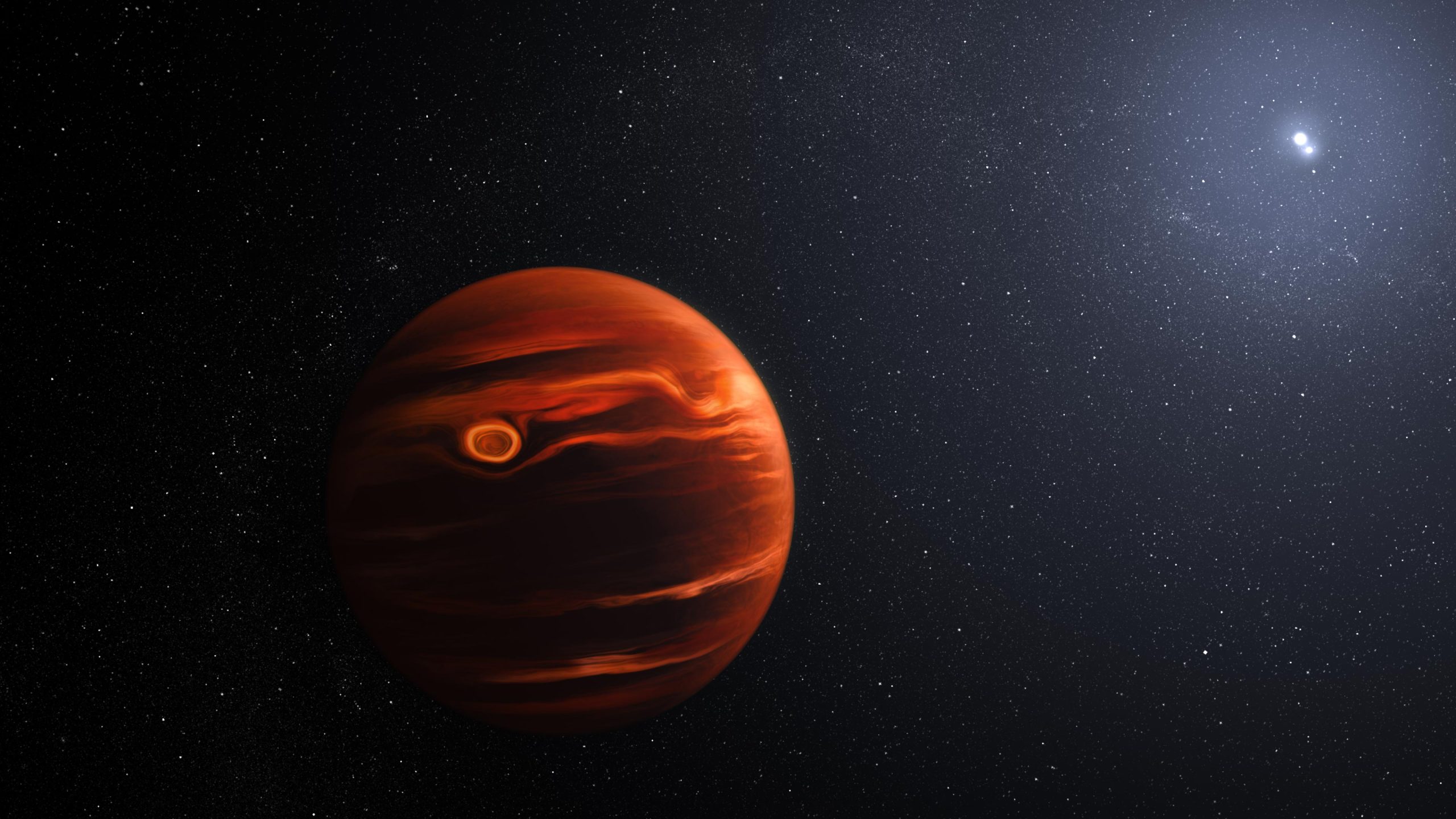
NASA's James Webb Space Telescope has detected silicate clouds in the atmosphere of exoplanet VHS 1256 b, which is about 40 light-years away and orbits two stars. The clouds are constantly rising, mixing, and moving during its 22-hour day, and contain silicate particles ranging from fine specks to small grains. The team also detected water, methane, carbon monoxide, and evidence of carbon dioxide. The planet's low gravity and young age make it an ideal target for observation. Webb's observations provide a treasure trove of data for researchers to analyze and understand the planet's dynamic cloud and weather systems.
- Alien Sandstorms: NASA's Webb Unravels the Mysteries of Planet VHS 1256 b's Silicate Clouds SciTechDaily
- Webb telescope details weather patterns on a distant planet with two suns CNN
- Webb Telescope detects 'turbulent' clouds on huge exoplanet that orbits 2 stars VideoFromSpace
- NASA's Webb Spots Swirling, Gritty Clouds on Remote Planet NASA Jet Propulsion Laboratory
- James Webb Telescope Finds 'Swirling Clouds' on Planet with 22-Hour Day and 1500-Degree Temps PEOPLE
Reading Insights
Total Reads
0
Unique Readers
6
Time Saved
7 min
vs 8 min read
Condensed
93%
1,481 → 98 words
Want the full story? Read the original article
Read on SciTechDaily