
Webb Space Telescope discovers ancient complex organic molecules in rare galaxy.
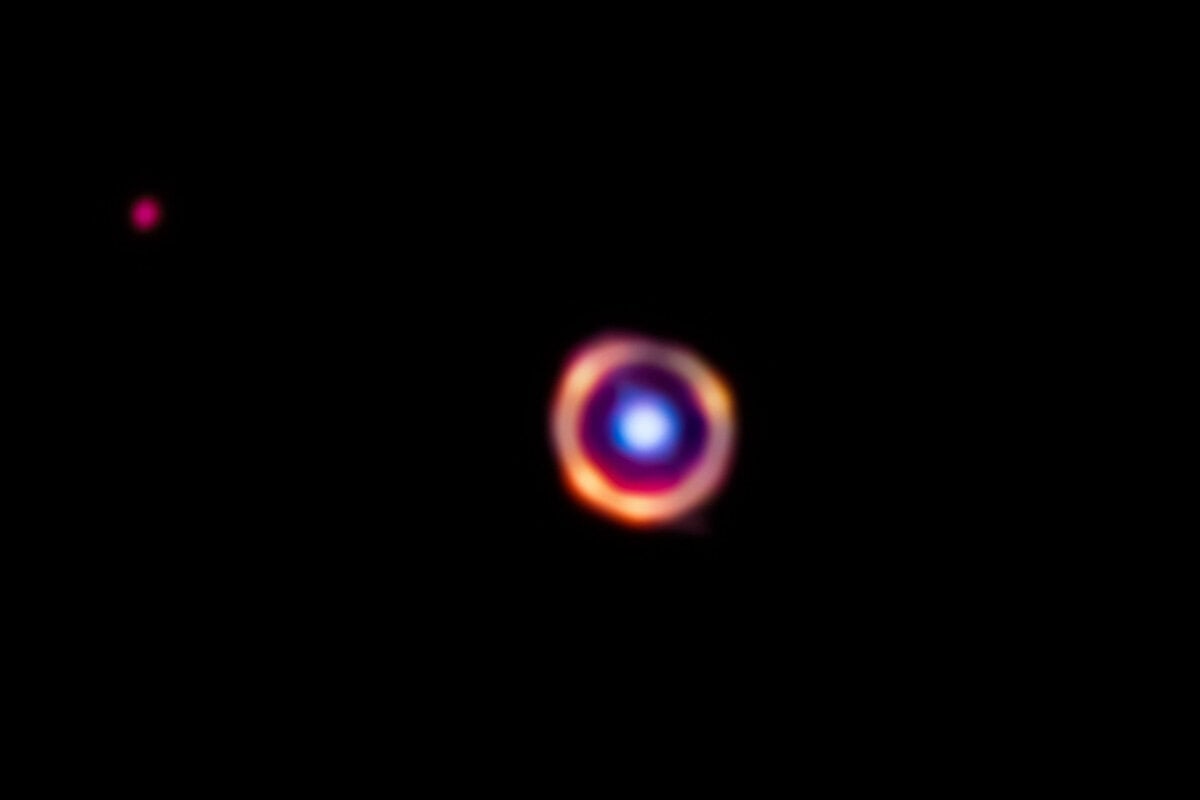
The James Webb Space Telescope has detected complex organic molecules in a galaxy more than 12 billion light-years away, the most distant galaxy in which these molecules are now known to exist. The researchers used gravitational lensing to magnify the galaxy and differentiate between infrared signals generated by dust grains and those of the newly observed hydrocarbon molecules. The specific compound detected is a type of molecule called polycyclic aromatic hydrocarbon, or PAH, which is considered the basic building blocks for the earliest forms of life. The findings provide critical insight into the complex chemical interactions that occur in the first galaxies in the early universe.
- Webb Space Telescope detects universe's most distant complex organic molecules Phys.org
- Complex Molecules Detected in Ancient Galaxy Near The Dawn of Time ScienceAlert
- James Webb Space Telescope spies earliest complex organic molecules in the universe Space.com
- One Of The Rarest Galaxies In The Universe Is Confirmed By Scientists Giant Freakin Robot
- NASA Finds Organic Molecules in 12 Billion-Year-Old Galaxy, and a Mystery VICE
Reading Insights
0
0
3 min
vs 4 min read
86%
768 → 106 words
Want the full story? Read the original article
Read on Phys.org