
Unraveling the Mystery: James Webb Telescope Sheds Light on "Impossible" Galaxies at Cosmic Dawn
TL;DR Summary
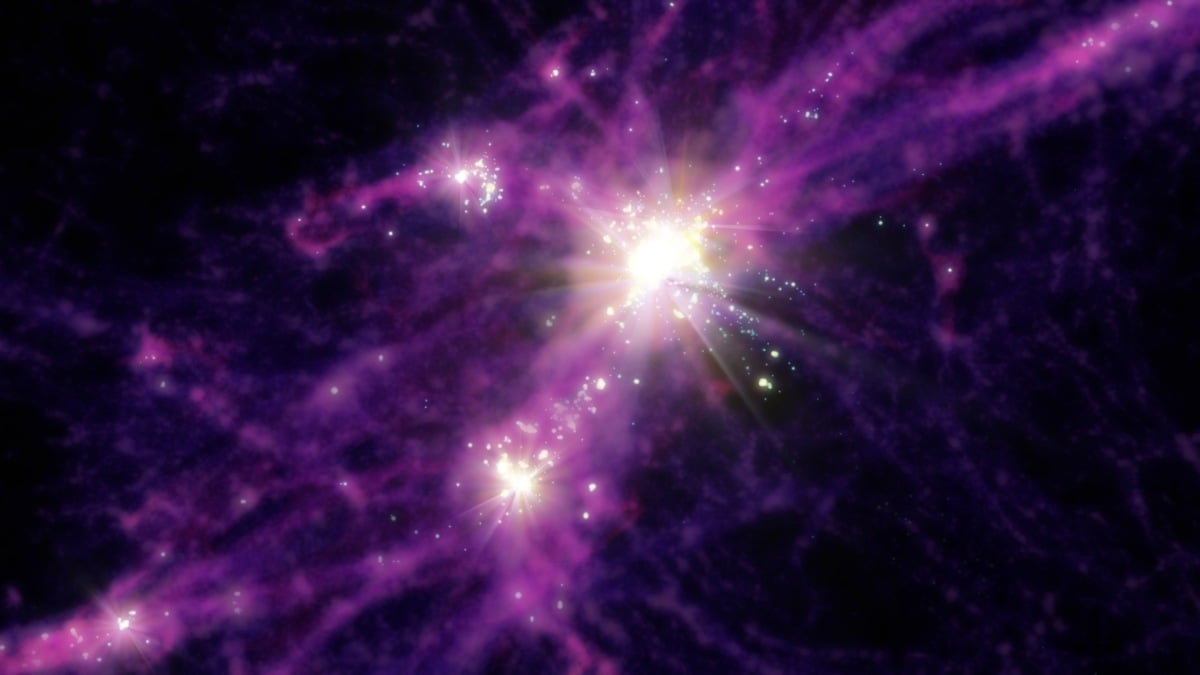
New research using computer simulations suggests that the early galaxies observed by the James Webb Space Telescope may appear mature and bright due to irregular bursts of star formation, rather than being uncharacteristically massive. The simulations were able to reproduce the same number of bright galaxies observed by the telescope, without contradicting existing cosmology theories. This phenomenon, known as "bursty star formation," involves the rapid formation of stars followed by stagnant periods before another burst. The study provides insights into the early universe and challenges previous assumptions about galaxy formation.
Topics:science#astronomy#astrophysics#bursty-star-formation#cosmology#early-galaxies#james-webb-space-telescope
- Astronomers may have solved one of Webb's first puzzles Mashable
- James Webb telescope's observations of 'impossible' galaxies at the dawn of time may finally have an explanation Livescience.com
- James Webb Space Telescope's early galaxy images were oddly bright. Now we know why Space.com
- New James Webb data offers potential explanation for "impossible" galaxies at cosmic dawn Salon
- The Dawn of The Universe Is Far Too Light. Astronomers May Have Figured Out Why. ScienceAlert
Reading Insights
Total Reads
0
Unique Readers
0
Time Saved
4 min
vs 5 min read
Condensed
90%
875 → 90 words
Want the full story? Read the original article
Read on Mashable