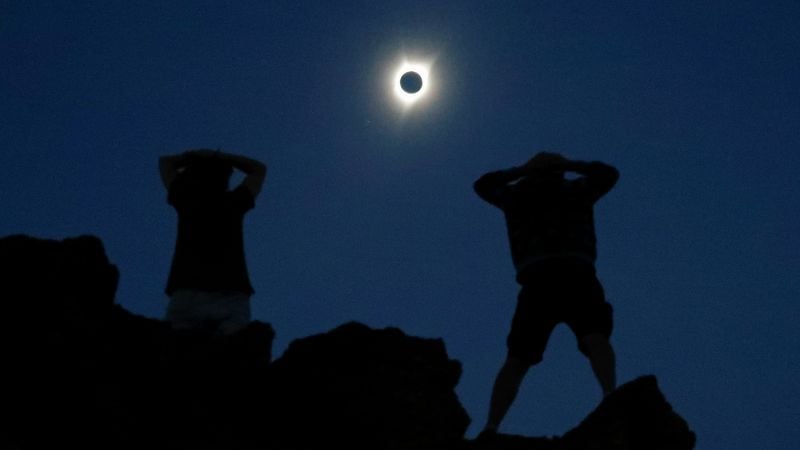
Saturday's annular solar eclipse will cause changes in temperature, wind speed, and humidity on Earth's surface as the moon passes in front of the sun, casting a shadow. The extent of these changes depends on the amount of sunlight blocked, with annular eclipses allowing slightly more solar radiation to reach the Earth's surface compared to total eclipses. Factors such as the time of year and cloud cover also influence the magnitude of temperature drops. Additionally, an eclipse can affect wind speed, humidity, and cloud cover, as the quick cooldown during the event reduces heat stored in the atmosphere, leading to calmer winds and potentially altering cloud formation.
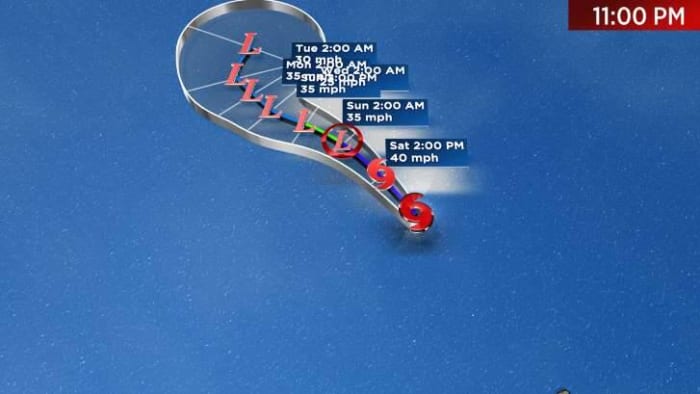
Tropical Depression Katia has strengthened into Tropical Storm Katia, located 580 miles northwest of The Cabo Verde Islands. It is moving towards the north-northwest at 13 mph with maximum sustained winds of 40 mph. The storm is expected to weaken and could become a remnant low by Sunday evening. There are currently no coastal watches or warnings in effect.
The storm that hit Houston on Wednesday night brought locally record-breaking winds, with wind gusts of 97 mph reported at Bush Intercontinental Airport, greatly eclipsing the previous record for strongest wind speeds, recorded during Hurricane Ike in 2008. Hundreds of thousands of Texans were left without power. The strength of wind gusts is measured about 10 meters above the ground because wind speed tends to decrease closer to the ground, due to friction. The National Weather Service said the wind strength was at a level more often associated with mild tornadoes.