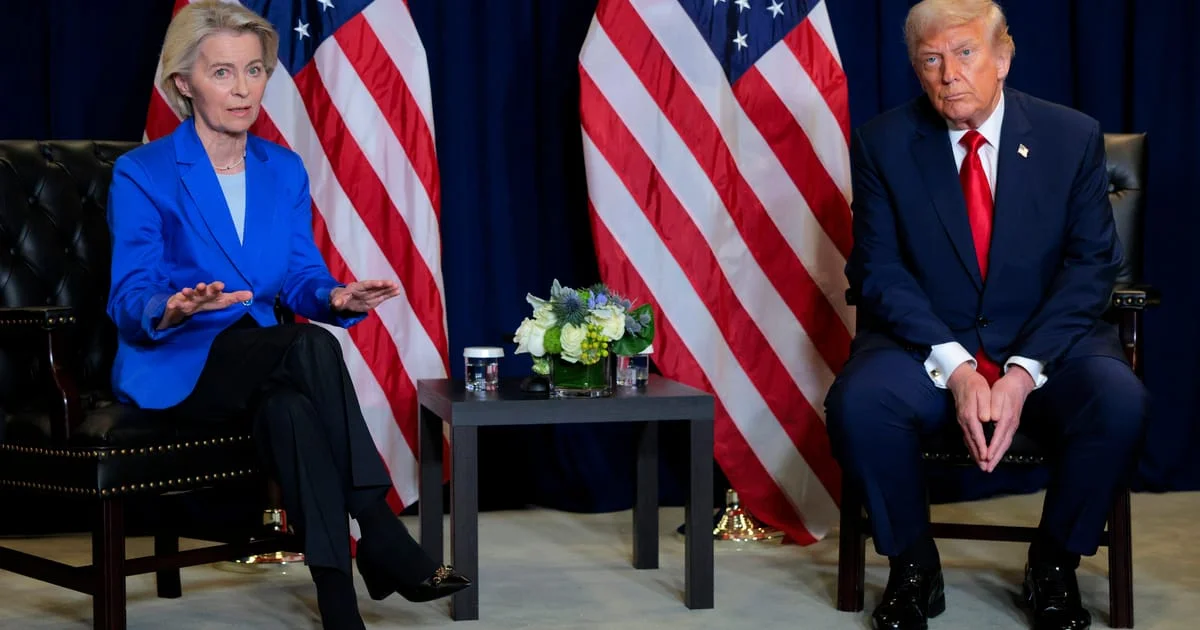
The European Union and Mercosur have finally sealed a long-running trade pact, marking a major geoeconomic milestone after decades of talks since 1999 and signaling a renewed push for open markets in the Trump-era global landscape.
The article discusses the deterioration of transatlantic relations, highlighting Europe's pursuit of strategic independence through economic and regulatory measures that challenge US interests, and the historical and political factors shaping this shift, including Europe's efforts to counter US economic dominance and the rise of regulatory imperialism.
European officials are concerned about the impact of Donald Trump's UN speech, which criticized Europe's immigration, energy policies, and shared democratic values, raising fears of a growing divide in the transatlantic alliance and a potential culture war over core Western principles.
The article criticizes Donald Trump's recent proposals for sanctions and tariffs against Russia and China, arguing they are impractical, unwise, and serve more to create an illusion of action rather than effective policy, while highlighting the lack of genuine U.S. support for Ukraine and the complex geopolitical realities involved.
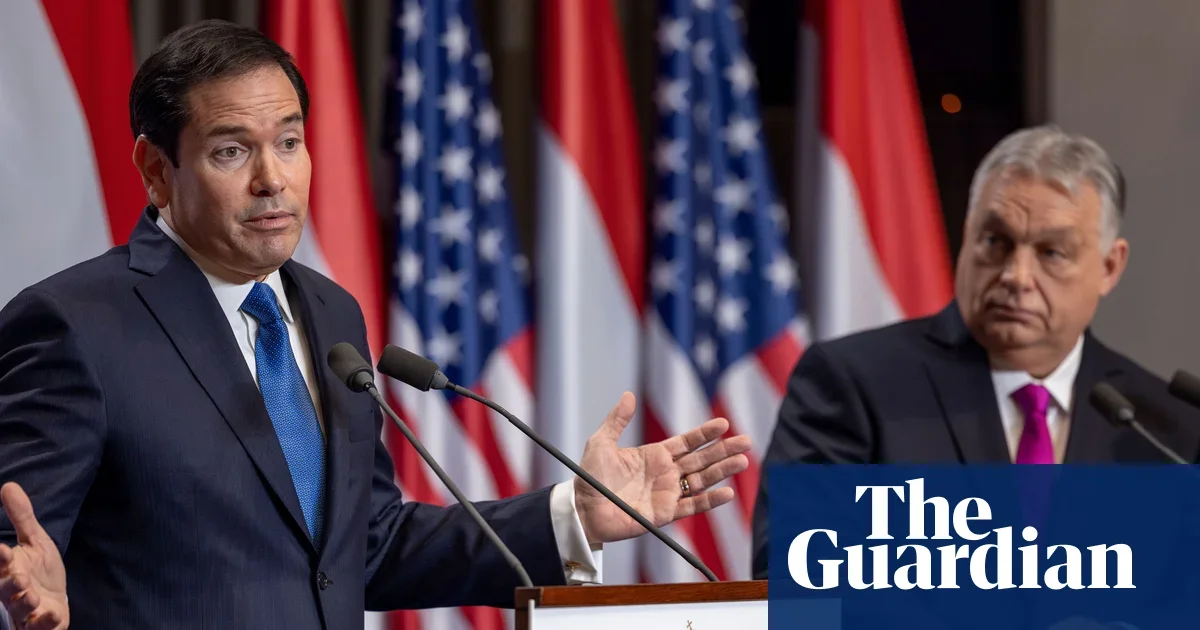
European leaders gathered in Budapest for a summit hosted by Hungary's Viktor Orbán, following Donald Trump's re-election and the collapse of Germany's government. The meeting highlighted the EU's struggle for unity amid Trump's "America First" policies and the geopolitical challenges they pose. Leaders, including France's Emmanuel Macron and European Commission President Ursula von der Leyen, emphasized the need for Europe to defend its interests and maintain transatlantic relations. The German political crisis further complicates the EU's ability to respond collectively to these challenges.
European leaders have congratulated Donald Trump on his return to the White House, despite concerns about potential economic conflicts. While some EU officials are apprehensive about Trump's confrontational style and possible trade tariffs, others, like Hungary's Viktor Orban, are supportive. The EU is preparing for potential economic challenges, with discussions planned at an upcoming meeting in Budapest. Analysts warn that a new trade war could push the eurozone into recession, particularly affecting Germany's economy.
Lithuania's Deputy National Defense Minister, Greta Monika Tučkutė, has called for European countries to include American companies in defense procurement, emphasizing the importance of the transatlantic bond in deterring adversaries. While some European countries advocate for strategic autonomy and spending European money on European companies, Central and Eastern European countries, closer to the front lines and threatened by Russia, are more inclined to purchase American weaponry. Tučkutė suggests that the European Defense Fund could also support projects involving U.S. companies collaborating with European defense contractors. Lithuania has significantly increased its defense spending and is diversifying its weapons acquisitions from various countries, including France, Germany, and the United States, to strengthen its defense capabilities against potential adversaries like Russia and China.