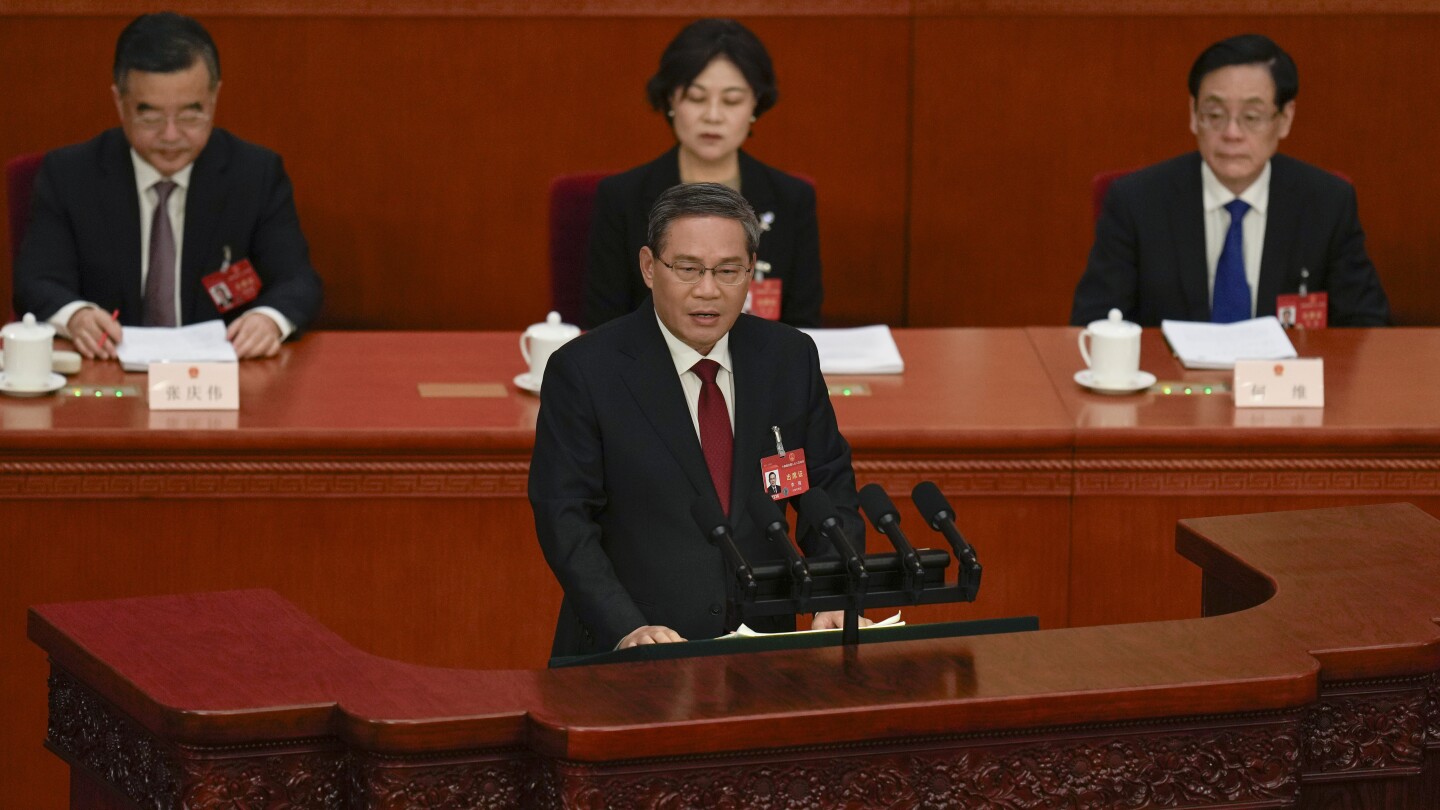
China aims for 5% economic growth this year, with plans to boost spending on technology, military, and the economy, but no major stimulus package. Premier Li Qiang acknowledged the challenges, including a real estate slump and overcapacity in some industries. The government plans to issue long-term bonds to boost growth and address housing market issues. The draft budget includes a 7.2% rise in defense spending. China's economy grew at a 5.2% pace last year, but replicating this growth will be difficult. The government emphasizes the need to raise consumer spending and provide support for local governments facing economic difficulty.

Israel's cabinet has approved a stimulus package to bolster the country's tech industry, aiming to counteract a decline in private funding caused by war and judicial reform. The plan includes launching a startup fund to inject over half a billion shekels annually into startups, establishing an investment fund to encourage Israeli institutions to invest in venture capital funds, and coordinating with global organizations to sustain or grow their presence in Israel. Despite mixed investor sentiment, the country's tech ecosystem is expected to navigate uncertainty and continue its growth trajectory.
The U.S. economy experienced a "miracle" in 2023, defying recession predictions with accelerated growth, a sharp decline in inflation from 6.4% to 3.1%, and the addition of over 2.5 million jobs. This success is attributed to prolonged pandemic recovery, resolution of supply chain issues, continued consumer spending, and significant wealth increases across income levels, driven by stock market gains and rising home values. The massive government stimulus, low mortgage rates, and a strong labor market return also played key roles. While President Biden and previous administrations will be debated for their contributions, the unique combination of these factors set the U.S. apart from other economies.
Italy has announced a €24 billion stimulus package aimed at boosting the country's faltering economic growth. The plan includes tax cuts and pay rises, with the goal of stimulating consumer spending and investment. The government hopes that these measures will help revive the Italian economy, which has been struggling with low growth and high levels of public debt.
China's economy grew 6.3% in the second quarter, falling short of expectations, while retail sales slowed, indicating that the country's post-COVID economic revival is faltering. Other concerning data includes disappointing trade figures, a surge in youth unemployment, and low inflation. Investors reacted negatively to the news, and economists expect the ruling Politburo to discuss implementing a stimulus package to boost growth.
Bitcoin remained stable as China's first cut in benchmark lending rates in 10 months failed to boost traditional markets. The looser conditions contrast with continued monetary tightening in western economies and follow recent economic reports that showed the world's second-largest economy is losing steam and is on the brink of deflation. Some crypto observers say a bigger China stimulus could compensate for the hawkish biases of the U.S. Federal Reserve, the European Central Bank and others, eventually pushing risk assets higher.