
Tag

Stellar Mass Black Holes

All articles tagged with #stellar mass black holes

astronomy2 years ago

Unraveling the Mysteries of Black Hole Growth and Influence

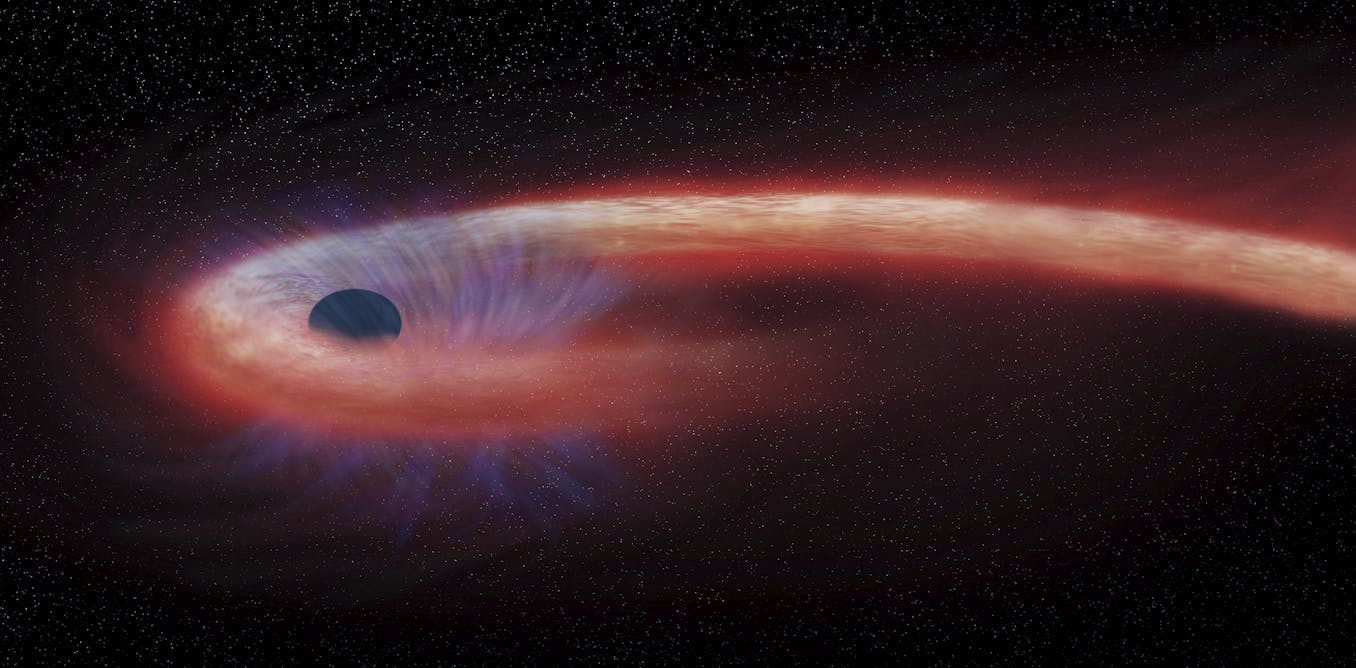
Black holes come in different sizes, with smaller ones called stellar mass black holes and larger ones known as supermassive black holes. Stellar mass black holes form when a massive star collapses under its own weight, while the origins of supermassive black holes are still a mystery. Black holes are usually invisible, but their presence can be detected by the way stars orbit around them. When a black hole is actively consuming gas, it can create a glowing ring of X-rays, optical light, and infrared light. The famous "white outlines" seen in movies depict the glowing ring of gases falling into a growing black hole. The best image of a real black hole's ring comes from the Event Horizon Telescope, showing the supermassive black hole at the center of the galaxy M87. Eventually, black holes exhaust their fuel and become invisible again.
astronomy2 years ago

Unraveling the Enigma: JWST Sheds Light on the Vanishing Massive Star

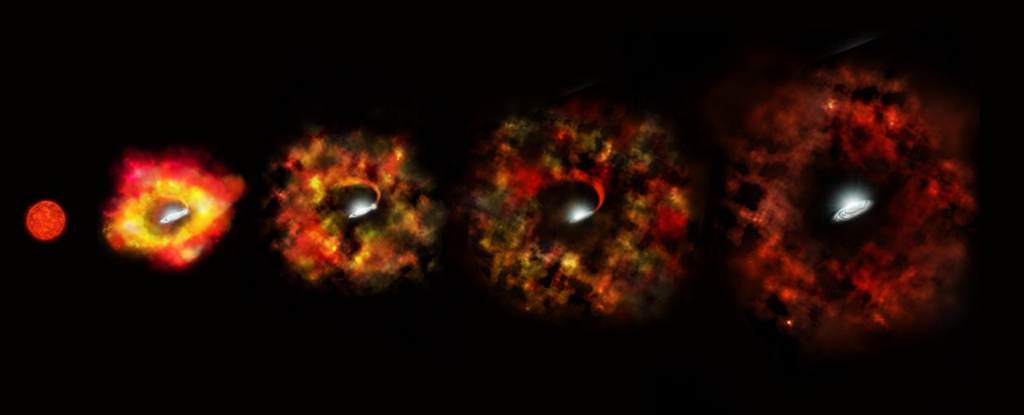
In 2009, a massive star known as N6946-BH1 underwent a period of brightening, leading astronomers to believe it was about to explode into a supernova. However, it faded instead of exploding, and subsequent observations couldn't detect the star. A new study using data from the James Webb Space Telescope (JWST) has revealed a bright infrared source consistent with material ejected from the star during its rapid brightening. Surprisingly, the study also found three remnant objects instead of one, suggesting a stellar merger rather than a failed supernova. This discovery complicates our understanding of supernovae and the formation of stellar-mass black holes. Further observations will help distinguish between stellar mergers and true failed supernovae, shedding light on the final stages of stars becoming black holes.

astronomy2 years ago

Unveiling Colliding Black Holes: The Quasar Connection

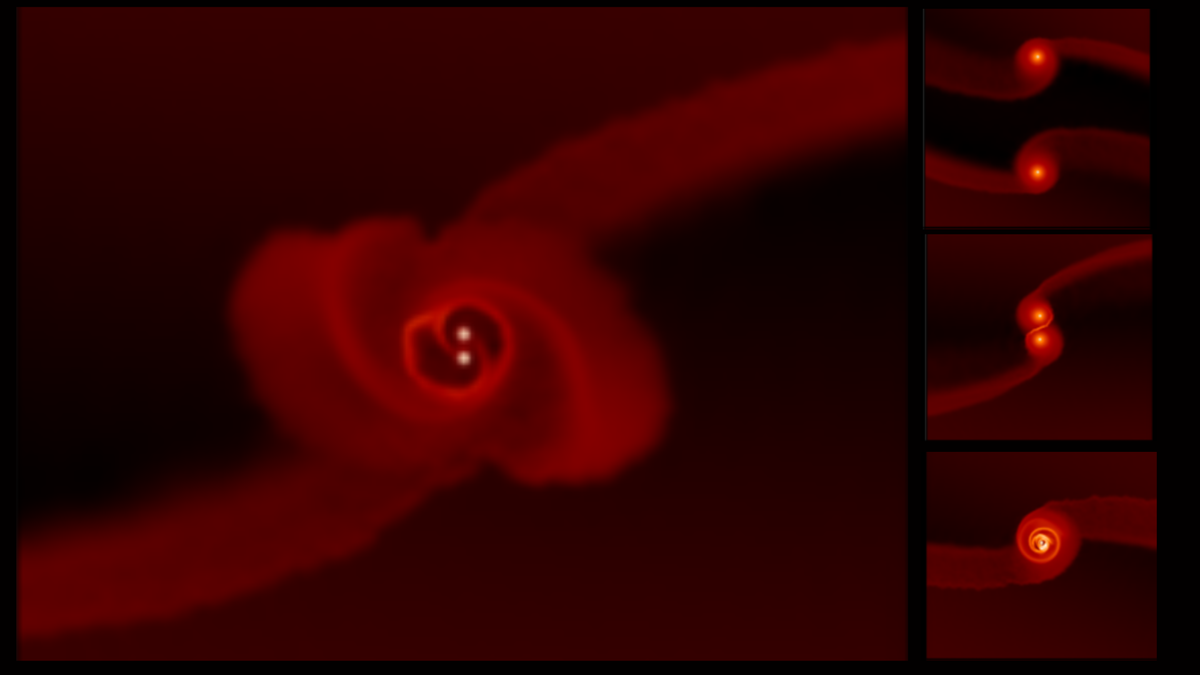
Collisions between stellar-mass black holes may occur in the violent environments created around supermassive black holes known as quasars. These quasars, which are incredibly bright, could be hiding smaller black holes that are growing by merging. Computer simulations showed that gas in the disks around supermassive black holes can slow down the speed of stellar-mass black holes, causing them to remain gravitationally bound to each other and their supermassive black hole "big brother." The simulations also revealed that the direction in which the black holes orbit the supermassive black hole can affect the production of gravitational wave emissions. This research validates that black hole mergers in supermassive black hole discs can happen and may explain many of the gravitational wave signals observed today.