
Unraveling the Enigma: JWST Sheds Light on the Vanishing Massive Star
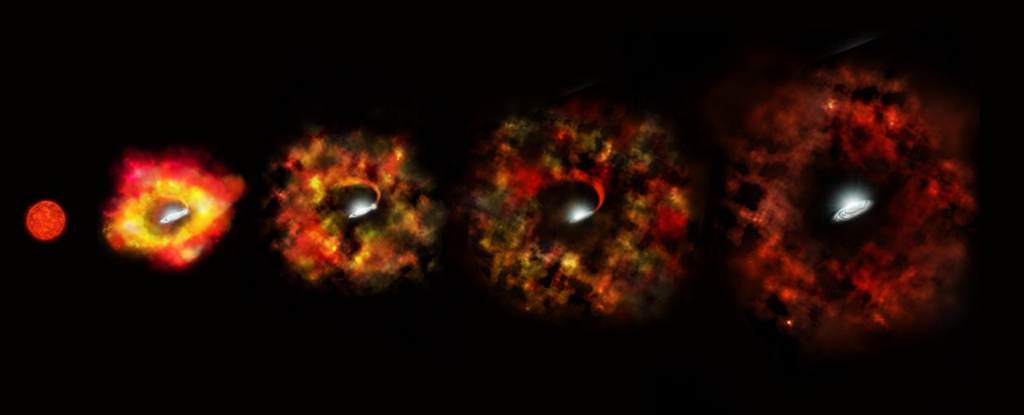
In 2009, a massive star known as N6946-BH1 underwent a period of brightening, leading astronomers to believe it was about to explode into a supernova. However, it faded instead of exploding, and subsequent observations couldn't detect the star. A new study using data from the James Webb Space Telescope (JWST) has revealed a bright infrared source consistent with material ejected from the star during its rapid brightening. Surprisingly, the study also found three remnant objects instead of one, suggesting a stellar merger rather than a failed supernova. This discovery complicates our understanding of supernovae and the formation of stellar-mass black holes. Further observations will help distinguish between stellar mergers and true failed supernovae, shedding light on the final stages of stars becoming black holes.
- In 2009, a Massive Star Vanished. JWST Might Have Figured Out What Happened. ScienceAlert
- Mystery behind massive star suddenly vanishing decoded The Independent
- A torn-up star is revealing the intensity of a supermassive black hole's grip Astronomy Magazine
- A Star Curiously Vanished From the Sky Back in 2009 and Astronomers Might Finally Know Why The Laconia Daily Sun
- The vanishing star mystery: When a star 25 times bigger than Sun disappeared India Today
Reading Insights
0
9
2 min
vs 3 min read
74%
481 → 124 words
Want the full story? Read the original article
Read on ScienceAlert