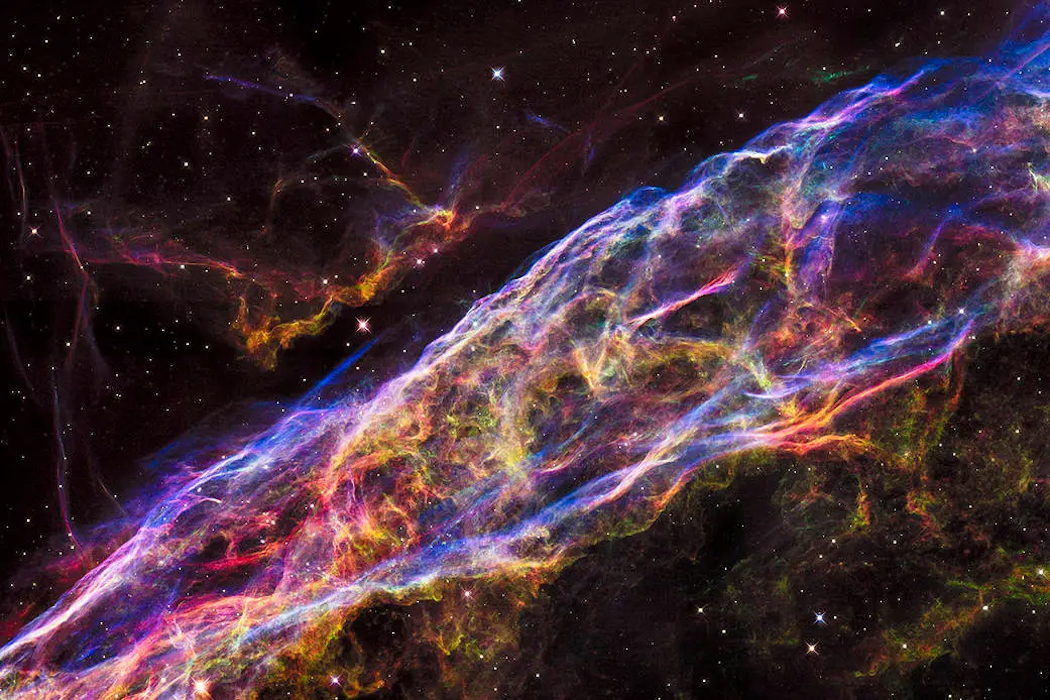
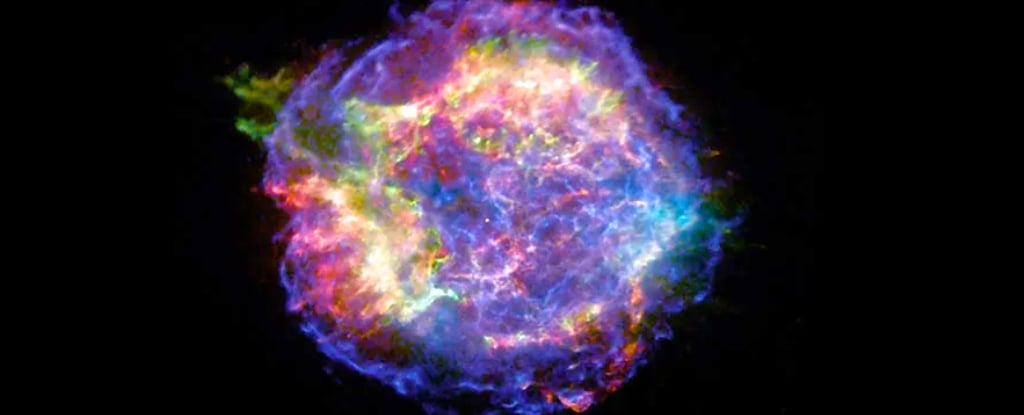
Atoms formed primarily from hydrogen and helium shortly after the Big Bang as the universe cooled, with heavier atoms created later in stars through fusion and in supernova explosions, while dark matter remains a mystery.
The article explains the formation of atoms from the Big Bang to stellar processes, highlighting how hydrogen and helium formed early in the universe and how heavier elements are created in stars and supernovae, with some mysteries remaining about dark matter.
Atoms, primarily hydrogen and helium, formed shortly after the Big Bang as the universe cooled, with heavier atoms created later in stars through fusion and in supernova explosions, which distribute these elements across the universe.
Scientists have discovered evidence of nuclear fission occurring amongst the stars, supporting the theory that neutron stars produce "superheavy" elements through collisions, which then undergo nuclear fission to create rare elements. This finding could help explain the origin of heavy elements in the universe. The research team observed a correlation between certain light precision metals and rare earth nuclei in stars, suggesting the presence of nuclear fission. The study also suggests the existence of elements with atomic masses greater than 260 around neutron star mergers. This is the first evidence of fission operating in the cosmos, confirming a theory proposed several years ago.