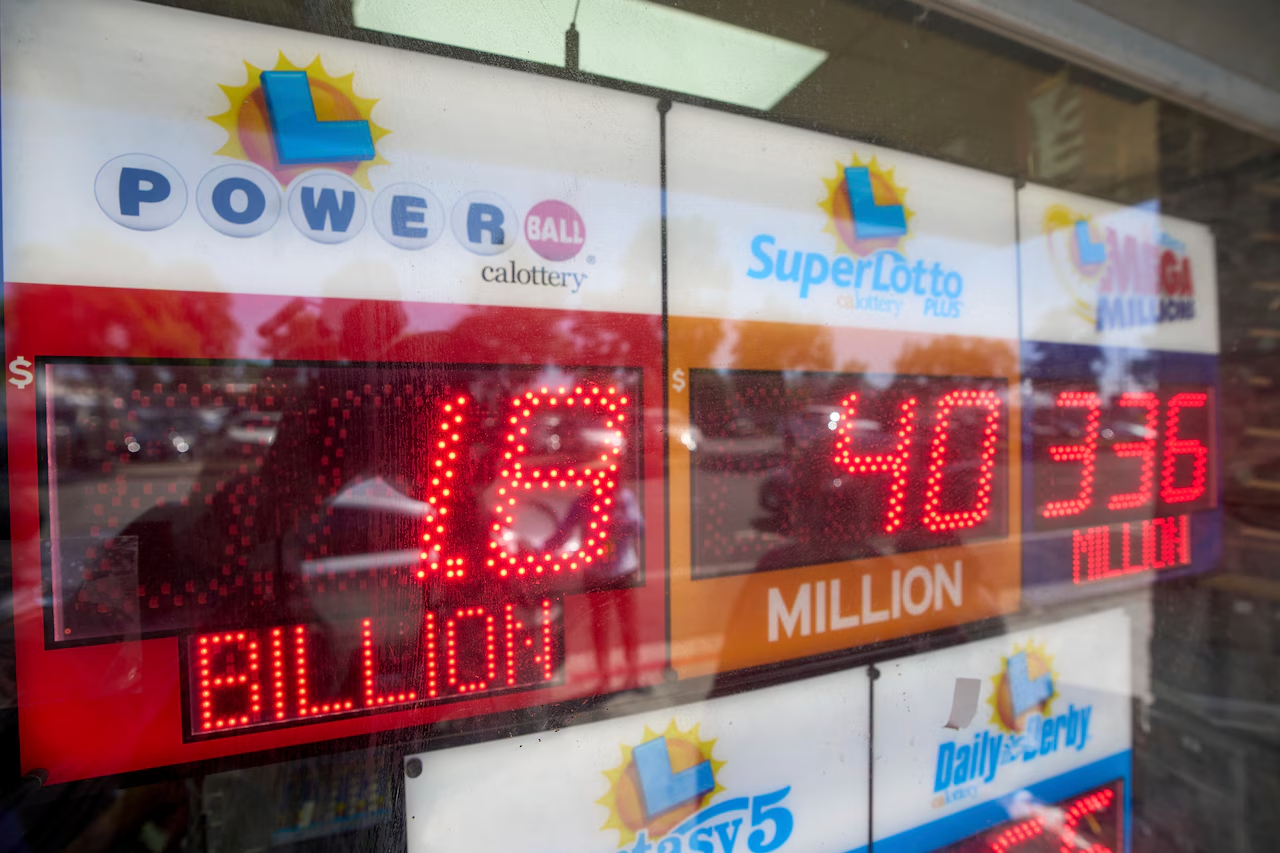
A Missouri man who won half of a record $1.787 billion Powerball jackpot plans to take a year off to relax and enjoy his winnings, which he chose to receive as a lump sum of approximately $410.3 million. He expressed excitement and disbelief about his win, which he shared with a Texas player, and plans to spend more time with his wife and relax at home.
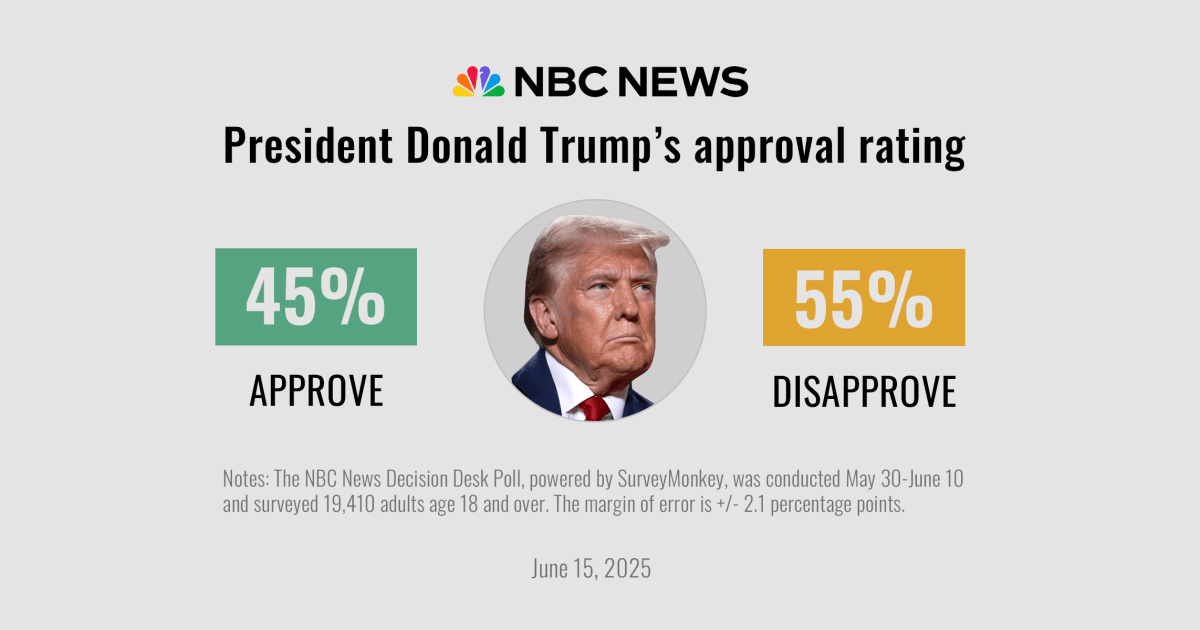
A recent NBC News poll shows that 55% of Americans disapprove of Trump's job performance, with strong partisan divides on his handling of immigration and other issues. While his overall approval remains stable, enthusiasm among supporters has waned slightly, and independents are largely dissatisfied. The poll also highlights internal Republican disagreements over spending priorities amid ongoing negotiations on a major tax and spending bill, with Democrats prioritizing maintaining current spending levels.
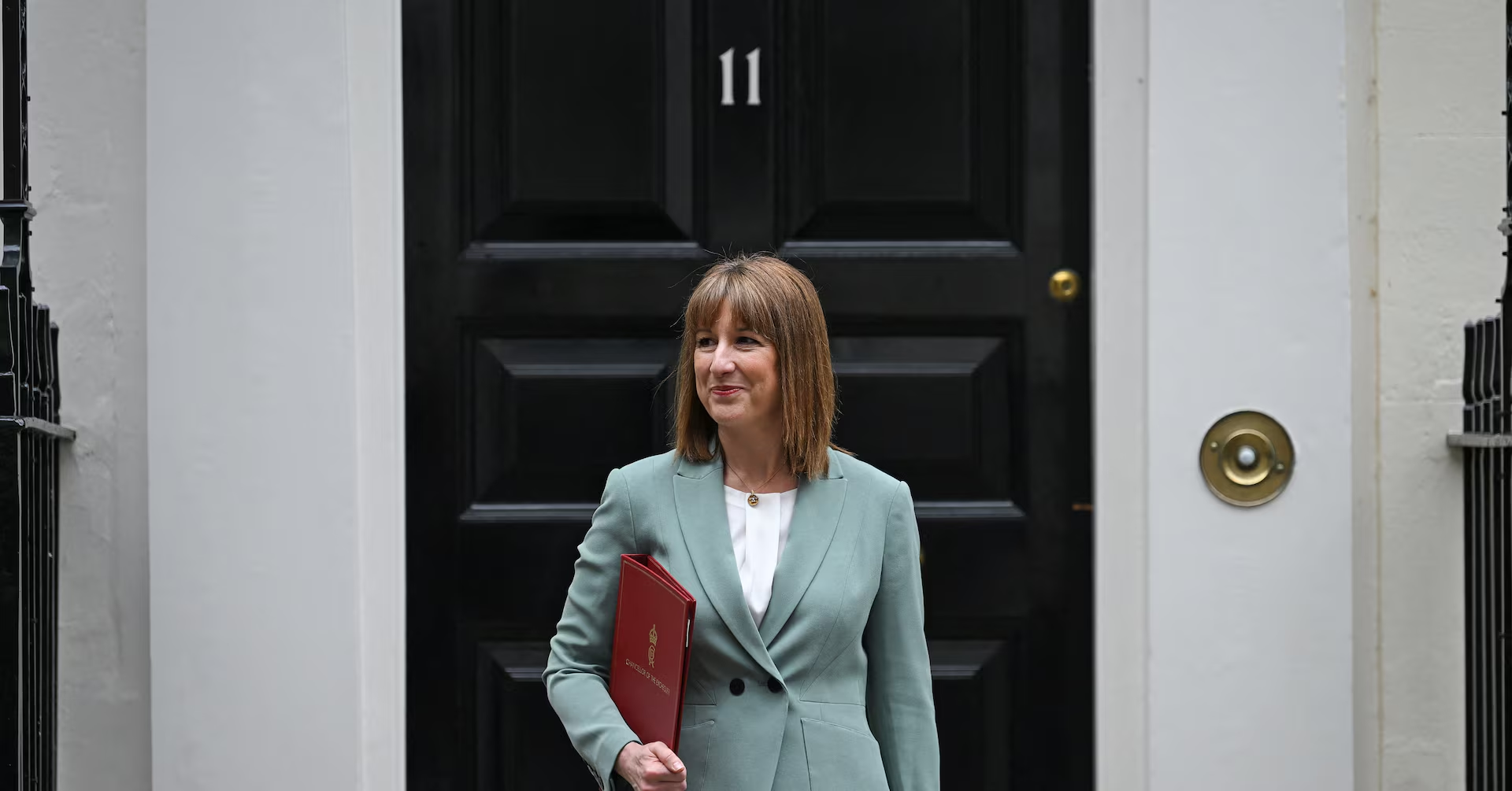
UK Finance Minister Rachel Reeves announced over $2.7 trillion in public spending from 2026 to 2030, focusing on national renewal through investments in defense, nuclear power, housing, and public services, amid political and economic challenges.
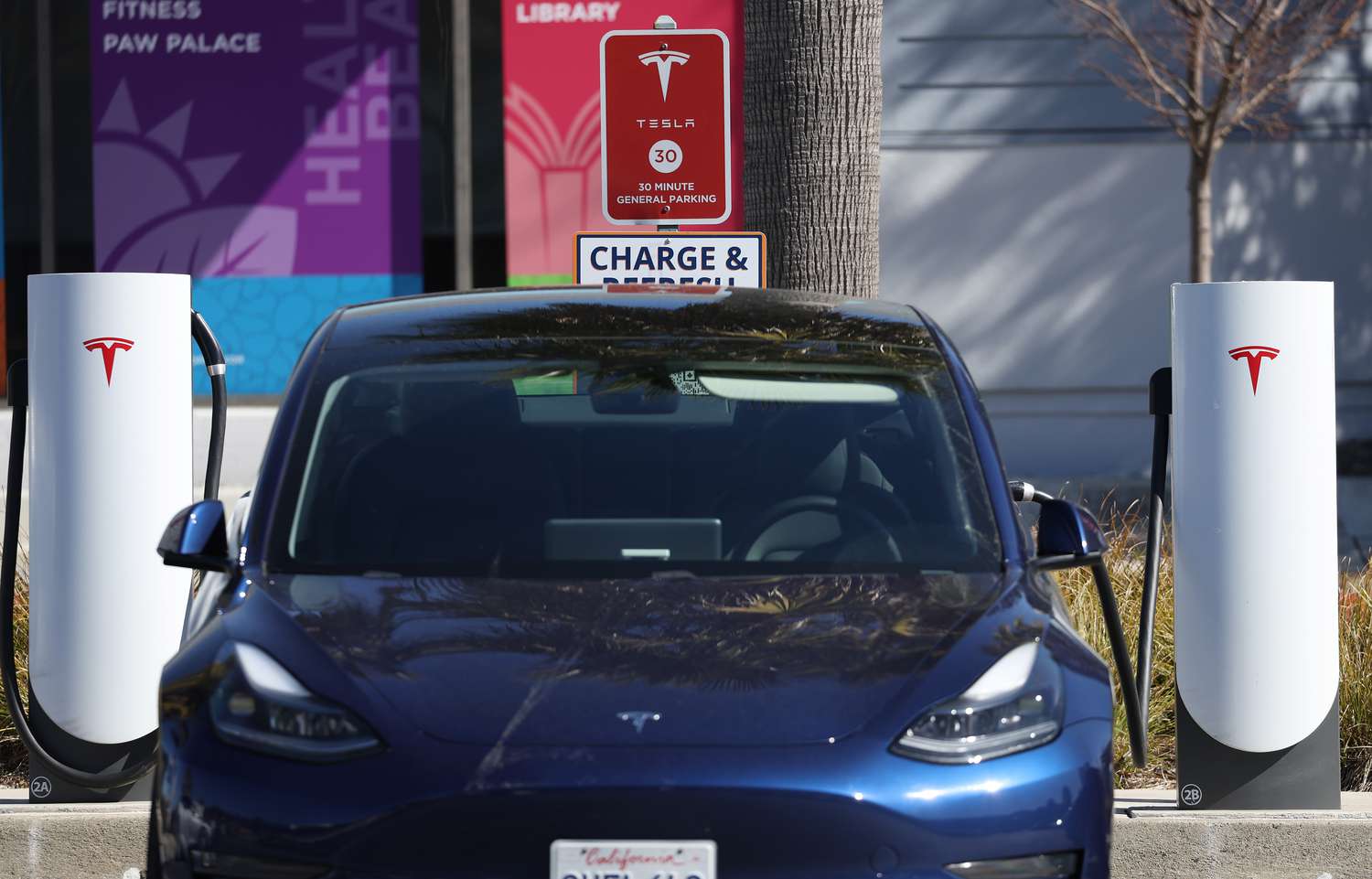
Tesla's stock rose over 3% as the company revealed plans to invest tens of billions of dollars in various projects, including artificial intelligence. The EV maker expects capital expenditures of over $10 billion in 2024 and $8-10 billion in the following two years, with cash flow and sales growth expected to cover the costs. Despite recent stock declines, Tesla remains confident in its ability to self-fund its ambitious plans as long as macroeconomic factors support current sales trends.
Natural gas producers in Canada are bracing for weak prices in the first half of 2024, prompting some companies to revise their spending plans. Reduced heating demand is expected due to warmer-than-normal temperatures this winter, leading to a pessimistic outlook for gas prices. Birchcliff Energy has cut its dividend and delayed drilling wells, while other companies are also considering deferring capital or shifting spending to oil developments. Industry analysts expect weak prices through the spring and summer, with an anticipated improvement later in the year.
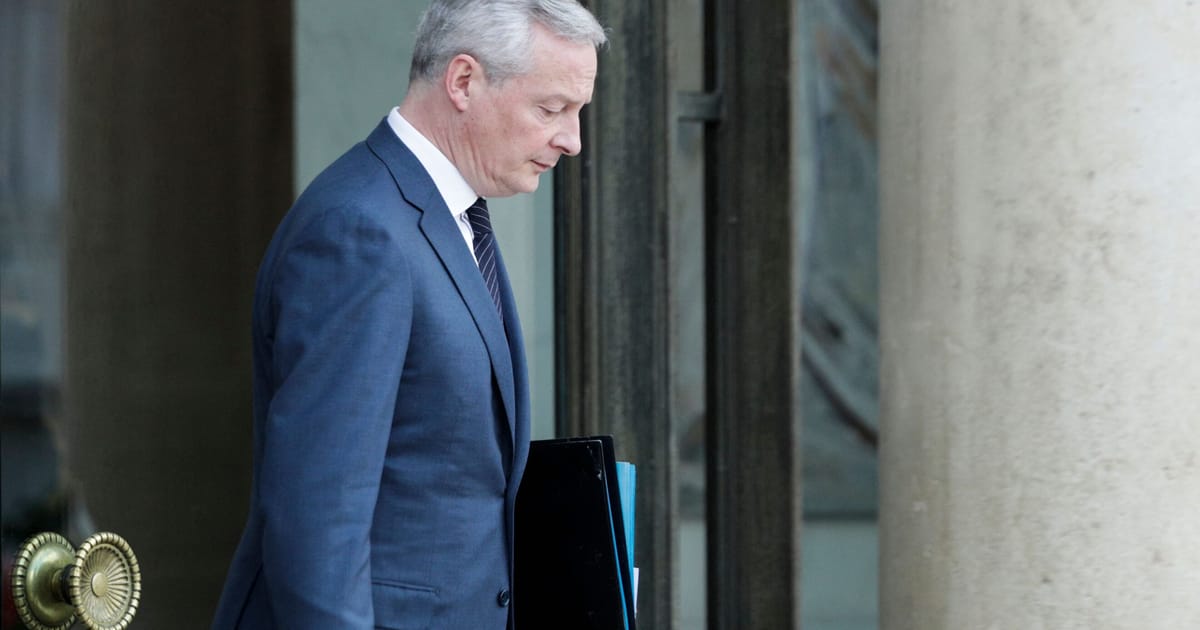
The European Commission has warned the French government to adjust its spending plans for next year to comply with the EU's debt and deficit rules, which will be reinstated after a four-year suspension. France, along with Belgium, Finland, and Croatia, has been given warnings by the Commission. Ignoring the warnings could lead to a lengthy process of spending cuts and potential financial sanctions. The resumption of these rules comes at a critical time for Europe's feeble economic growth and high interest rates. France's violation of the deficit criteria could trigger an Excess Deficit Procedure, and the case is particularly sensitive as France has received special treatment in the past.
A German ruling has dealt a blow to EU spending plans, potentially impacting the bloc's ability to fund key initiatives. The ruling by Germany's Constitutional Court stated that the European Central Bank's bond-buying program was partially unconstitutional, and called for the German government to ensure that the ECB provides a "proportionate justification" for its actions. This decision could complicate the EU's plans to issue joint debt to fund its recovery from the COVID-19 pandemic.
The Conference Board Consumer Confidence Index® increased slightly in March to 104.2, up from 103.4 in February, driven by an uptick in expectations, but remains below the average level seen in 2022. Consumers' assessment of current business and labor market conditions worsened in March, while their short-term outlook for income, business, and labor market conditions ticked up slightly. The survey also revealed that consumers plan to spend less on highly discretionary categories such as playing the lottery, visiting amusement parks, going to the movies, personal lodging, and dining, but will spend more on less discretionary categories such as health care, home or auto maintenance and repair, and economical entertainment options such as streaming. The latest results also reveal that their expectations of inflation over the next 12 months remains elevated—at 6.3 percent.