Scientists have developed a brain-computer interface that can decode a person's inner speech with up to 74% accuracy, potentially aiding those with speech impairments by allowing them to communicate through thought alone, without requiring physical speech attempts.
Scientists have made significant progress in decoding not only spoken words but also imagined speech using brain-machine interfaces, offering hope for patients with speech impairments like A.L.S. and stroke victims to communicate through their 'inner voice.'
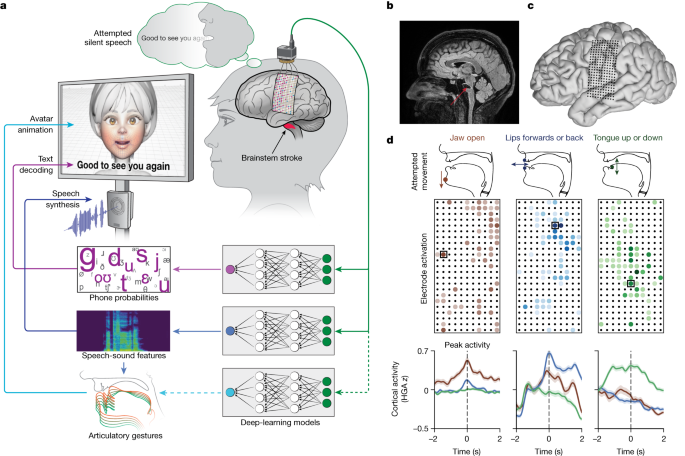
Researchers have developed a high-performance neuroprosthesis that can decode speech and control an avatar. The neuroprosthesis, tested on a paralyzed individual with anarthria, uses brain-computer interface technology to translate neural activity into synthesized speech. The study demonstrates the potential for individuals with severe speech impairments to communicate effectively using this technology. Data relevant to the study are available upon request, and the code to replicate the findings can be found on GitHub.
Scientists have successfully reconstructed Pink Floyd's "Another Brick in the Wall" by decoding brainwaves, marking the first time a recognizable song has been decoded from electrical brain activity. The study aims to restore musicality to patients with neurological conditions that affect speech. Previous attempts at decoding speech from brain recordings lacked emotional and prosodic qualities, but music offers a broader spectrum of elements that could enhance speech decoding. By analyzing brain recordings from 29 patients, the researchers used artificial intelligence to reproduce the sounds and words of the song, albeit muffled. The study also identified new brain areas involved in rhythm detection and confirmed the right side of the brain's dominance in music processing.