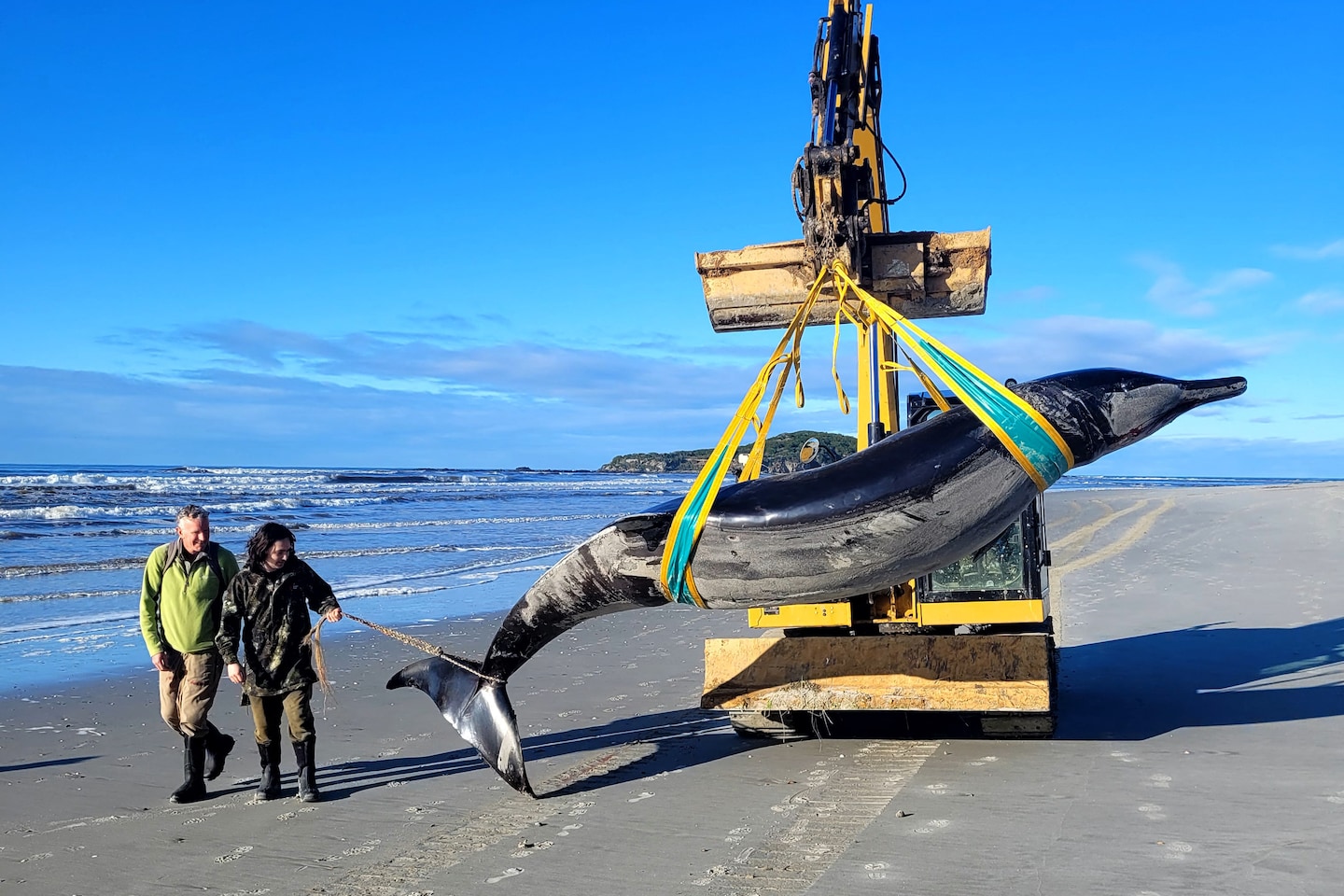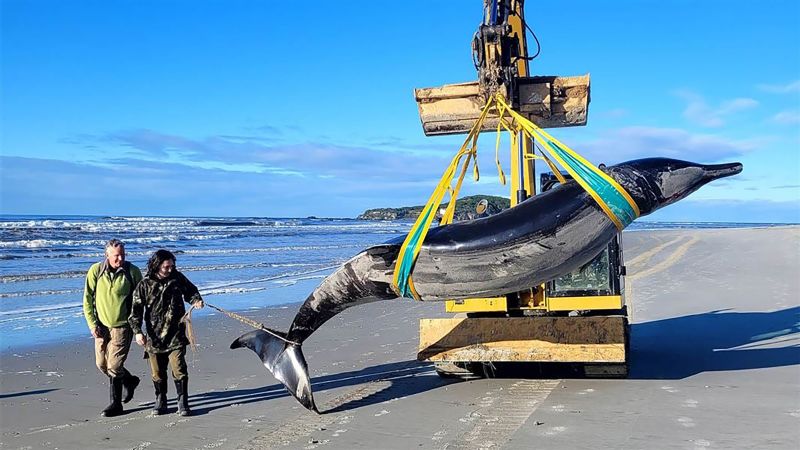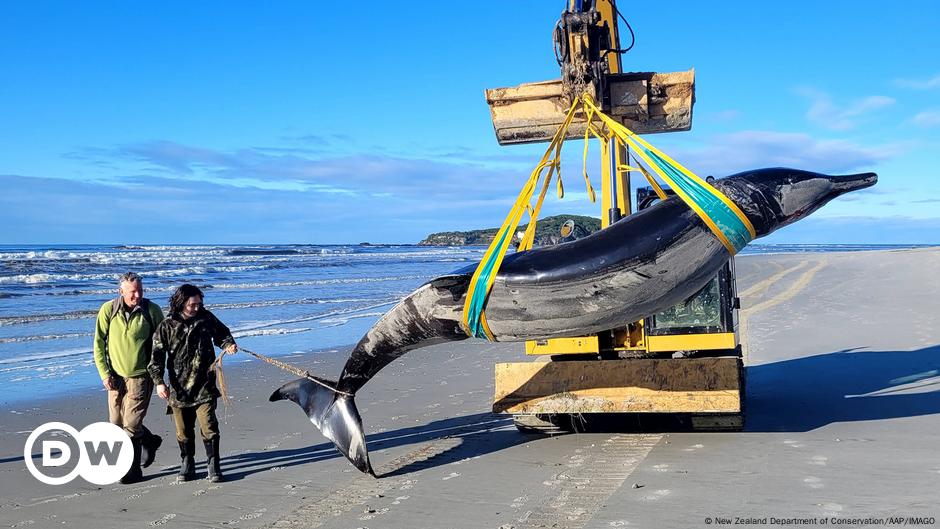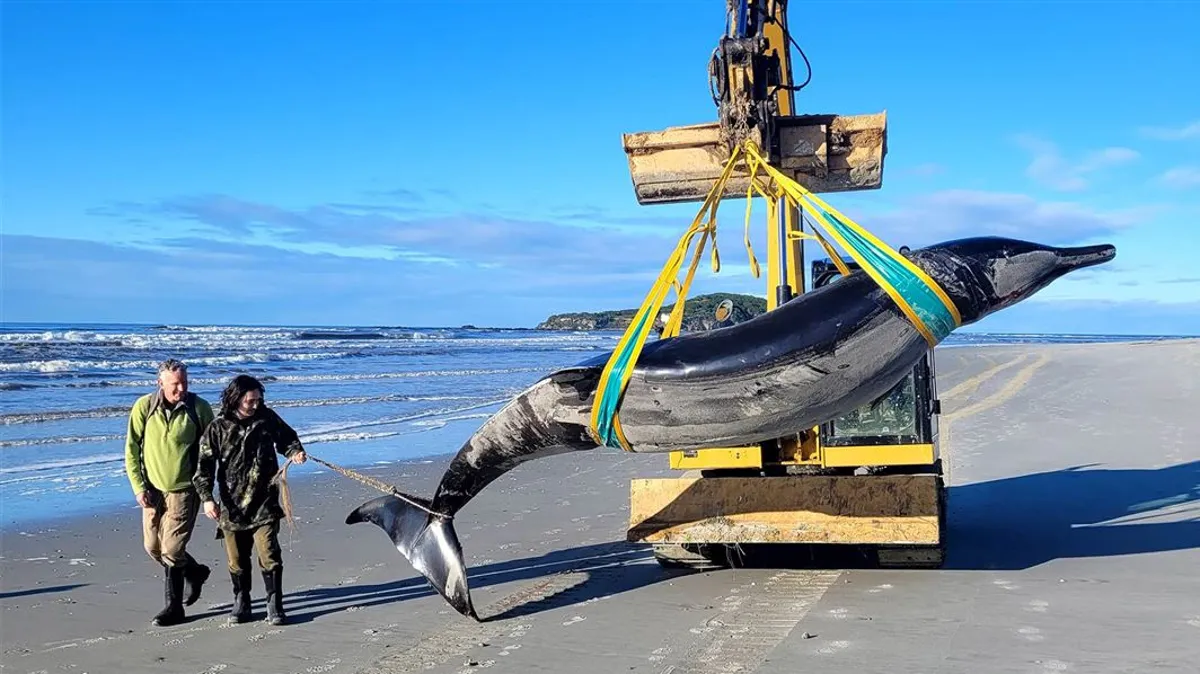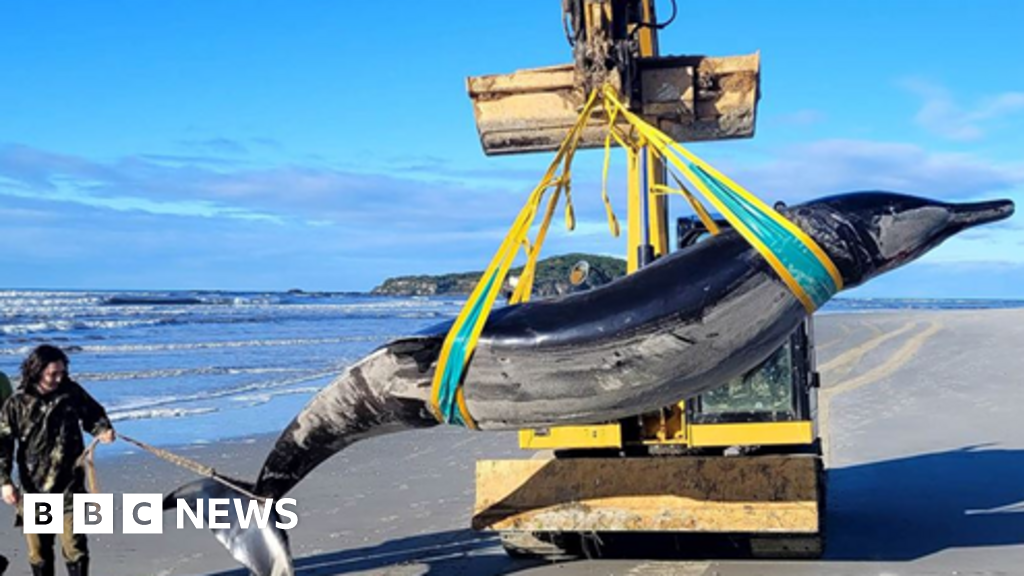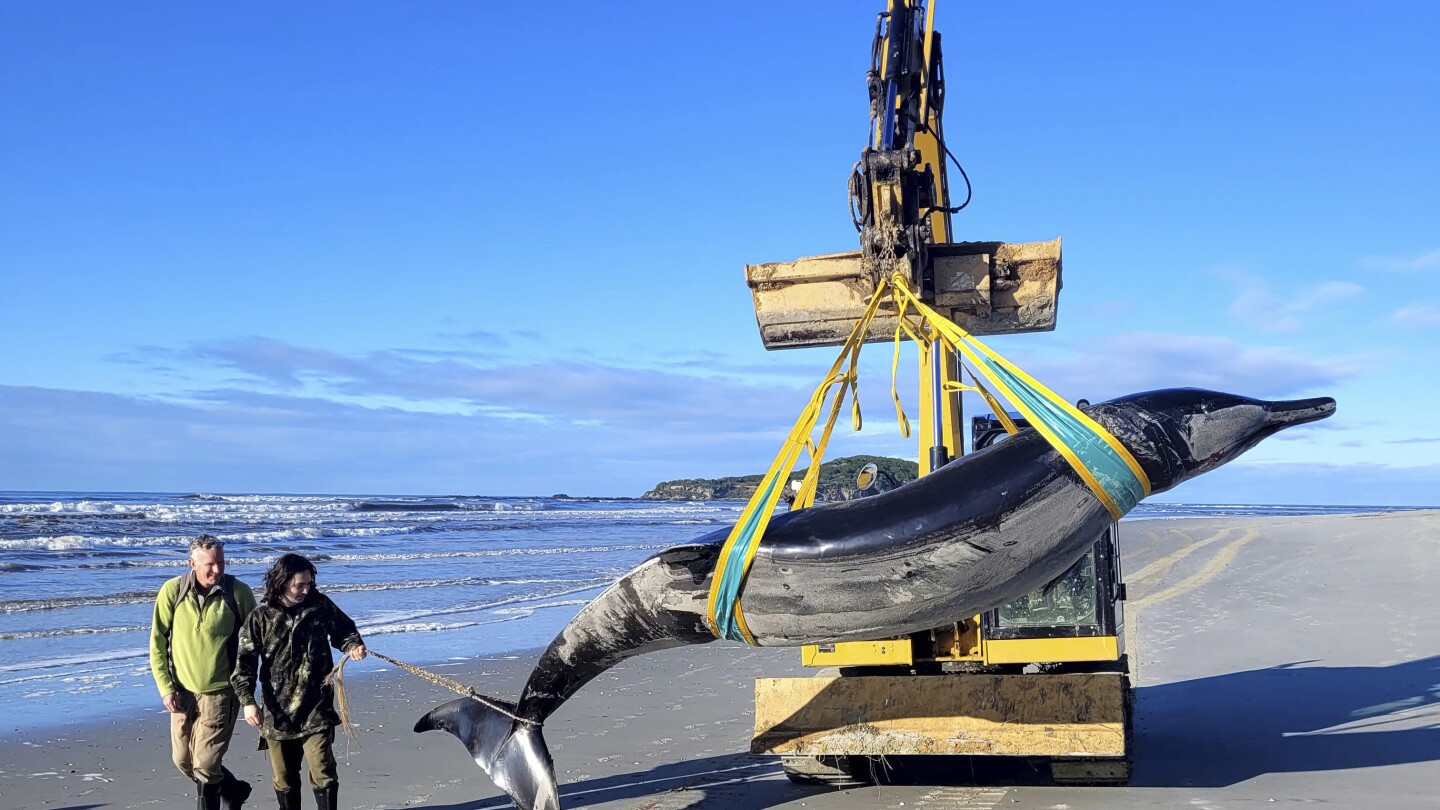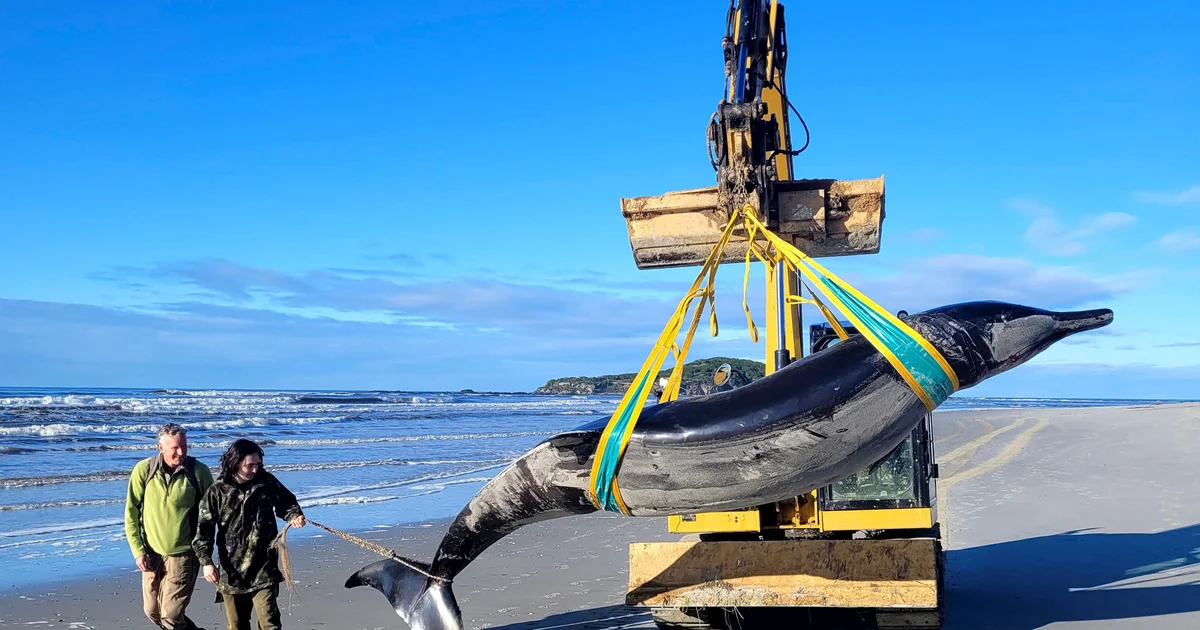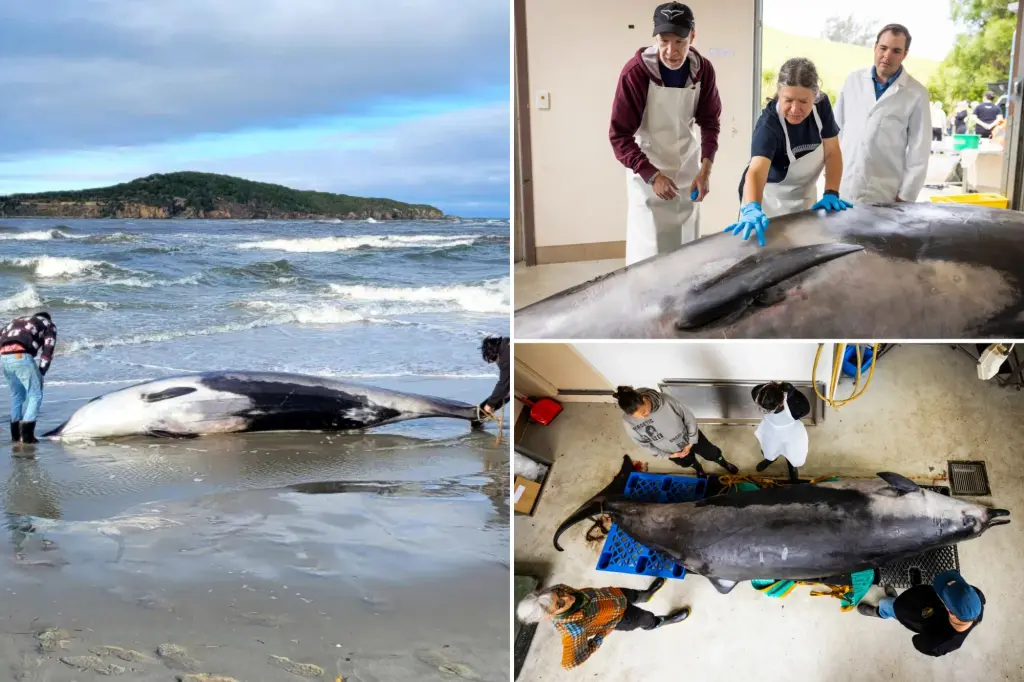
Scientists in New Zealand have completed the first dissection of a spade-toothed whale, the world's rarest whale, after a near-perfectly preserved specimen was found washed ashore. The whale likely died from head trauma, as indicated by a broken jaw and bruising. The dissection revealed nine stomach chambers with squid remnants and parasitic worms, and tiny vestigial teeth, offering insights into the whale's evolutionary history. The process involved collaboration with local Māori, who regard whales as sacred, and will retain the jawbone and teeth for cultural reasons.
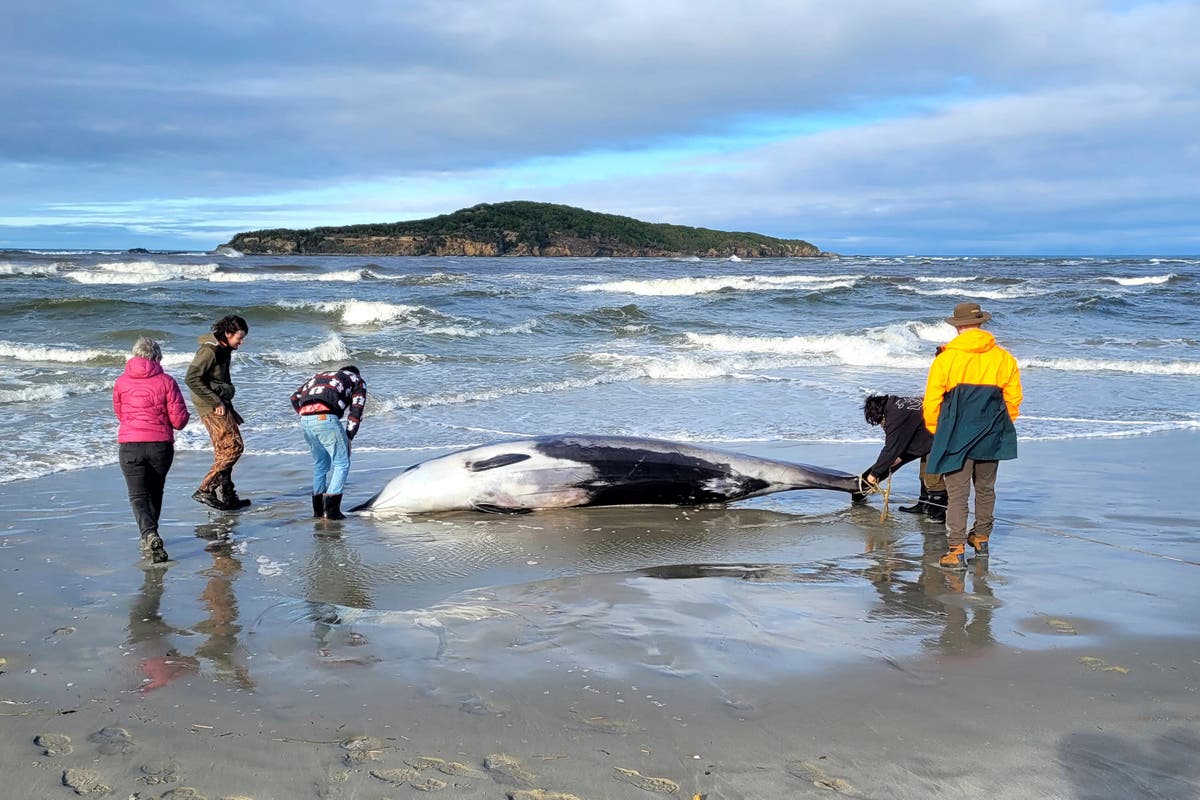
Scientists in New Zealand may have made a breakthrough in studying the world's rarest whale, the spade-toothed whale, after a specimen washed ashore on Otago beach. This discovery could provide unprecedented insights into the species, which has never been seen alive and is known from only a few previous finds. Genetic testing and collaboration with local Māori iwi will help confirm the whale's identity and allow for detailed scientific examination.
Scientists in New Zealand are excited about a potential sighting of the elusive spade-toothed whale, a species rarely seen and never observed alive. If confirmed, this would be only the seventh specimen ever studied. The whale's remains are being analyzed to learn more about its characteristics and diet, with the involvement of local Maori people due to the whale's cultural significance. This discovery highlights the vast unknowns of ocean life.
Scientists in New Zealand are investigating whether a 5-meter carcass that washed ashore is a spade-toothed whale, one of the world's rarest whales with no recorded live sightings. If confirmed, it would be the first opportunity to dissect the species, providing unprecedented insights into its biology and ecology. Genetic samples are being analyzed, and the whale is in cold storage as experts plan the next steps, working closely with local Māori communities to ensure respectful treatment.
The remains of a rare spade-toothed whale, the world's rarest whale species, have washed ashore in New Zealand, offering scientists a unique opportunity to study the elusive creature. Identified by marine mammal experts, the whale's body is now in cold storage, with genetic samples sent for DNA testing to confirm its classification. This discovery could provide crucial insights into the whale's diet, habitat, and relationship to other species.
A sea creature that washed up on a New Zealand beach may be the world's rarest whale, the spade-toothed whale, with only six specimens ever studied. The 16-foot male whale's remains are being preserved while genetic tests are conducted to confirm its species. This discovery could provide significant scientific insights into the poorly understood species.
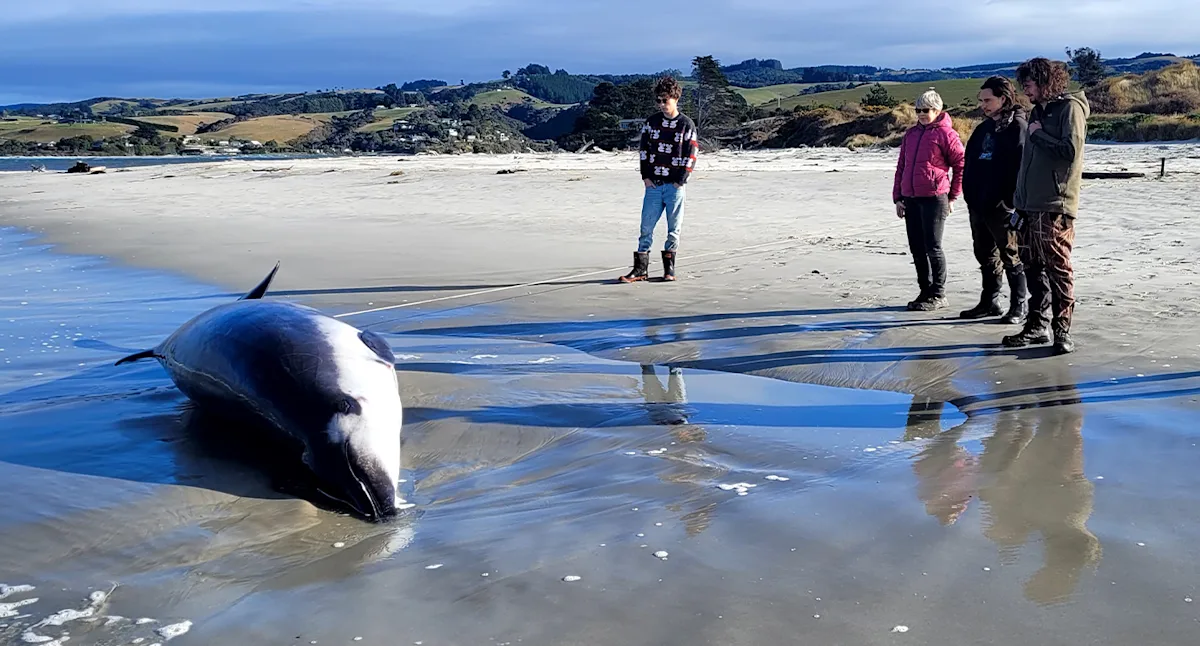
A dead whale found on a New Zealand beach has been identified as a spade-toothed whale, one of the world's rarest species, never seen alive. The five-meter-long whale's identity was confirmed through its physical characteristics, and DNA testing is underway. This discovery could provide crucial information about the species, with only six samples documented worldwide. Local Māori communities will participate in deciding the whale's fate, as whales are considered sacred treasures.
A rare spade-toothed whale, the world's least observed whale species, has washed up on a New Zealand beach, offering scientists a unique opportunity to study the elusive creature. Identified by its distinct physical features, the whale's discovery could provide groundbreaking insights into its diet, habitat, and population. The specimen has been preserved for detailed examination, with local Māori iwi involved in the process. Genetic testing to confirm the whale's identity may take months.
A rare spade-toothed whale, the world's rarest whale species, may have washed up on a New Zealand beach, offering scientists a unique opportunity to study the elusive creature. Identified by its distinct features, the whale's discovery could provide crucial insights into its diet, habitat, and population. The specimen has been preserved for examination, with local Māori iwi involved in the process, highlighting the cultural significance of whales in New Zealand.
A rare spade-toothed whale, the world's rarest whale species with no live sightings ever recorded, has washed up on a beach in New Zealand. This discovery offers a unique opportunity for scientists to study the elusive creature, potentially providing groundbreaking insights into its diet, habitat, and behavior. The whale has been transported to cold storage for examination, with local Māori iwi involved in the process. Genetic testing to confirm the whale's identification could take months.
A rare spade-toothed whale, one of the world's least known and most elusive marine mammals, has washed up on a beach in New Zealand's South Island. This discovery could provide scientists with a unique opportunity to study the species, which has never been seen alive and is known from only a few specimens. The whale has been preserved for examination, and genetic testing will confirm its identification. This event could lead to significant scientific breakthroughs regarding the whale's diet, habitat, and population.
A rare spade-toothed whale, one of only six ever examined, was found washed up near a remote fishing village in Otago, New Zealand. The whale's body has been placed in cold storage for further study, with the discovery being hailed as significant for both scientific and cultural reasons.