
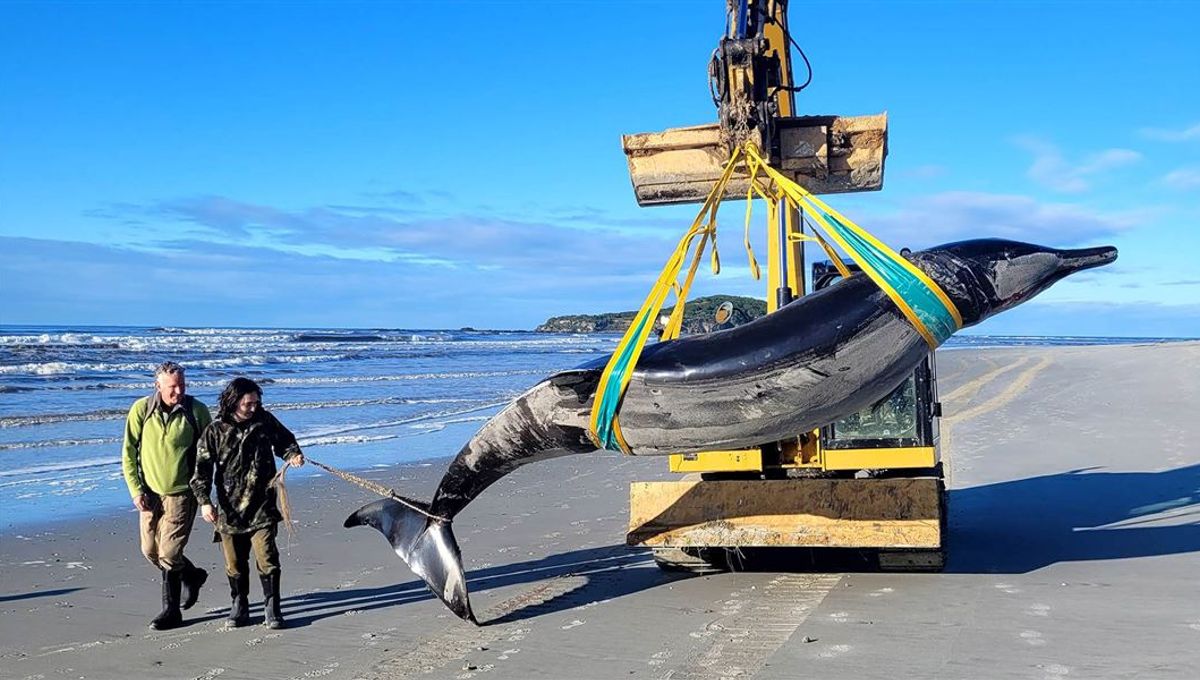
The rarest whale, the spade-toothed whale, with only seven known specimens and never seen alive, was recently dissected in New Zealand, revealing new insights into its anatomy, vestigial teeth, and stomach structure, highlighting the importance of combining indigenous and scientific knowledge for conservation.
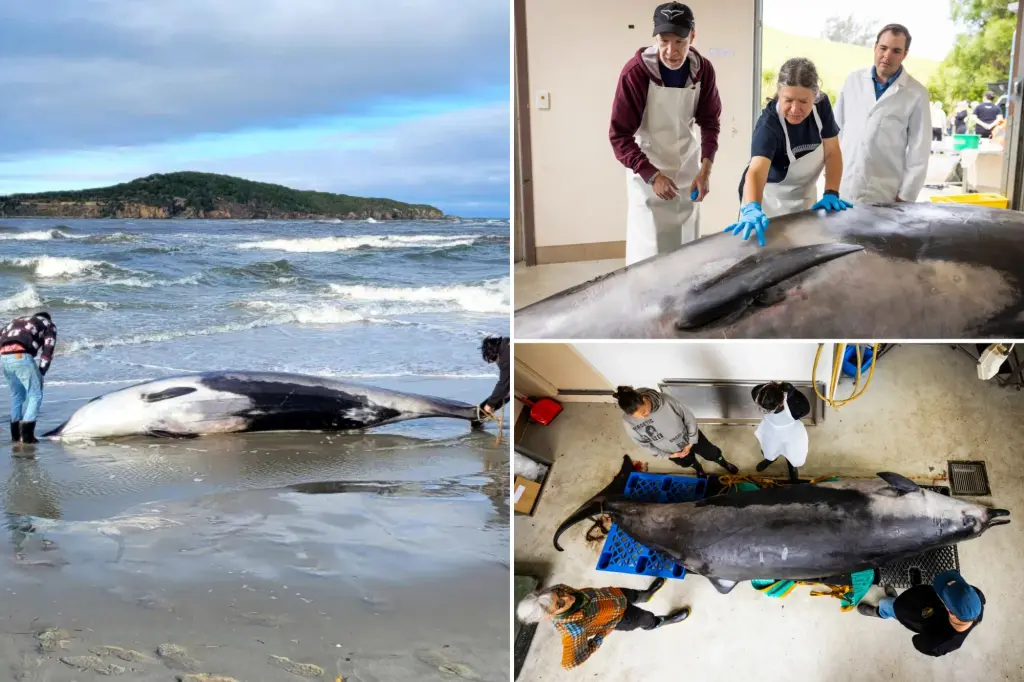
Scientists in New Zealand have completed the first dissection of a spade-toothed whale, the world's rarest whale, after a near-perfectly preserved specimen was found washed ashore. The whale likely died from head trauma, as indicated by a broken jaw and bruising. The dissection revealed nine stomach chambers with squid remnants and parasitic worms, and tiny vestigial teeth, offering insights into the whale's evolutionary history. The process involved collaboration with local Māori, who regard whales as sacred, and will retain the jawbone and teeth for cultural reasons.