Tag

Solarsystem

All articles tagged with #solarsystem

science1 year ago

Interstellar Visitor May Have Reshaped Our Solar System's Orbits

A recent study suggests that an interstellar object, possibly 2 to 50 times the mass of Jupiter, may have passed through our solar system, potentially altering the orbits and inclinations of the giant planets like Jupiter and Saturn. This discovery challenges the notion of our solar system's stability, indicating that external forces from interstellar visitors could have significant impacts on planetary dynamics. The object's unique trajectory and speed highlight the potential for such encounters to influence the solar system's structure over time.

science1 year ago

Interstellar Object Influenced Planetary Orbits

A new theory suggests that an interstellar object, with a mass between 2 to 50 times that of Jupiter, may have passed through the Solar System and influenced the orbits of the planets. This theory, proposed by scientists led by Garett Brown from the University of Toronto, posits that such a visitor could explain the eccentricities of the gas giants' orbits better than current models. The study indicates a 1 in 100 chance that this event shaped the planetary orbits we observe today, offering a plausible alternative to existing theories of planetary migration.

science1 year ago

Study: Kuiper Belt's Ultrawide Binaries May Be Newer Than Thought

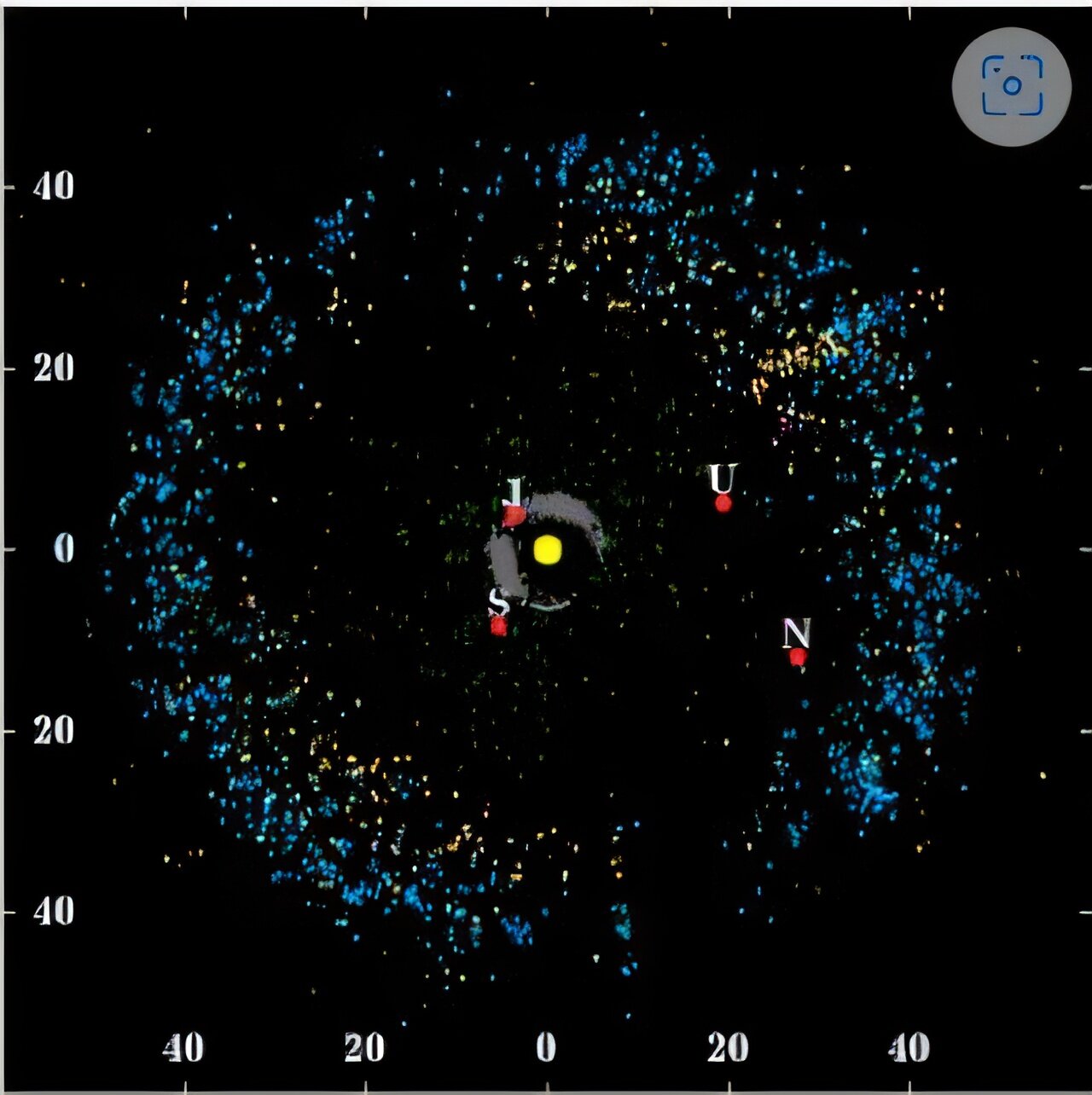
New research suggests that ultrawide binary objects in the Kuiper belt may not have originated in the primordial solar system as previously thought. Instead, these binaries could have evolved from initially tighter pairs that were gradually separated by gravitational perturbations over billions of years. This challenges the assumption that ultrawide binaries can be used to infer the early conditions of the solar system, as their current configuration may not be primordial.

science1 year ago

Astronomers Close to Unveiling Possible Hidden Planet in Solar System

Astronomers are debating the existence of a potential ninth planet, known as Planet Nine, in our solar system. This hypothetical planet, inferred from the unusual orbits of trans-Neptunian objects, could reshape our understanding of the solar system. While some researchers are skeptical, others, like Mike Brown and Konstantin Batygin, present evidence supporting its existence. The upcoming Vera C. Rubin Observatory, set to begin operations in 2025, may provide definitive answers by surveying the sky for this elusive planet.

science-and-technology2 years ago

"NASA's Juno Captures Stunning Close-Up Images of Jupiter's Volcanic Moon Io"

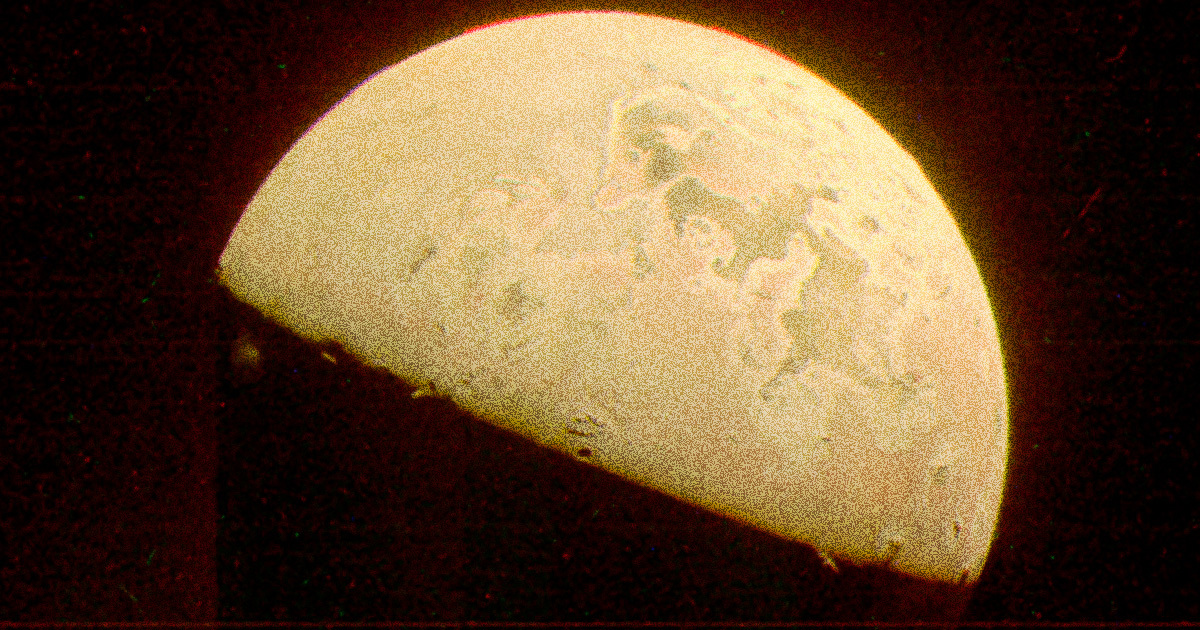
NASA's Juno spacecraft recently completed a historic flyby of Jupiter's moon Io, coming within 930 miles of its surface, the closest approach in over two decades. The flyby provided stunning images and a wealth of data on Io's volcanic activity, which is among the most intense in the Solar System due to tidal heating from Jupiter and its moons. The mission aims to understand the frequency and patterns of volcanic eruptions on Io, as well as the suspected magma oceans beneath its crust. Juno is set to continue its exploration with another close pass on February 3.

science-and-technology2 years ago

"Intruder Among Us: The Alien Planet Invasion Theory of Our Solar System"

A new theory proposed by Princeton astrophysicist Amir Siraj suggests that a rogue planet, possibly the size of Earth or Mars, may have been captured by the sun's gravity and could be lurking in the outer reaches of our solar system. This theory is based on calculations of rogue planets in space and the likelihood of their capture during the solar system's formation. While no such planet has been detected yet, the upcoming Large Synoptic Survey Telescope in Chile could potentially discover these hypothetical alien planets when it becomes operational in August 2025.

science-and-technology2 years ago

"Quantifying the Sun's Immense Energy Output"

The Sun's energy output is a crucial factor for life on Earth and has been measured to be approximately 4 × 10^26 watts. This measurement was historically achieved through a combination of understanding the Sun's physical properties, such as its size and distance from Earth, and the development of instruments like the actinometer. William Herschel's discovery of infrared radiation and subsequent experiments by his son John Herschel and others led to the ability to calculate the Sun's power output by measuring the energy incident on Earth. These findings have paved the way for modern solar power technologies, harnessing the Sun's energy for various applications.

science-and-technology2 years ago

"Exploring the Potential Number of Planets Hidden in the Kuiper Belt"

A study by Amir Siraj suggests that Mars-sized free-floating planets could exist in the Kuiper Belt, far beyond Pluto, at distances ranging from 600 to 3,500 AU from the sun. These rogue planets, potentially billions in number throughout the Milky Way, could have been captured by our solar system's gravity. Siraj's research, involving 100 million simulations, indicates the possibility of terrestrial planets in the outer solar system, which could provide insights into the formation and habitability of exoplanets. The study emphasizes the need for further research on the capture process of rogue planets and suggests microlensing as a method for their detection.

science-and-technology2 years ago

"Exploring the Potential Number of Planets Hidden in the Kuiper Belt"

A study in The Astrophysical Journal Letters suggests that Mars-sized free-floating planets could exist in the Kuiper Belt, far beyond Pluto, potentially captured by the Sun's gravity. These rogue planets, possibly numbering in the billions or trillions galaxy-wide, could inform us about planetary system formation, habitability, and dynamical interactions with stars. Using computer simulations, the study indicates the possibility of a Mars or Mercury-sized body at a distance of 600 to 3,500 AU from the Sun. The research highlights the importance of understanding the capture process of rogue planets and suggests microlensing as a method for their detection.

science-and-technology2 years ago

"2023: A Revolutionary Year in Unveiling Asteroid Mysteries and Close Earth Encounters"

Recent observations of asteroids by the SPHERE instrument at the European Southern Observatory's Very Large Telescope are providing new insights into the composition and origins of these celestial bodies, suggesting that many may have formed beyond their current location in the Main Asteroid Belt. The findings indicate a bimodal density distribution among these asteroids, with implications for the history of the solar system and the potential for asteroids to have delivered water and prebiotic materials to Earth. The research is also paving the way for future studies with ESO's upcoming Extremely Large Telescope, which will further our understanding of the early solar system and the emergence of life on Earth.

science-and-technology2 years ago

"Pluto's Planetary Debate and the Quest for Extraterrestrial Insights"

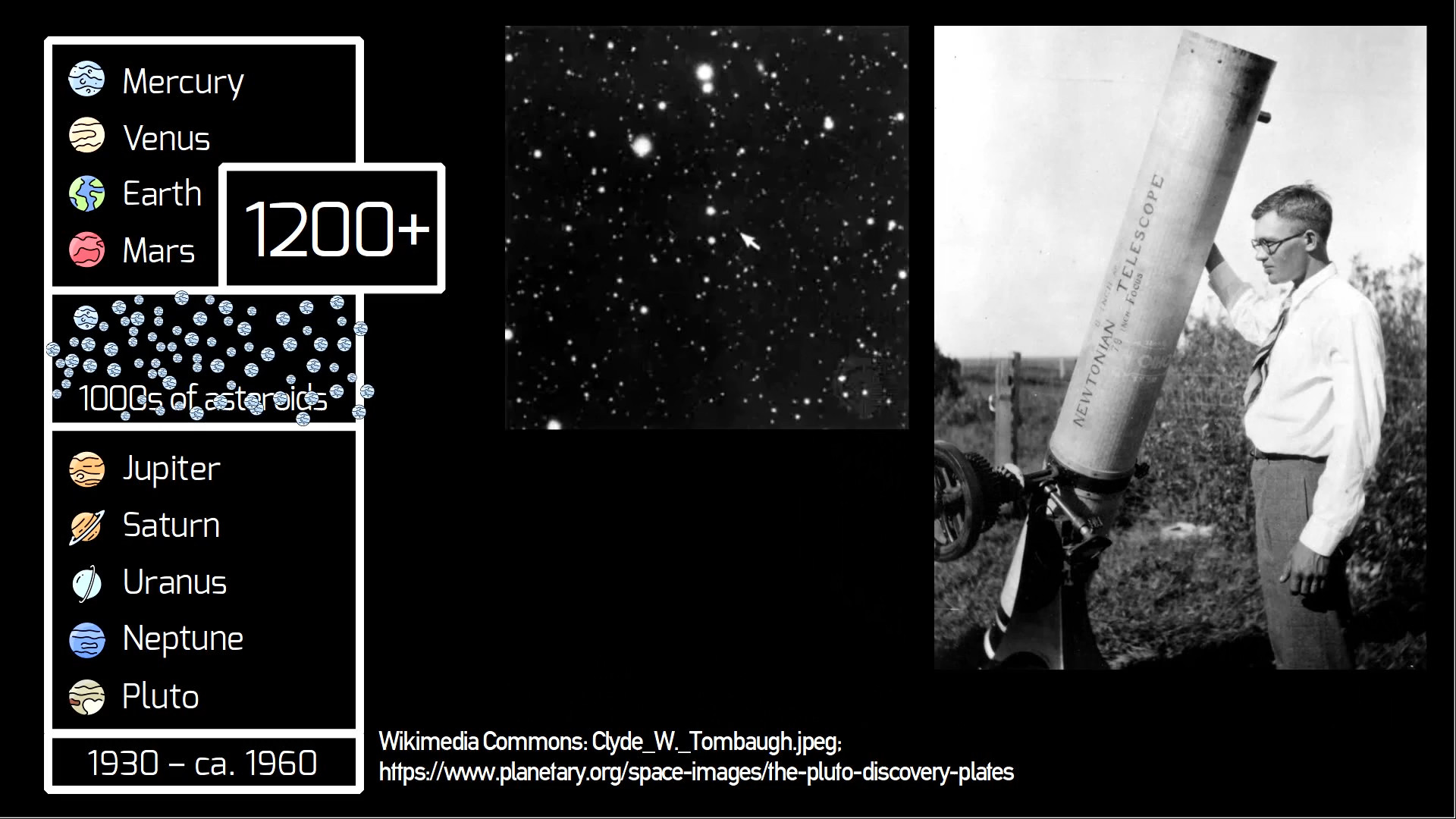
At the 37th Chaos Communication Congress, Michael Büker gave a talk on the history of our understanding of planets, highlighting the fluidity of the term "planet" throughout history. Initially, the Sun and Moon were considered planets, and later asteroids like Ceres and Vesta were included, leading to a list of over 1,200 celestial bodies. The concept of nine planets was a short-lived modern idea, and the debate over Pluto's status illustrates the challenges of classifying the diverse bodies in our solar system. Büker suggests that the distinction between what is and isn't a planet is more about human perception and classification than the celestial bodies themselves.