Tag

Kuiperbelt

All articles tagged with #kuiperbelt

science1 year ago

Study: Kuiper Belt's Ultrawide Binaries May Be Newer Than Thought

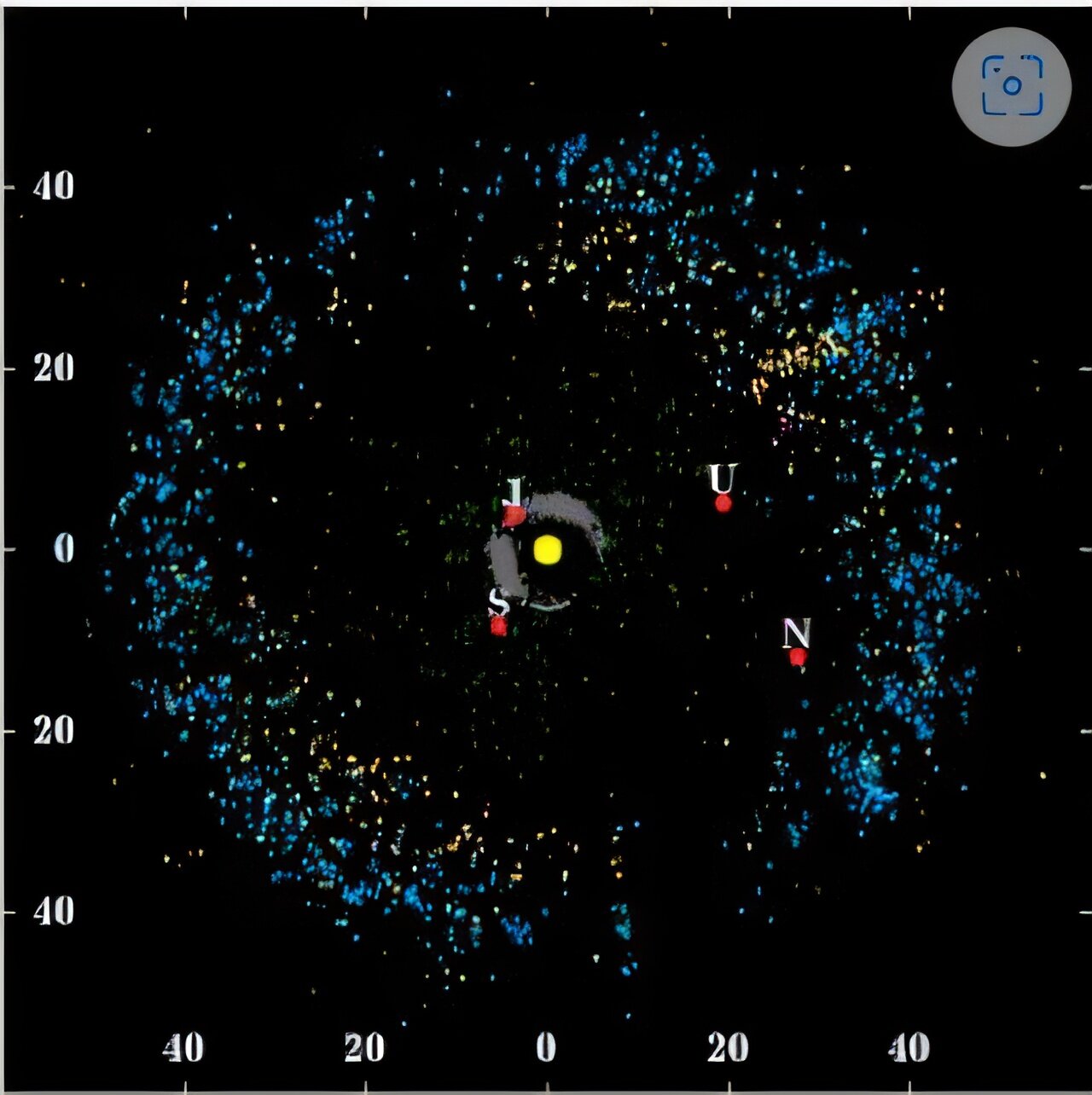
New research suggests that ultrawide binary objects in the Kuiper belt may not have originated in the primordial solar system as previously thought. Instead, these binaries could have evolved from initially tighter pairs that were gradually separated by gravitational perturbations over billions of years. This challenges the assumption that ultrawide binaries can be used to infer the early conditions of the solar system, as their current configuration may not be primordial.
science1 year ago

Growing Evidence Fuels Debate Over Mysterious Planet Nine

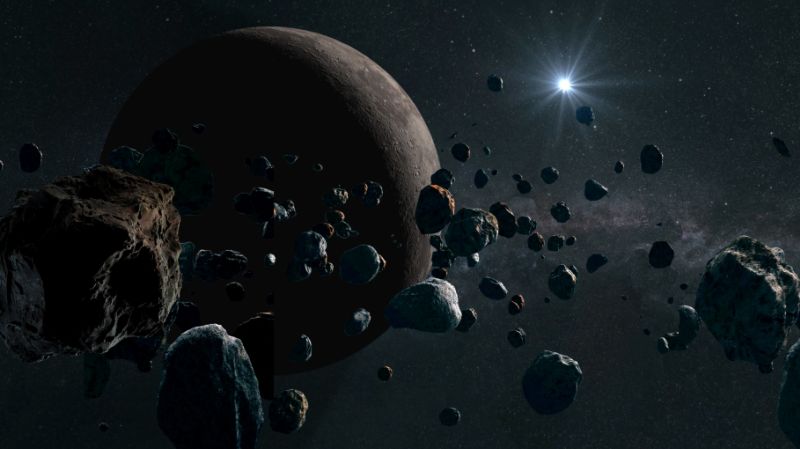
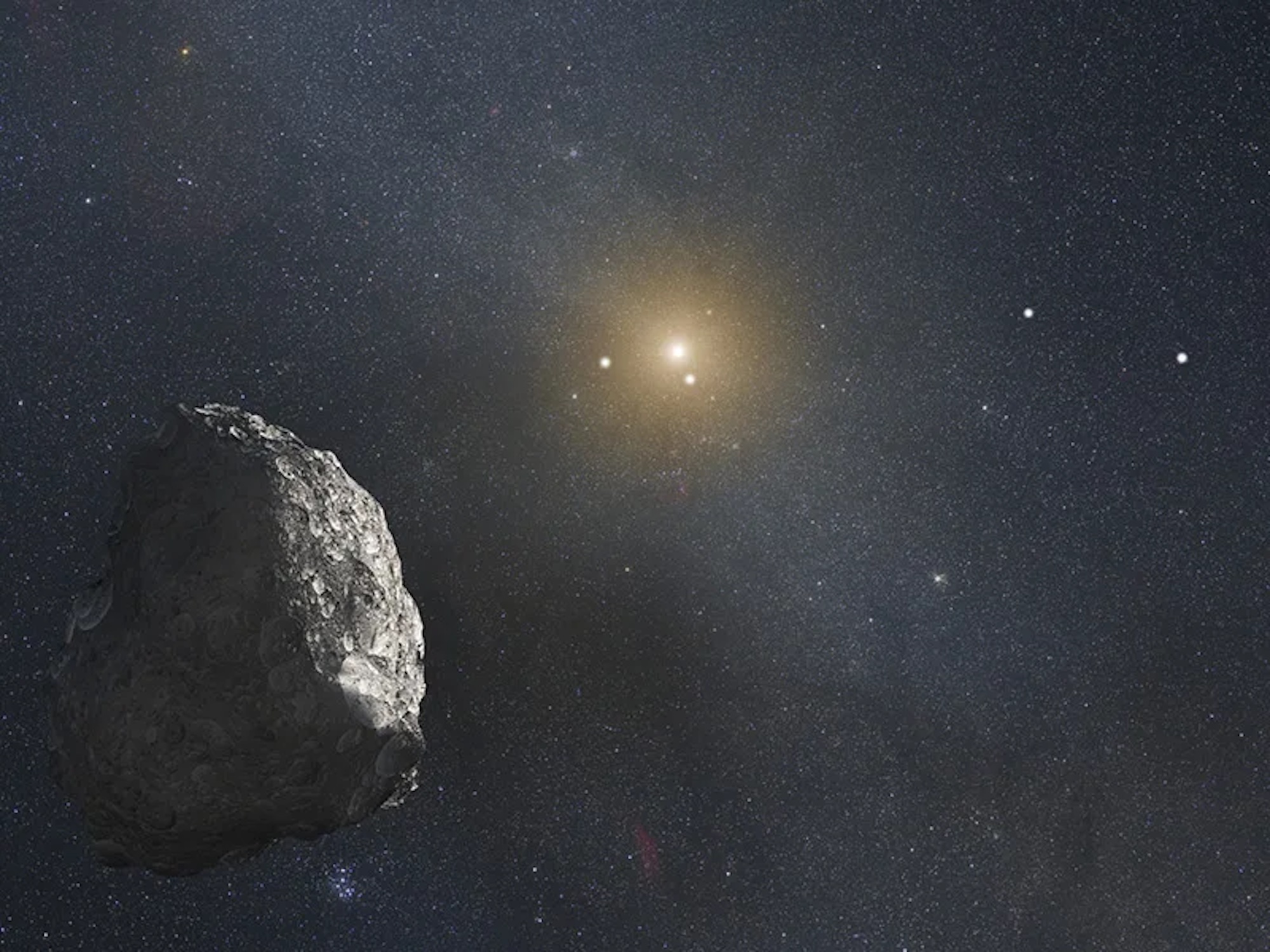
Researchers have presented compelling evidence for the existence of Planet Nine, a hidden planet in the Kuiper Belt, with a mass between 1.5 and 3 times that of Earth. This potential "super-Earth" could explain the unusual orbits of distant Kuiper Belt objects. Scientists like Michael Brown and Konstantin Batygin have been investigating this possibility since 2014, using computer simulations and observing gravitational anomalies. Advances in telescope technology may soon confirm the planet's existence, with NASA's new telescope expected to provide more insights by 2025.

science1 year ago

Astronomers Close to Unveiling Possible Hidden Planet in Solar System

Astronomers are debating the existence of a potential ninth planet, known as Planet Nine, in our solar system. This hypothetical planet, inferred from the unusual orbits of trans-Neptunian objects, could reshape our understanding of the solar system. While some researchers are skeptical, others, like Mike Brown and Konstantin Batygin, present evidence supporting its existence. The upcoming Vera C. Rubin Observatory, set to begin operations in 2025, may provide definitive answers by surveying the sky for this elusive planet.

science-and-technology2 years ago

"Intruder Among Us: The Alien Planet Invasion Theory of Our Solar System"

A new theory proposed by Princeton astrophysicist Amir Siraj suggests that a rogue planet, possibly the size of Earth or Mars, may have been captured by the sun's gravity and could be lurking in the outer reaches of our solar system. This theory is based on calculations of rogue planets in space and the likelihood of their capture during the solar system's formation. While no such planet has been detected yet, the upcoming Large Synoptic Survey Telescope in Chile could potentially discover these hypothetical alien planets when it becomes operational in August 2025.

science-and-technology2 years ago

"Exploring the Potential Number of Planets Hidden in the Kuiper Belt"

A study by Amir Siraj suggests that Mars-sized free-floating planets could exist in the Kuiper Belt, far beyond Pluto, at distances ranging from 600 to 3,500 AU from the sun. These rogue planets, potentially billions in number throughout the Milky Way, could have been captured by our solar system's gravity. Siraj's research, involving 100 million simulations, indicates the possibility of terrestrial planets in the outer solar system, which could provide insights into the formation and habitability of exoplanets. The study emphasizes the need for further research on the capture process of rogue planets and suggests microlensing as a method for their detection.

science-and-technology2 years ago

"Exploring the Potential Number of Planets Hidden in the Kuiper Belt"

A study in The Astrophysical Journal Letters suggests that Mars-sized free-floating planets could exist in the Kuiper Belt, far beyond Pluto, potentially captured by the Sun's gravity. These rogue planets, possibly numbering in the billions or trillions galaxy-wide, could inform us about planetary system formation, habitability, and dynamical interactions with stars. Using computer simulations, the study indicates the possibility of a Mars or Mercury-sized body at a distance of 600 to 3,500 AU from the Sun. The research highlights the importance of understanding the capture process of rogue planets and suggests microlensing as a method for their detection.