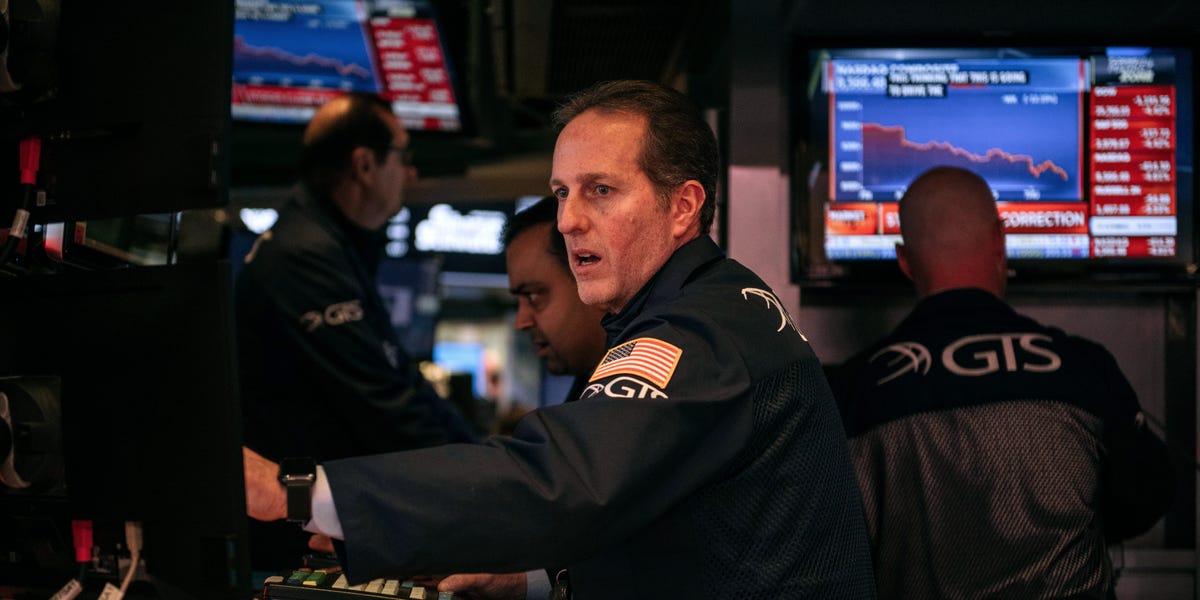
Historically, December 26 is the most reliably positive trading day of the year for the S&P 500, with gains occurring in 33 of the past 39 years since 1953, making it a significant day for investors following Christmas. This year, the market has been strong, and the upcoming session marks the second day of the Santa Claus rally, which has been notably positive despite recent years of negative returns.
Nvidia's stock historically faces a downturn in December, despite often positive third-quarter earnings. Over the past decade, December has been the weakest month for Nvidia, with an average decline of 1.84%. This trend is attributed to year-end profit-taking rather than negative earnings reactions, as Nvidia typically sees strong gains in the first quarter of the following year. The pattern is particularly pronounced in years with significant stock rallies, such as 2023, driven by the AI boom.
The Dow Jones Industrial Average, Nasdaq 100, and S&P 500 reached record highs, but historical trends suggest a potential pause in the market's rally, especially during the seasonally weak months of the year. Divergences between sectors, such as industrials and transports, as well as market concentration in megacap stocks, indicate a need for correction. However, opportunities may arise in underrepresented sectors like healthcare, financials, and industrials, which have shown strength and potential for further growth.
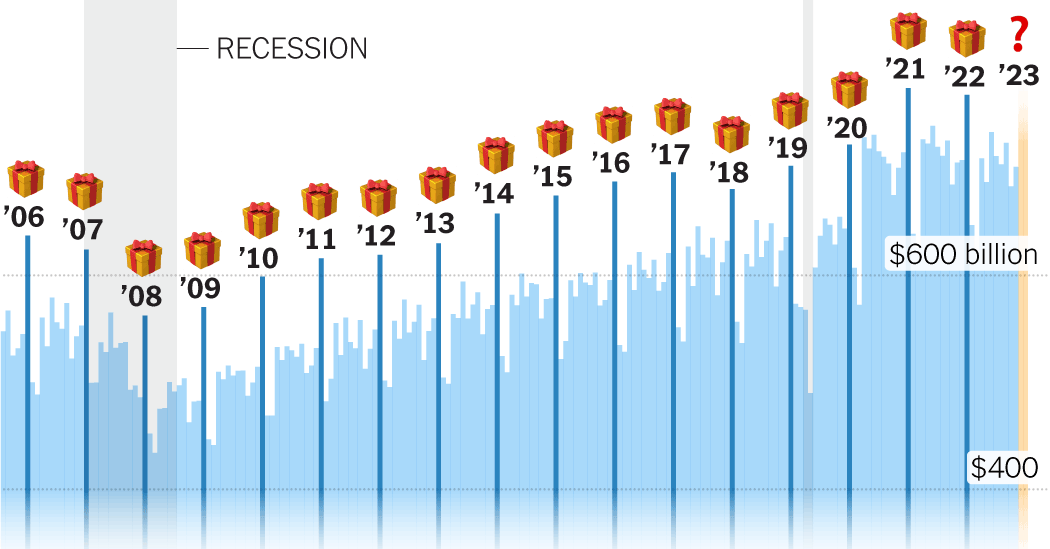
December is traditionally a strong month for retail spending, with Americans typically spending more during the holiday season. This trend is seen not only in retail shopping but also in the overall GDP of the country. Despite the economic crisis caused by the pandemic, December spending increased in 2020, aided by government stimulus payments. Economists are closely watching consumer behavior this holiday season, expecting a promotion-driven shopping period with increased spending compared to last year. The ability of Americans to spend during the darkest months of the year plays a crucial role in the health of the economy.
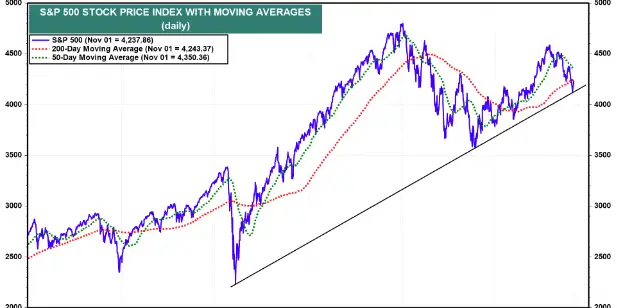
Market veteran Ed Yardeni suggests that the stock market may have just bottomed, pointing to the S&P 500 finding support at its rising trend line. The recent rally has been driven by better-than-expected earnings and the Federal Reserve's less hawkish stance on interest rates. If the market did bottom this week, it would align with the historically bullish seasonals that typically drive stocks higher towards the end of the year.
Apple, Microsoft, Tesla, and Meta collectively lost $625 billion in market value this month, with Apple leading the decline with a $314 billion slump. The tech selloff is likely influenced by seasonal trends, as August historically tends to be a weak month for equities. The broader decline in US equities, triggered in part by higher bond yields, has also contributed to the slump. Despite this, Nvidia, a semiconductor company, has defied the trend and experienced a successful year.