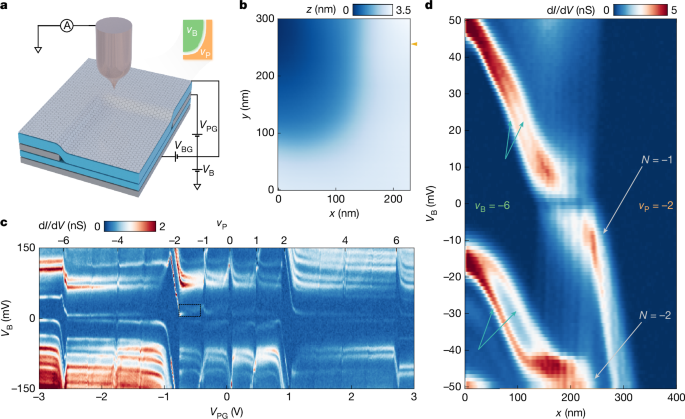
The article discusses the visualization and analysis of interaction-driven restructuring of quantum Hall edge states in graphene using advanced scanning tunneling microscopy techniques, providing insights into the topological and electronic properties of these states.
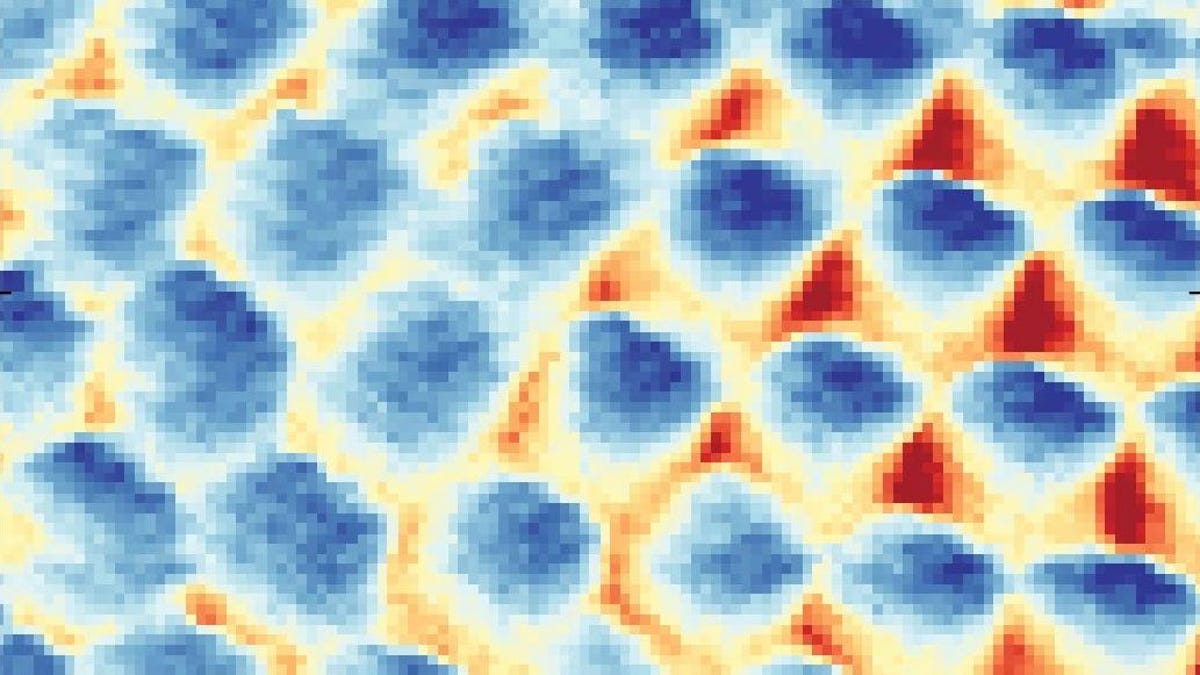
Physicists have successfully captured the first-ever image of electrons in a Wigner crystal, a quantum phase of matter predicted by Eugene Wigner in 1934. Using high-resolution scanning tunneling microscopy, the team observed electrons forming a lattice structure at very cold temperatures and low-density conditions, under the influence of a magnetic field. This breakthrough provides direct evidence of the Wigner crystal and opens the door to further exploration of how this phase transitions into other states of matter.
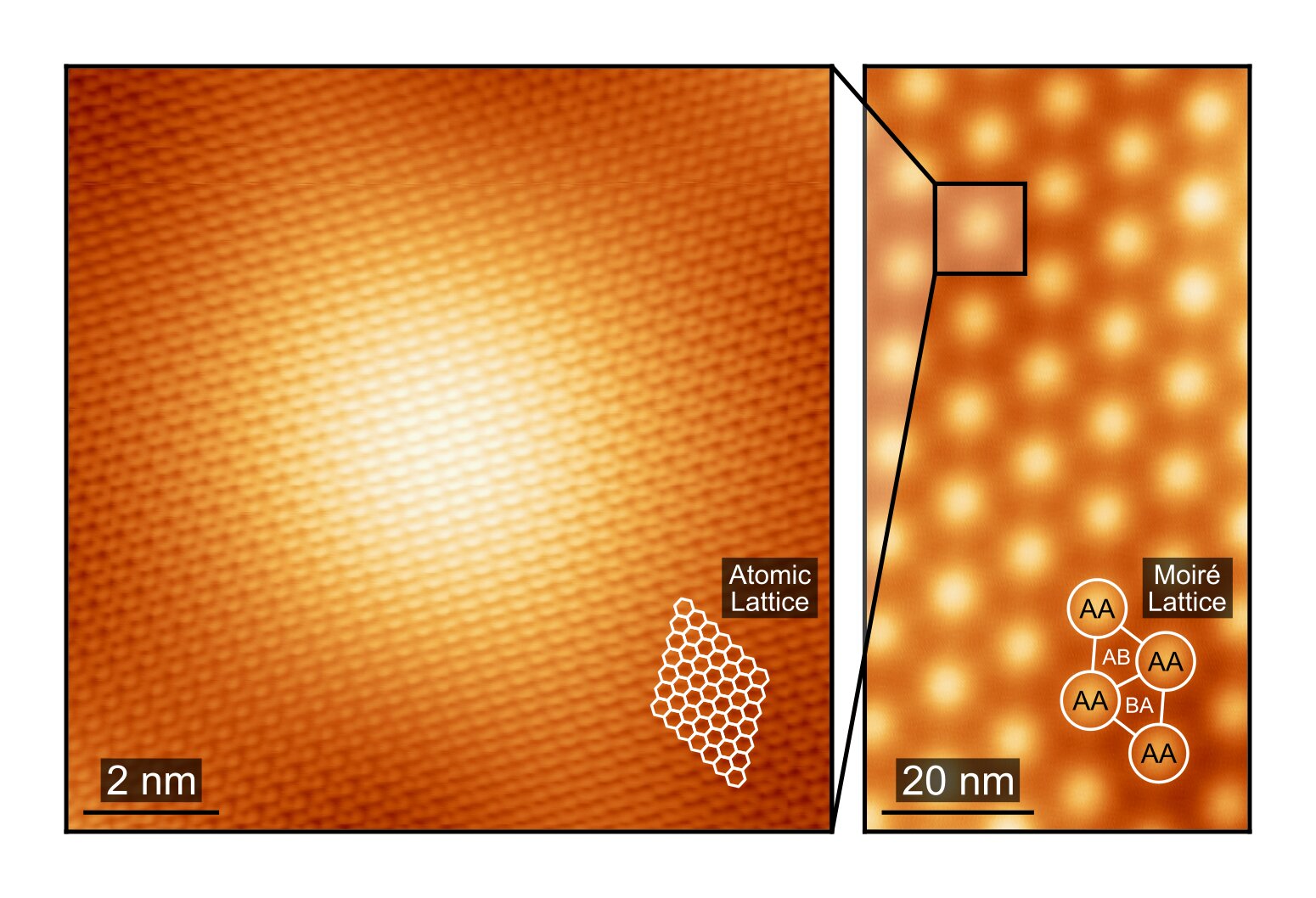
A team of scientists from Princeton University has successfully visualized the microscopic behavior of interacting electrons in magic-angle twisted bilayer graphene (MATBG), a material that has demonstrated various quantum phases. Using scanning tunneling microscopy, the researchers captured precise images of the insulating quantum phase and developed a theoretical framework to interpret the behaviors. The study provides insights into the origins of quantum phases in MATBG and may contribute to the understanding of other unusual superconductors and the development of next-generation quantum technologies.
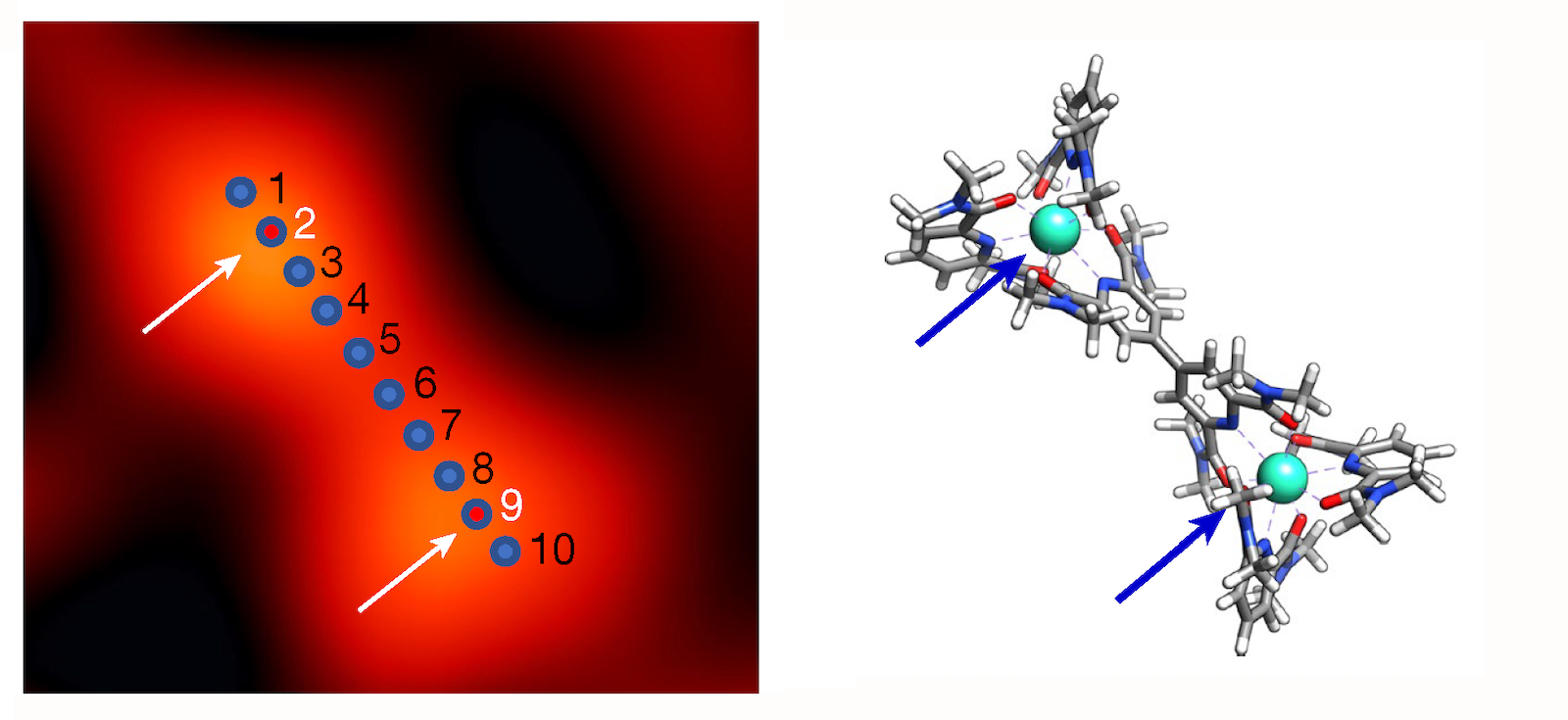
A recent study by Tolulope M. Ajayi and colleagues demonstrates how Scanning Tunneling Microscopes (STMs) and X-ray spectroscopy can be combined to characterize singular atoms. The researchers synthesized supramolecular complexes that could hold the atom under investigation in place and away from atoms of the same species, allowing the atom to be identified using SX-STM. This method provides a very efficient way to get a detailed overview of an atom's properties, and in future studies, researchers hope to use polarized X-rays to obtain information about an atom's spin state, opening interesting possibilities in areas such as spintronics and memory technologies.
Researchers at the Cornell University Center for Bright Beams have developed new techniques to guide the growth of materials used in next-generation particle accelerators. The study reveals the potential for greater control over the growth of superconducting Nb3Sn films, which could significantly reduce the cost and size of cryogenic infrastructure required for superconducting technology. The team delivered the first atomic-scale images of Sn on oxidized niobium, depicting the early stages of Nb3Sn formation, which is an essential advancement in creating a mechanistic formula for optimizing the fabrication of next-generation accelerator cavities.