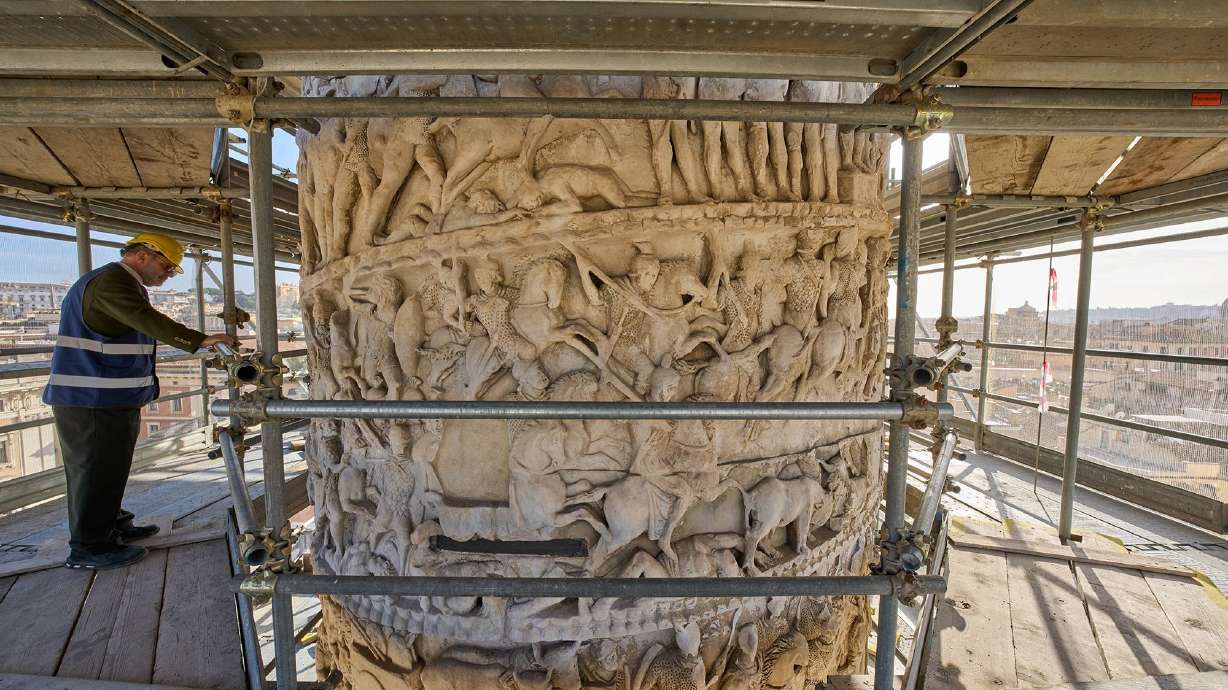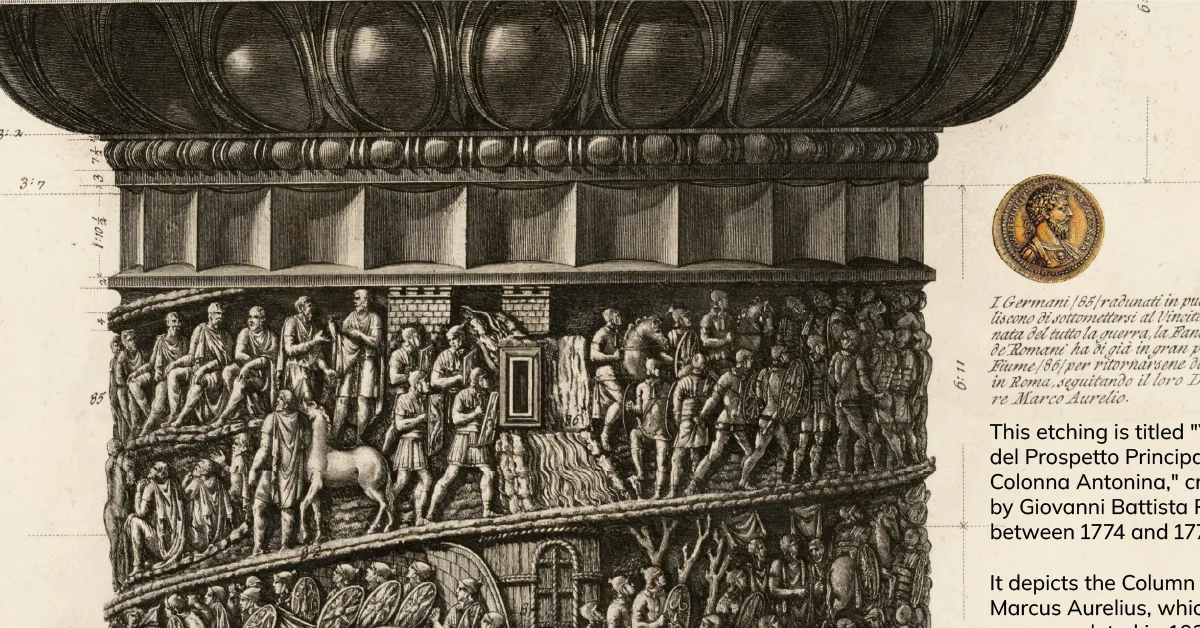
A 1,840-year-old marble column in Rome depicting scenes from Marcus Aurelius's reign is undergoing a $2.3 million laser restoration, the most extensive use of laser technology on an ancient monument, to remove grime, repair damage, and preserve its historical integrity, with completion expected in 2026.
The Column of Marcus Aurelius in Rome, completed in 193 AD, vividly depicts the emperor's military campaigns during the Marcomannic Wars through intricate carvings, reflecting both triumph and the brutal realities of war. Recent laser restoration in 2025 has enhanced its details, preserving this ancient monument's legacy amid centuries of wear.
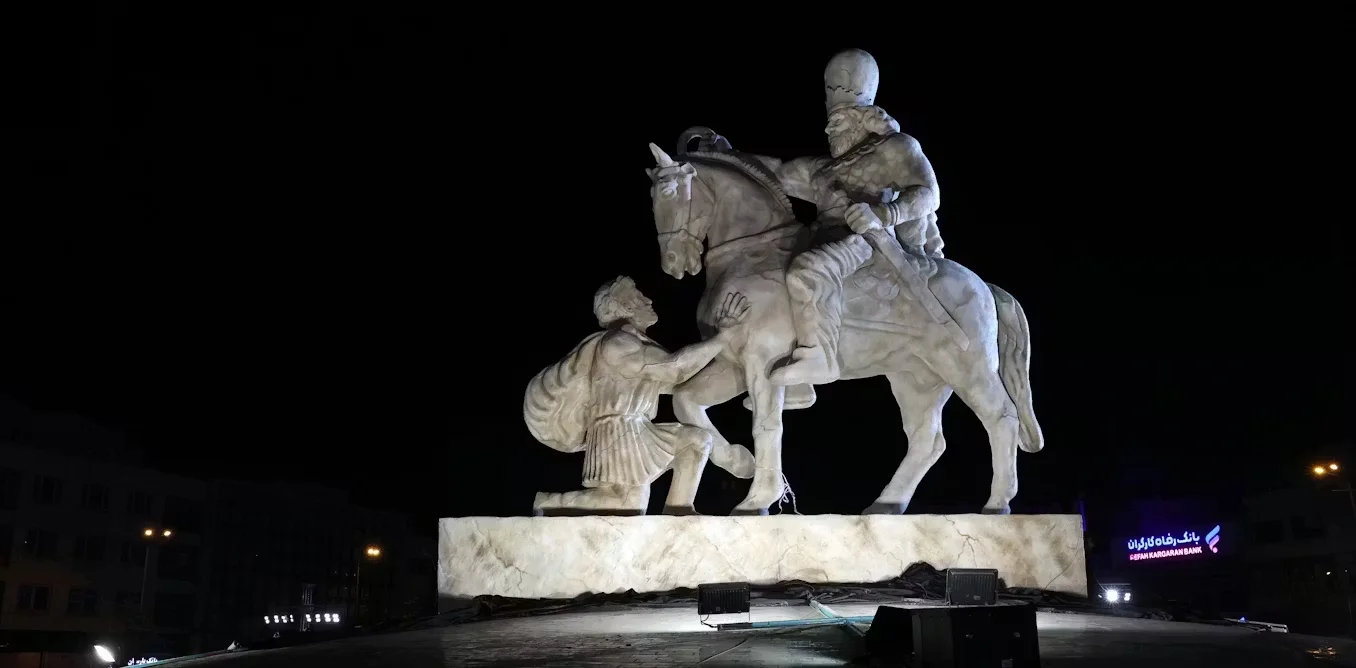
A new statue in Tehran depicts Roman Emperor Valerian kneeling before Persian King Shapur I, symbolizing Iran's historical resilience and victory over Rome, and serving as a message of defiance amid recent tensions with the West.
The article debunks common historical misconceptions, such as knights' armor being slow, Cleopatra's beauty, the fall of the Roman Empire, and the story of the space pen, providing accurate historical context and clarifications.
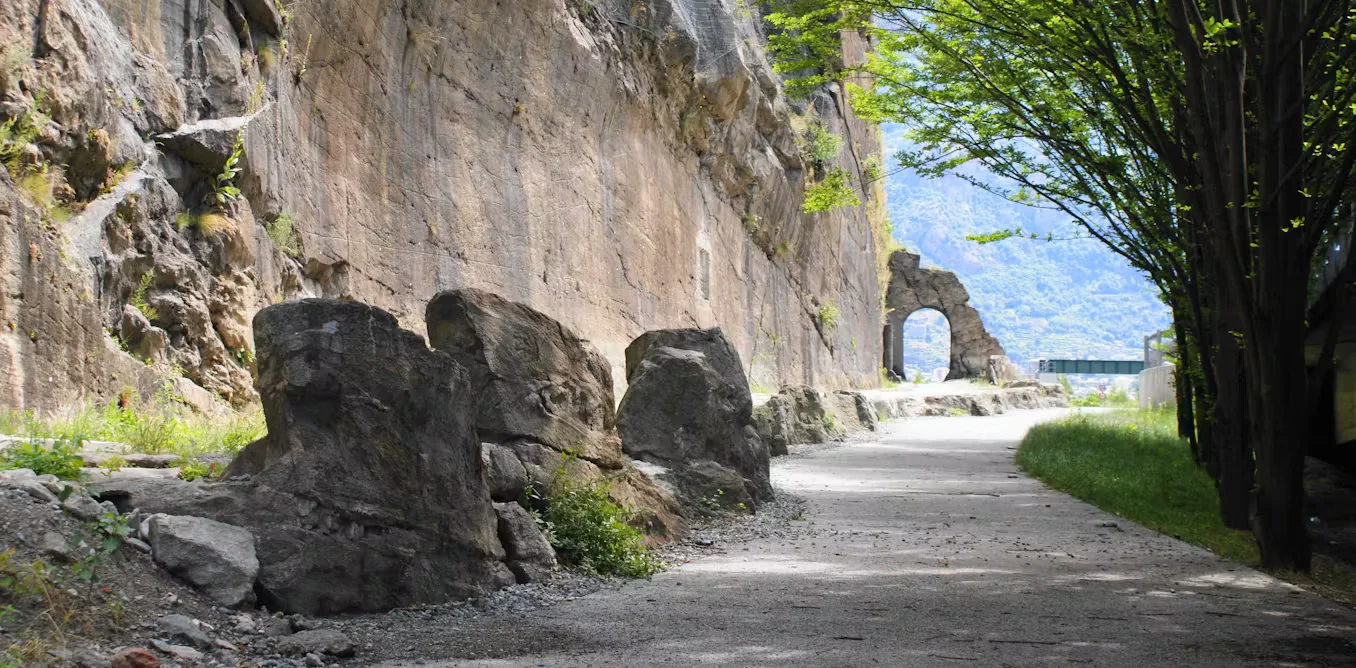
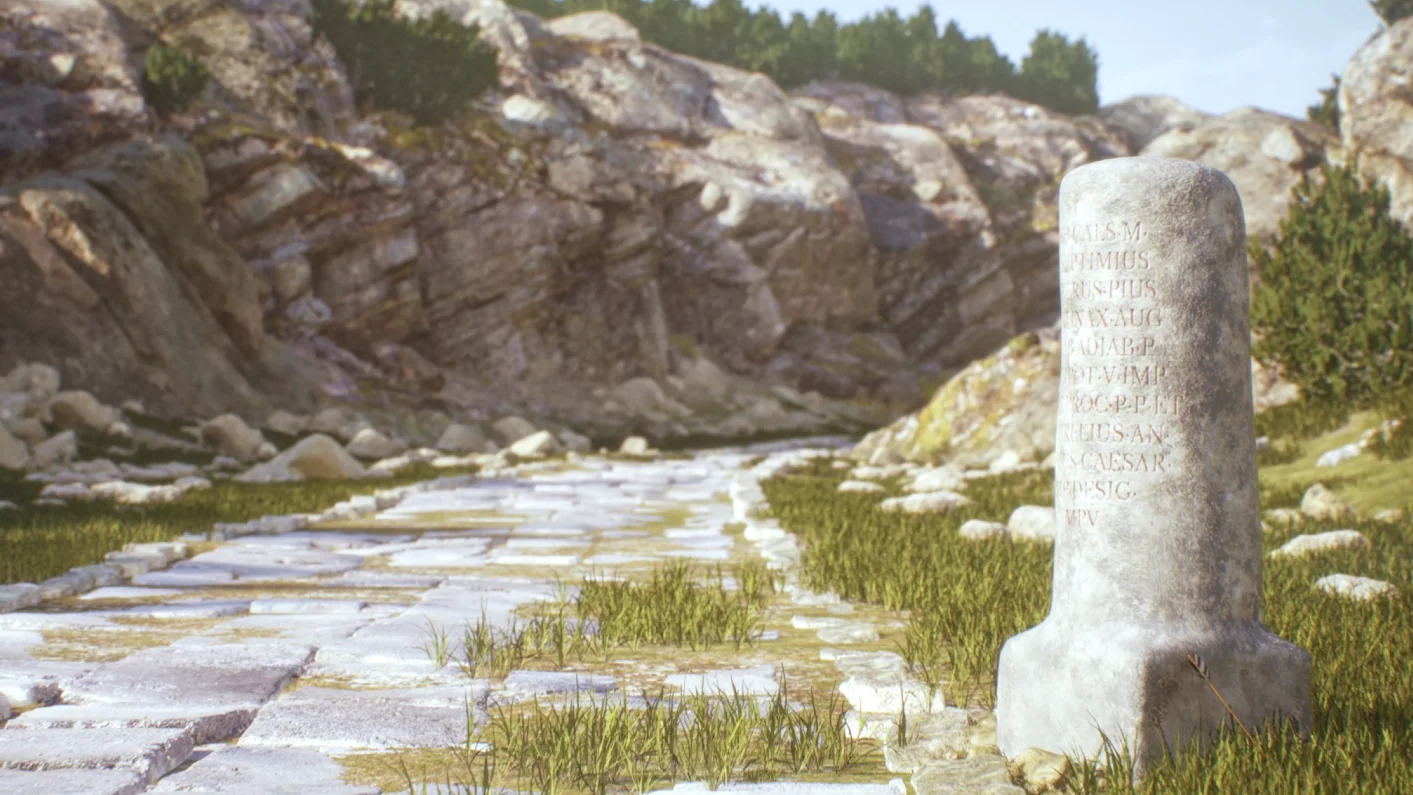
A new comprehensive map and digital dataset called Itiner-e reveals nearly 300,000 km of Roman roads, significantly expanding previous knowledge and offering insights into ancient transportation networks, their construction, and potential logistical implications within the Roman Empire.
A new digital map called Itiner-e reveals that the Roman road network was over 60,000 miles longer than previously thought, encompassing nearly 186,000 miles of roads across Europe, the Near East, and North Africa, providing new insights into the connectivity and power of the Roman Empire.
A team of international researchers has created a detailed map of the Roman road system around AD 150, covering over 300,000 km, which offers new insights into ancient Roman connectivity, travel, and influence, despite many roads still being uncertain in exact location. The visualization tool supports further research into Roman infrastructure and its long-term effects on the empire and beyond.
Itiner-e is a comprehensive, high-resolution digital dataset mapping nearly 300,000 km of Roman roads across the empire, created from archaeological, historical, and remote sensing sources, revealing significant gaps in certainty and coverage that can inform future research on ancient mobility and infrastructure development.
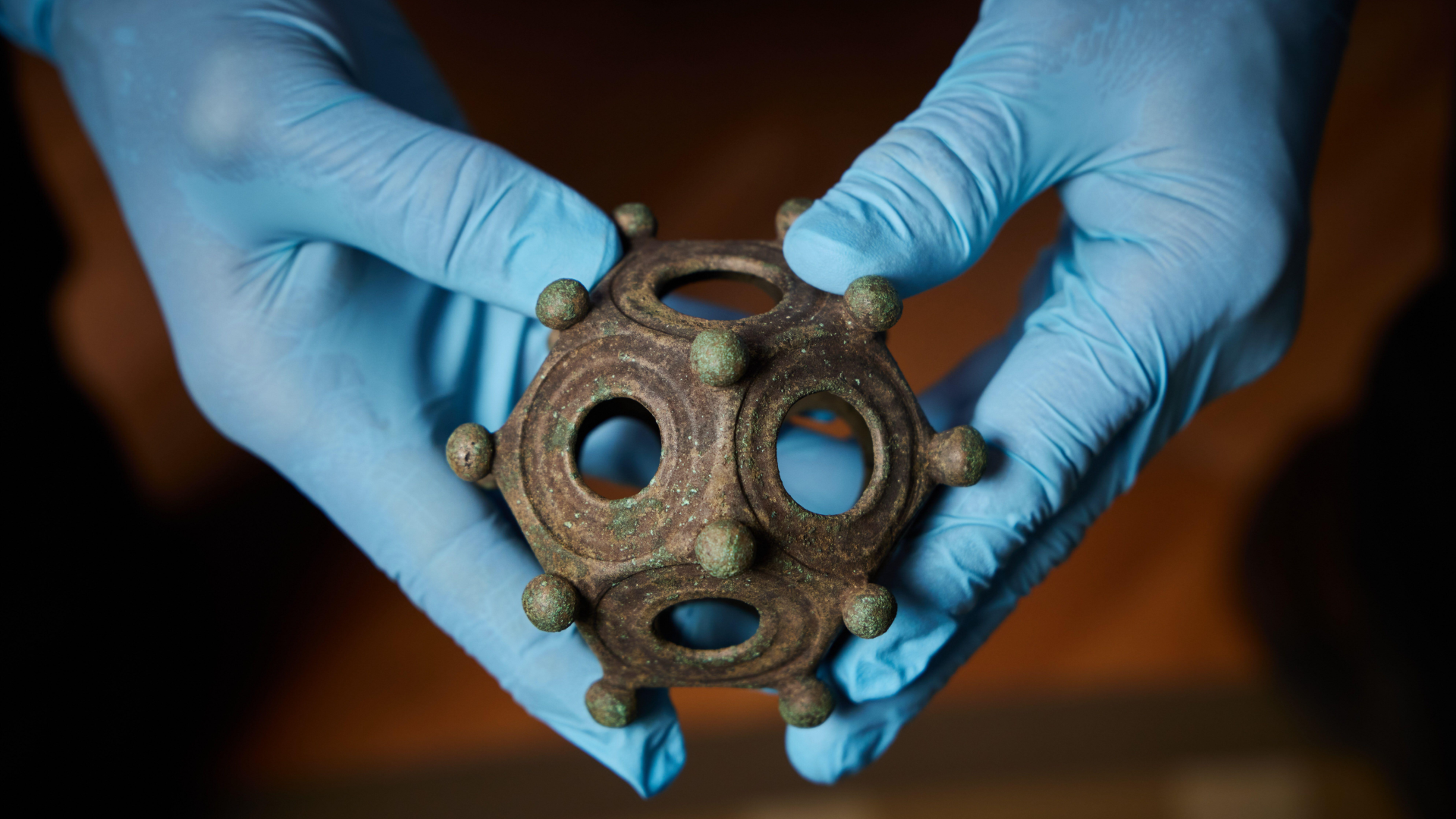
A mysterious 12-sided bronze object called the Roman dodecahedron, discovered across various European countries and dating from the second to fourth centuries AD, has puzzled archaeologists for centuries. Its purpose remains unknown, with theories ranging from practical uses to symbolic representations linked to ancient Greek philosophy and possibly Druidic traditions, suggesting it may have served as a cosmic or spiritual symbol.
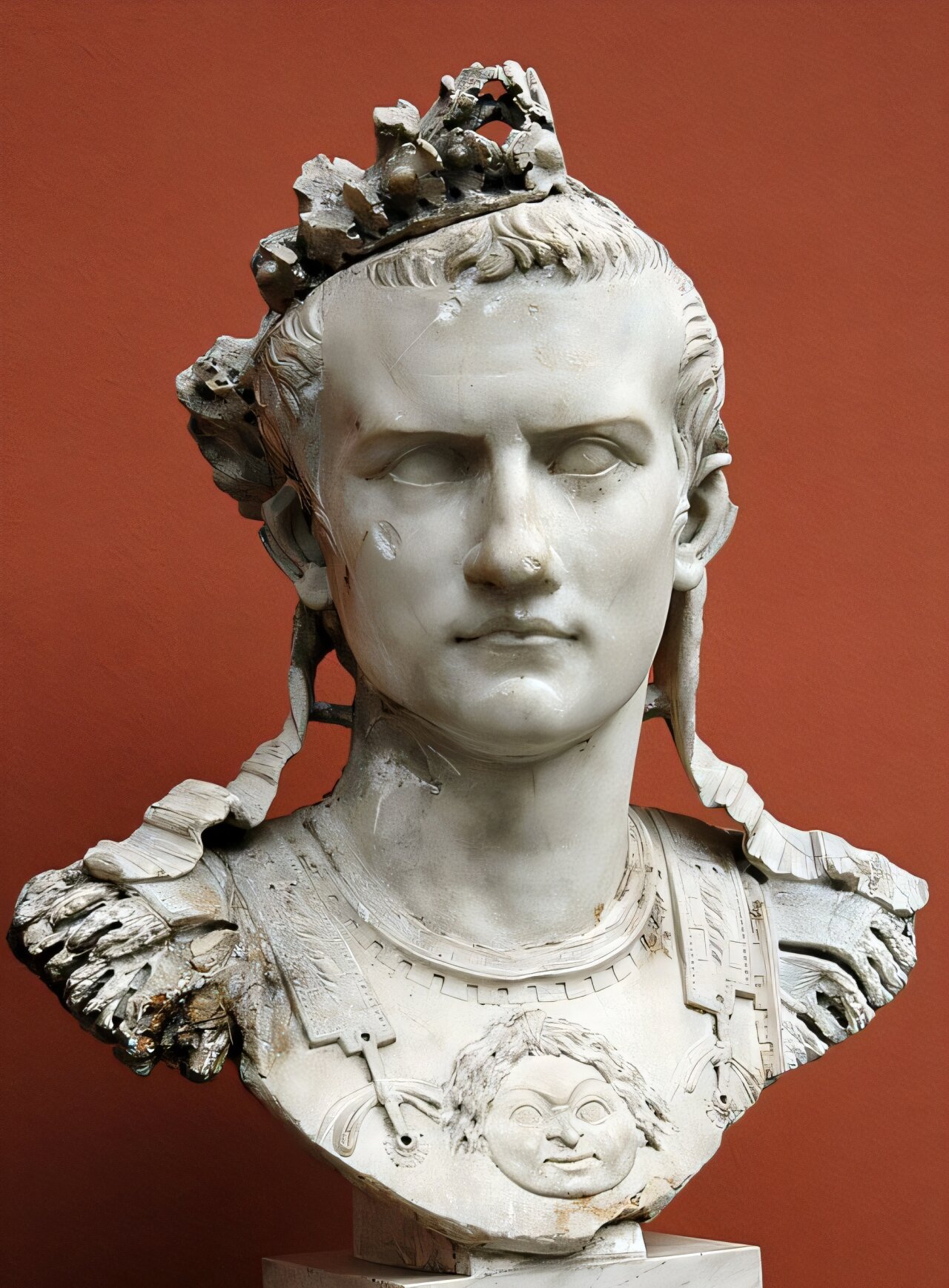
A Yale study suggests that Caligula, often seen as a mad and cruel Roman emperor, was actually knowledgeable about medicine, particularly hellebore treatments used in ancient Greece, indicating a more nuanced understanding of his character and medical practices of the time.
Scientists used ancient DNA analysis on fish bones from a Roman fish-salting site to identify European sardines as a key ingredient in the popular Roman fish sauce, garum, providing new insights into its composition and regional variations.
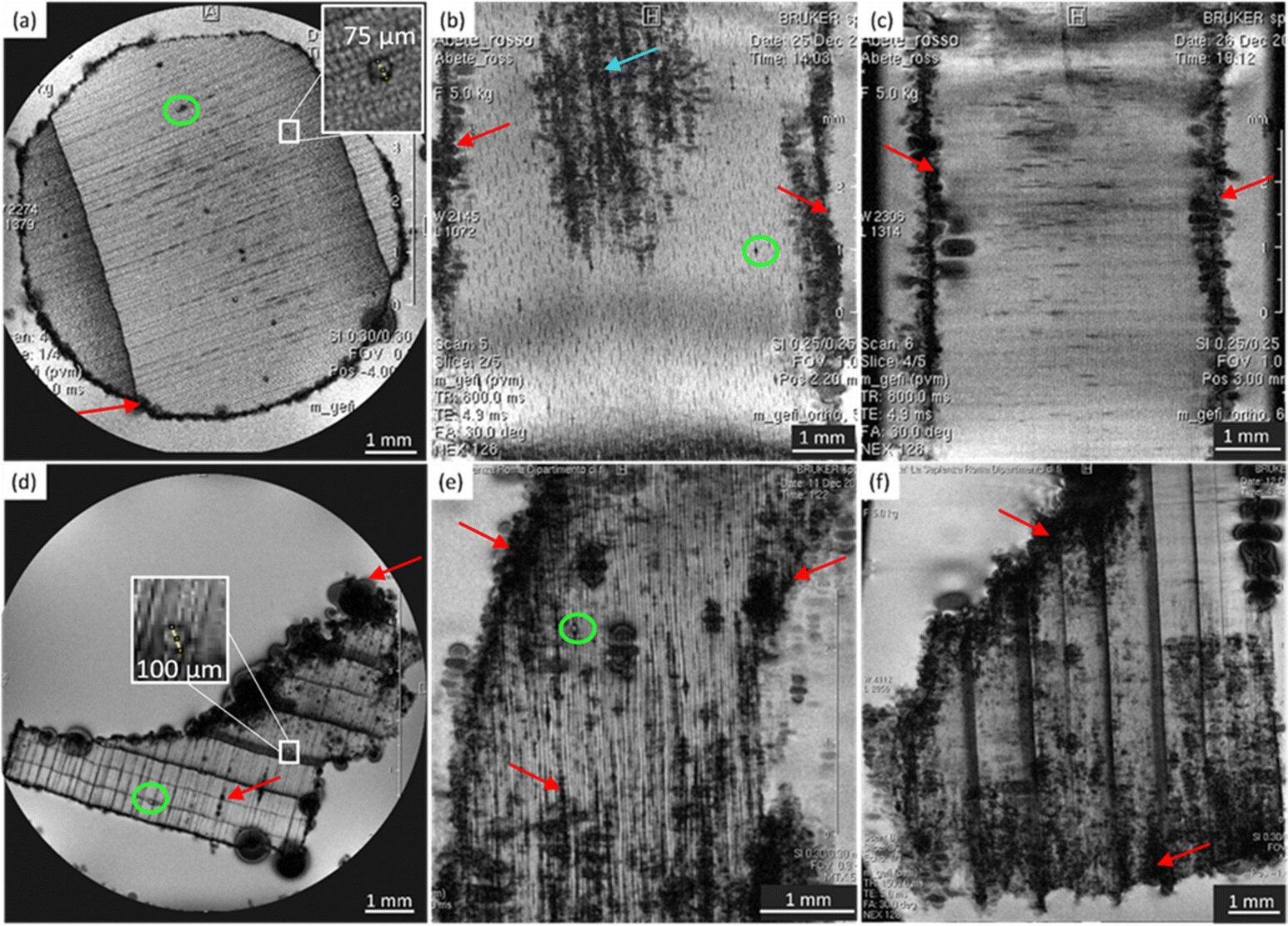
Researchers have used NMR methods, similar to MRI technology, to analyze rare wooden structures from an ancient Roman harbor discovered in Naples, Italy. These non-invasive techniques allow for detailed examination of the wood's structure and preservation without damaging the samples, which have been preserved by an aquifer for centuries. The study, published in Physical Chemistry Chemical Physics, highlights the potential of NMR in archaeology and other fields, with future applications expected to expand as the technology becomes more portable and affordable.
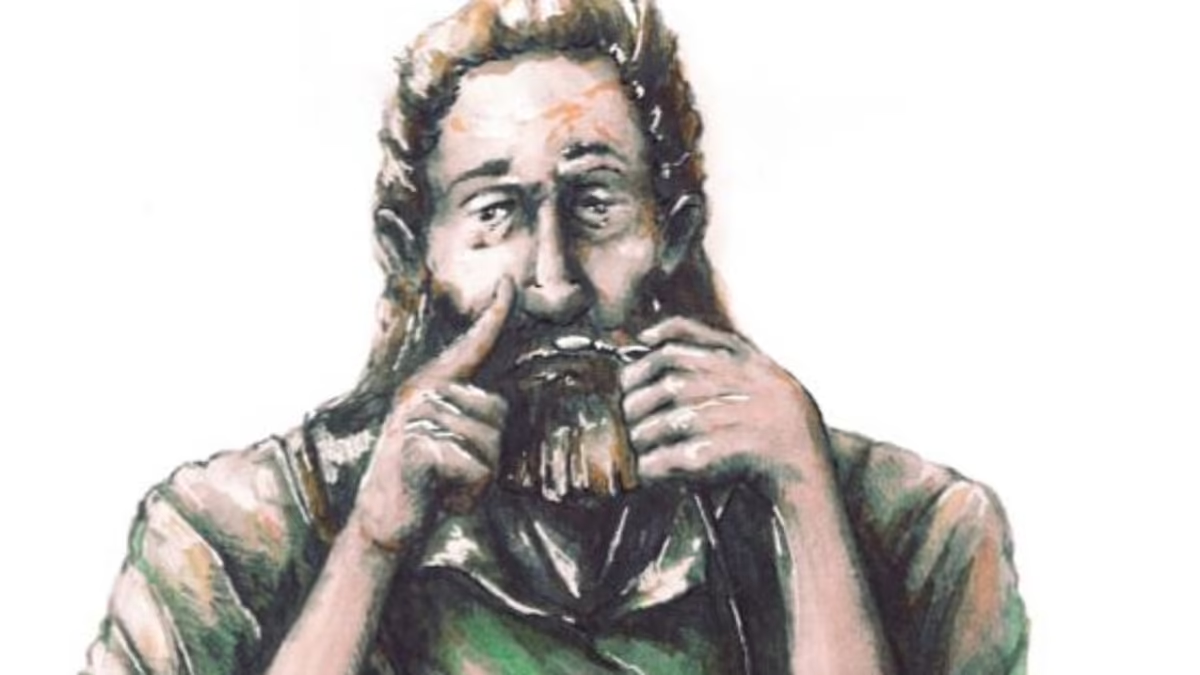
Archaeologists have discovered that barbarian warriors during Roman times may have used herbal stimulants to enhance their performance in battle. Small spoon-shaped objects found in graves across Scandinavia, Germany, and Poland suggest these were used to dose narcotics like opium, belladonna, and ergot fungus. These substances could have provided the necessary stimulation and stress relief for warriors, indicating a sophisticated narcotic economy existed to supply troops. The study highlights the historical use of drugs in military contexts, similar to more recent examples.
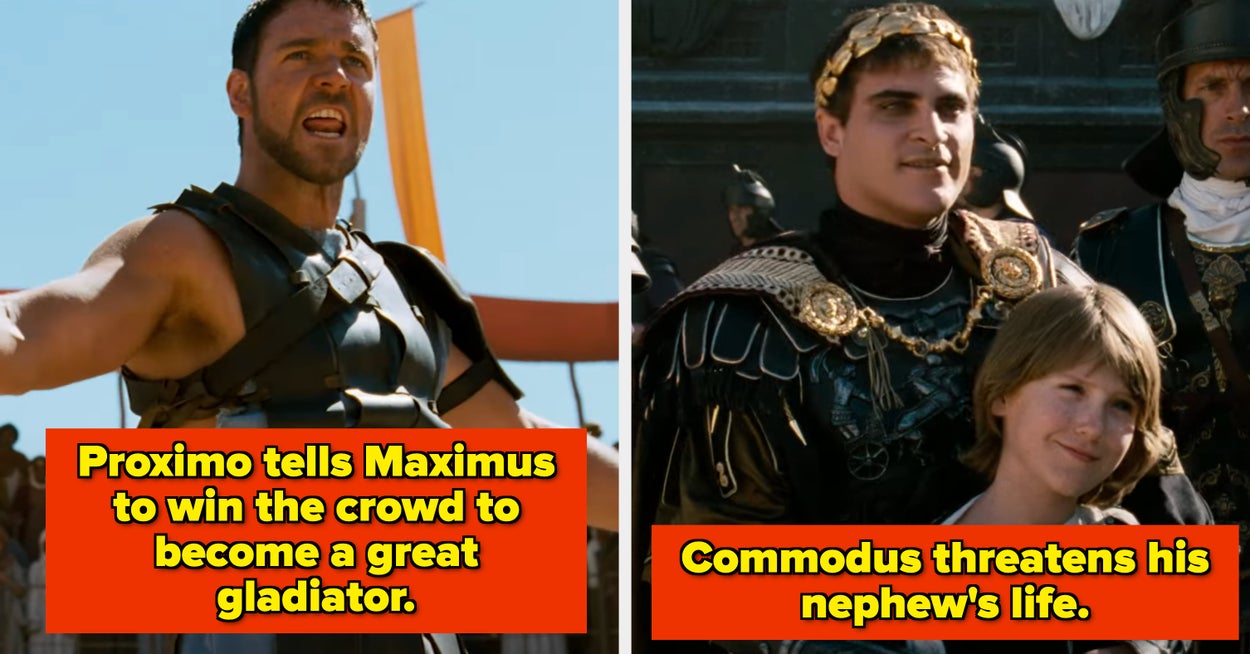
Before watching 'Gladiator II,' it's important to remember key moments from the original 'Gladiator' film. The story follows Maximus Decimus Meridius, a respected Roman general who is betrayed by Commodus, the emperor's son, after being chosen by Marcus Aurelius to succeed him. Maximus becomes a gladiator after escaping execution and seeks revenge against Commodus, who killed his family. The film culminates in a final battle in the Colosseum where Maximus kills Commodus but succumbs to his own injuries, fulfilling Marcus Aurelius' wish to restore Rome to its people.
Denzel Washington stars as Macrinus in "Gladiator II," a pivotal character in the sequel to the iconic film. Directed by Ridley Scott, the movie features Paul Mescal as Lucius, the heir to Maximus. Washington's Macrinus, a former slave turned power broker, is a manipulative figure who selects gladiators by stoking their rage. The film marks a reunion between Washington and Scott, who previously collaborated on "American Gangster." Washington reflects on his career and future, expressing a desire to focus on family and personal fulfillment.