A new study analyzing 18 years of wave data has revealed that rogue waves are primarily caused by bound-wave asymmetry, challenging previous theories like modulational instability, and highlighting the importance of nonlinear crest sharpening in their formation, which has significant implications for maritime safety and vessel design.
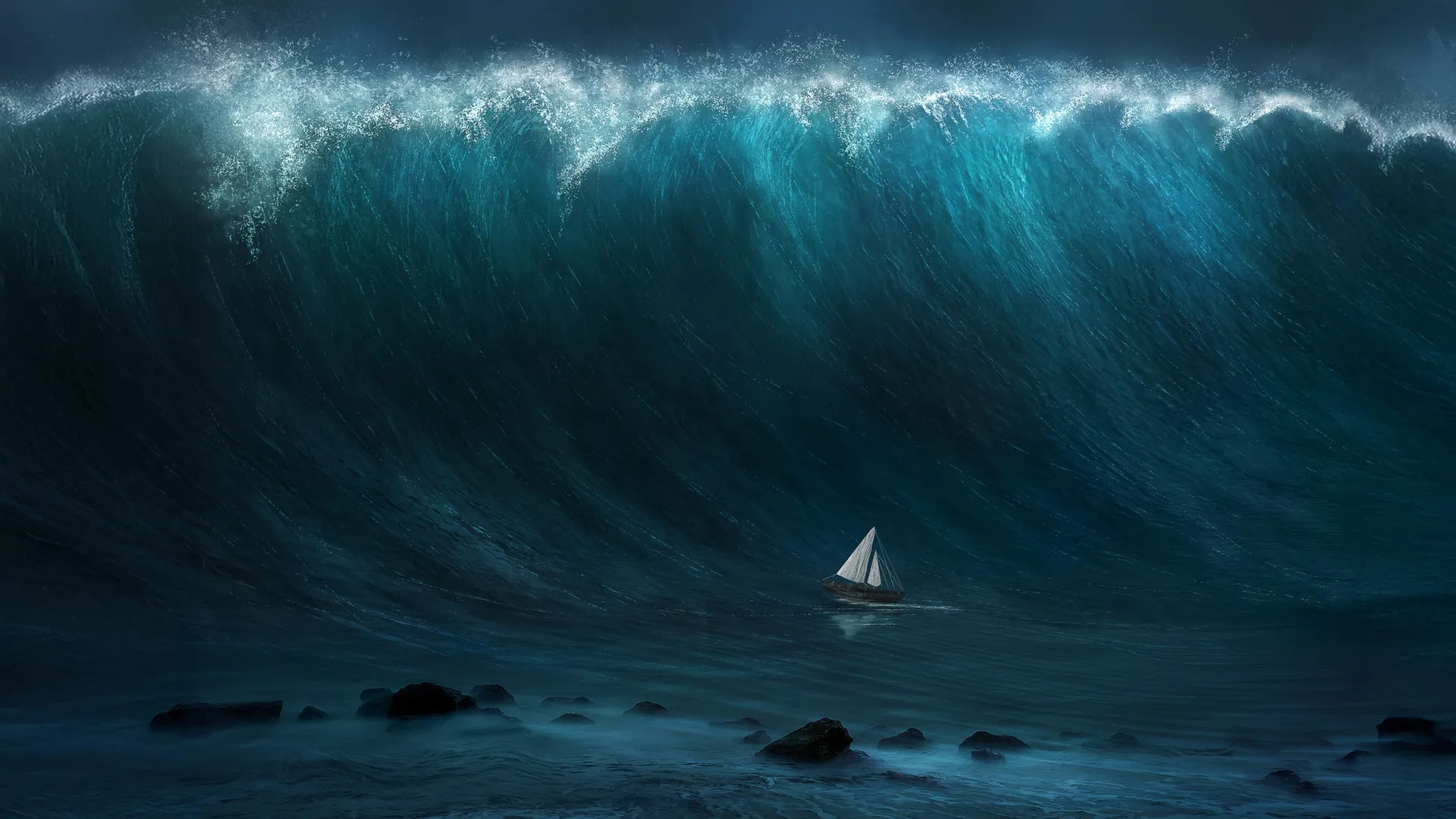
Scientists have used extensive data to debunk previous theories about rogue wave formation, showing that these massive waves result from the alignment of common wave behaviors like linear focusing and nonlinear effects, rather than exotic phenomena, leading to improved prediction models for maritime safety.
New research shows rogue waves are caused by natural ocean processes like linear focusing and nonlinear effects, not mysterious anomalies, enabling better prediction and safety measures.
A scientist from the University of Southampton claims to have solved the mystery of the Bermuda Triangle, attributing the disappearances of ships and planes to rogue waves caused by a perfect storm of weather conditions, rather than supernatural or extraterrestrial causes.
A comprehensive 18-year study of North Sea wave data reveals that rogue waves are primarily caused by constructive interference of smaller waves, rather than modulational instability, providing new insights into their formation and potential for improved safety measures.
A study analyzing 18 years of data from the North Sea reveals that rogue waves, which can reach heights of 65 feet, are not just freak occurrences but are primarily caused by constructive interference of smaller waves, challenging previous theories and improving understanding of these dangerous ocean phenomena.
A 1995 North Sea wave measurement confirmed rogue waves are natural phenomena caused by linear focusing and nonlinear wave effects, challenging previous theories and improving forecasting models for maritime safety.
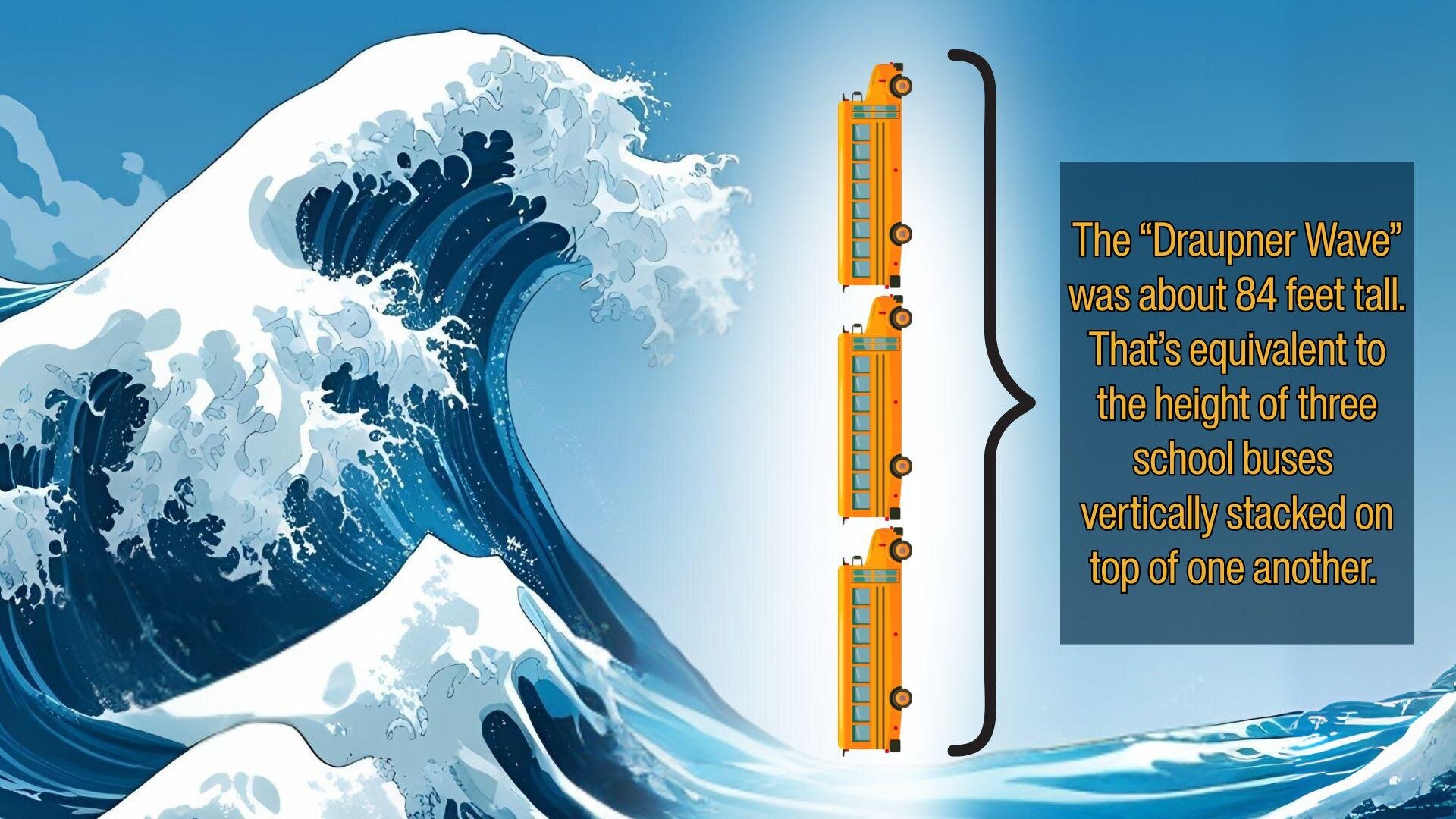
The article discusses the most extreme rogue waves ever recorded, including the 85-foot Draupner wave and the 58-foot Ucluelet wave, highlighting their formation, dangers, and recent scientific insights into their chaotic nature and wind influence, with implications for improved prediction and marine safety.
In 2020, a rare and massive rogue wave measuring 17.6 meters was recorded off Vancouver Island, challenging previous understanding of ocean waves and highlighting potential risks for maritime activities, with climate change possibly increasing the frequency and size of such waves in the future.
In November 2020, a buoy off British Columbia recorded the Ucluelet wave, a 58-foot rogue wave, considered the most extreme ever due to its relative size. Such waves, occurring once every 1,300 years, pose significant maritime dangers. Recent studies highlight wind's role in rogue wave formation, emphasizing the need for improved marine safety measures. As climate change may increase wave heights, integrating wind dynamics into predictive models is crucial for enhancing safety and decision-making in marine operations.
Recent research indicates that rogue waves, which are massive and unpredictable ocean waves, are becoming more frequent due to a combination of overlapping waves, wind, and a self-amplification mechanism. This increase is linked to rising wind speeds and wave heights driven by climate change, posing greater risks to maritime activities.
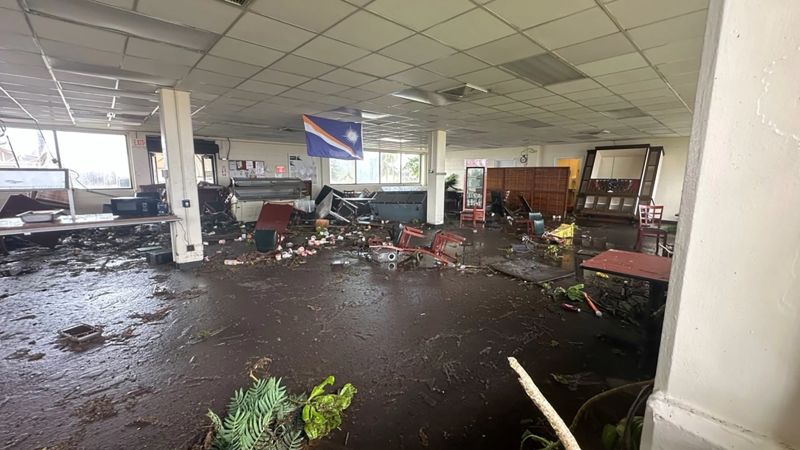
Gigantic rogue waves caused extensive damage to a US military facility on Roi-Namur island in the Pacific, with flooding affecting multiple areas and infrastructure. The waves, which were captured in a video, resulted in minor injuries and will take months to repair. The remote island's low elevation and rising sea levels due to climate change exacerbated the impact of the rogue waves, highlighting the vulnerability of low-lying islands.
Scientists have detected the most extreme rogue wave ever recorded off the coast of British Columbia. In November 2020, a buoy suddenly lifted more than 17 meters above its previous position before crashing back down, indicating the presence of a fleeting but impressive rogue wave. Rogue waves, which are at least twice the size of neighboring waves, have long been considered legends, but their existence was confirmed in the 1990s. These powerful waves pose a threat to ships, coastal areas, and oceanic equipment. Climate change is expected to make rogue waves even more impressive, and researchers are using data from sensing buoys to better understand their formation.
The largest rogue wave ever recorded, reaching a height of 58 feet, appeared off the coast of British Columbia in November 2020 and has been named the Ucluelet wave. While not the tallest on record, it is considered the most extreme due to its unprecedented size and velocity relative to the surrounding calm waters. Rogue waves pose a significant danger to naval vessels, oil rigs, wind farms, and beachgoers. Scientists still have limited understanding of these waves, but they are expected to worsen with climate change.
Researchers have used artificial intelligence (AI) to analyze 700 years of wave data in order to predict the occurrence of rogue waves, which can reach over 100 feet and pose a significant threat to ships and offshore structures. The AI software transformed the wave observations into a human-readable equation, providing the probability of rogue wave occurrences. The study revealed that abnormal waves, including rogue waves, happen frequently, with approximately one monster wave occurring every day in the ocean. The ability to predict these dangerous waves could greatly enhance maritime safety.