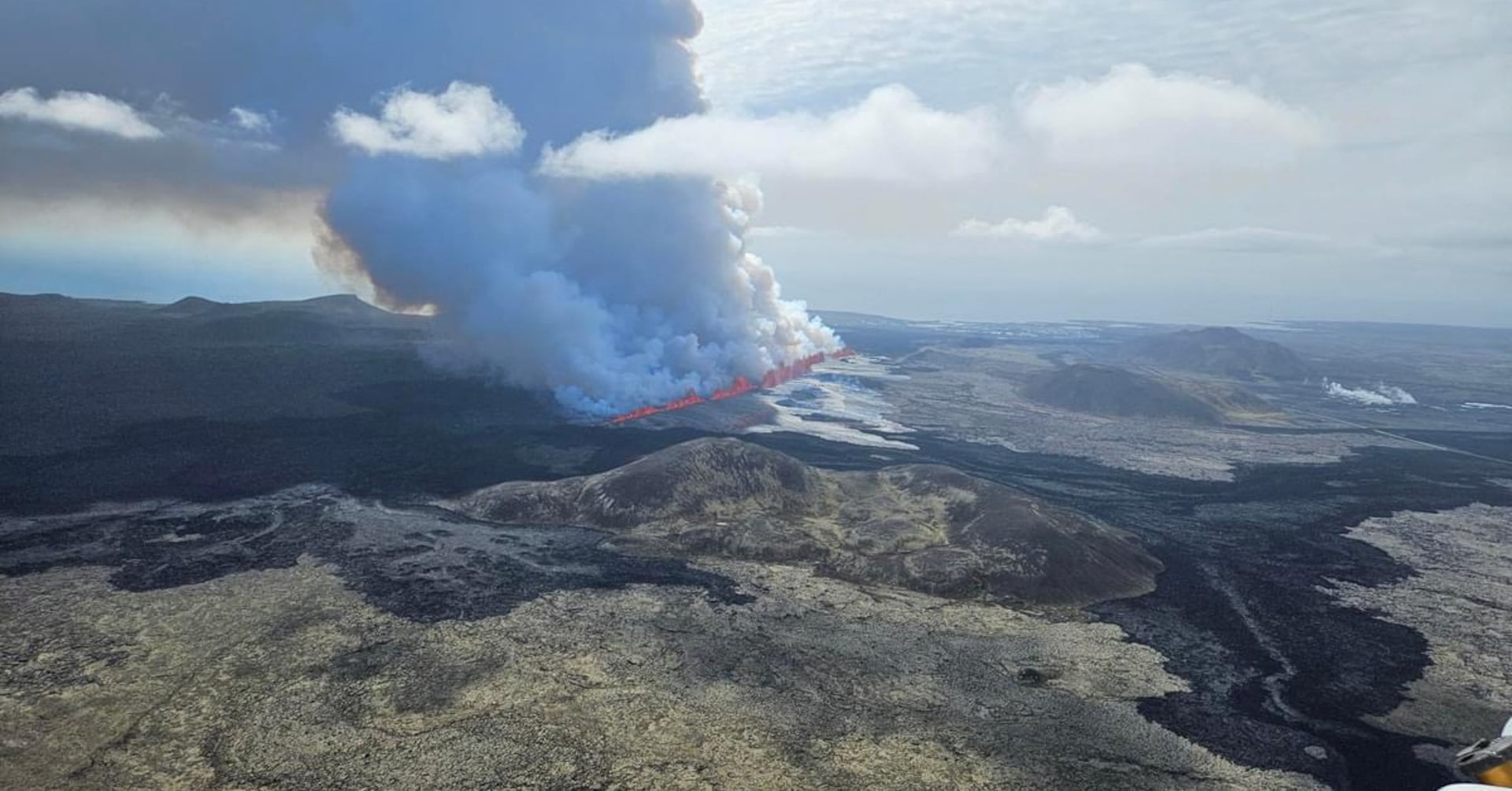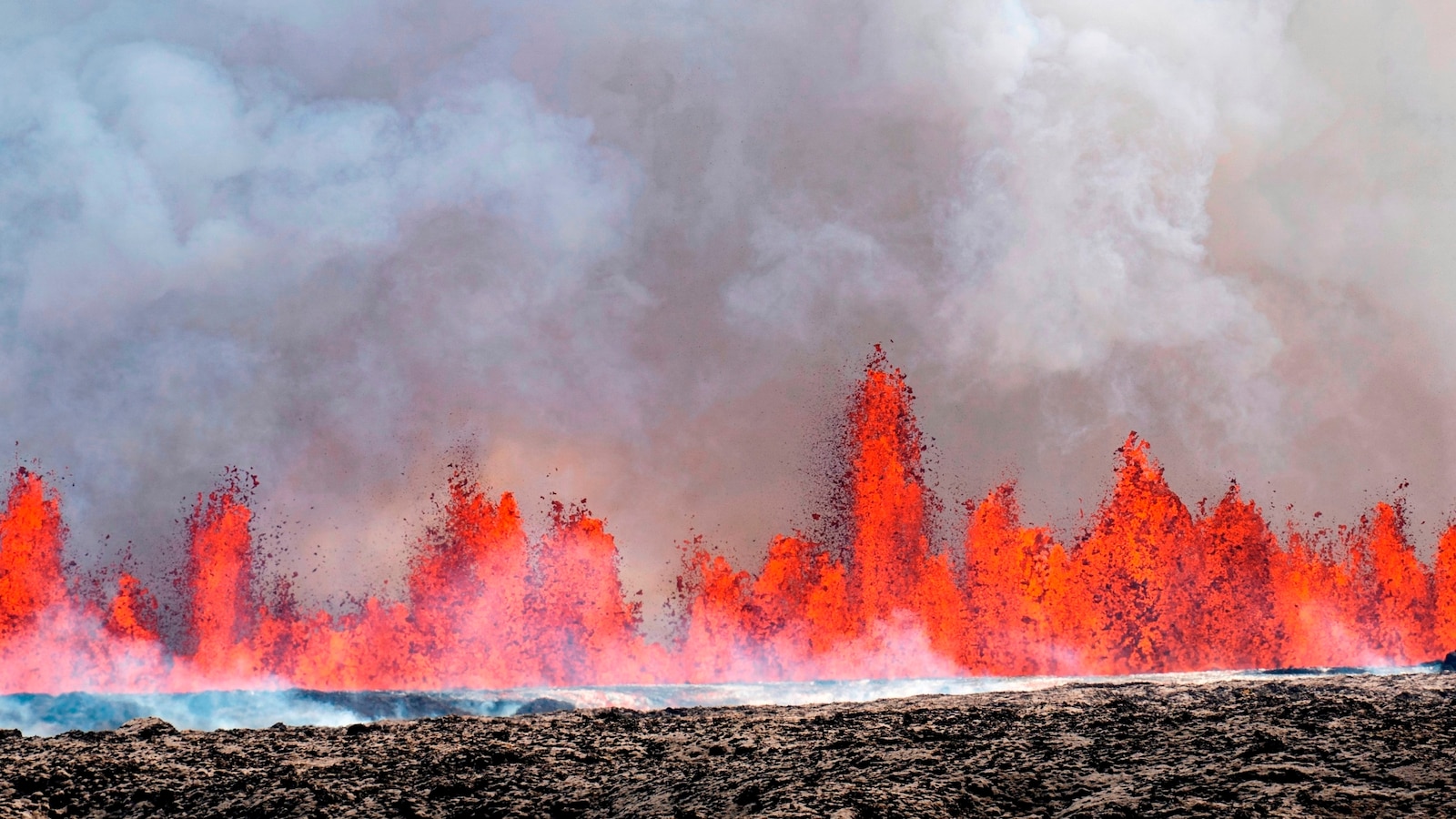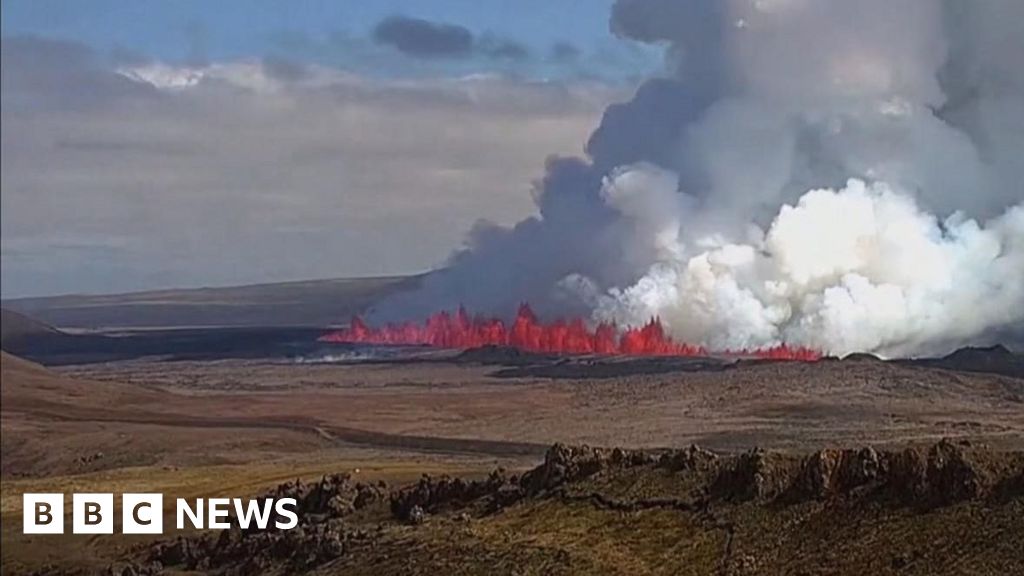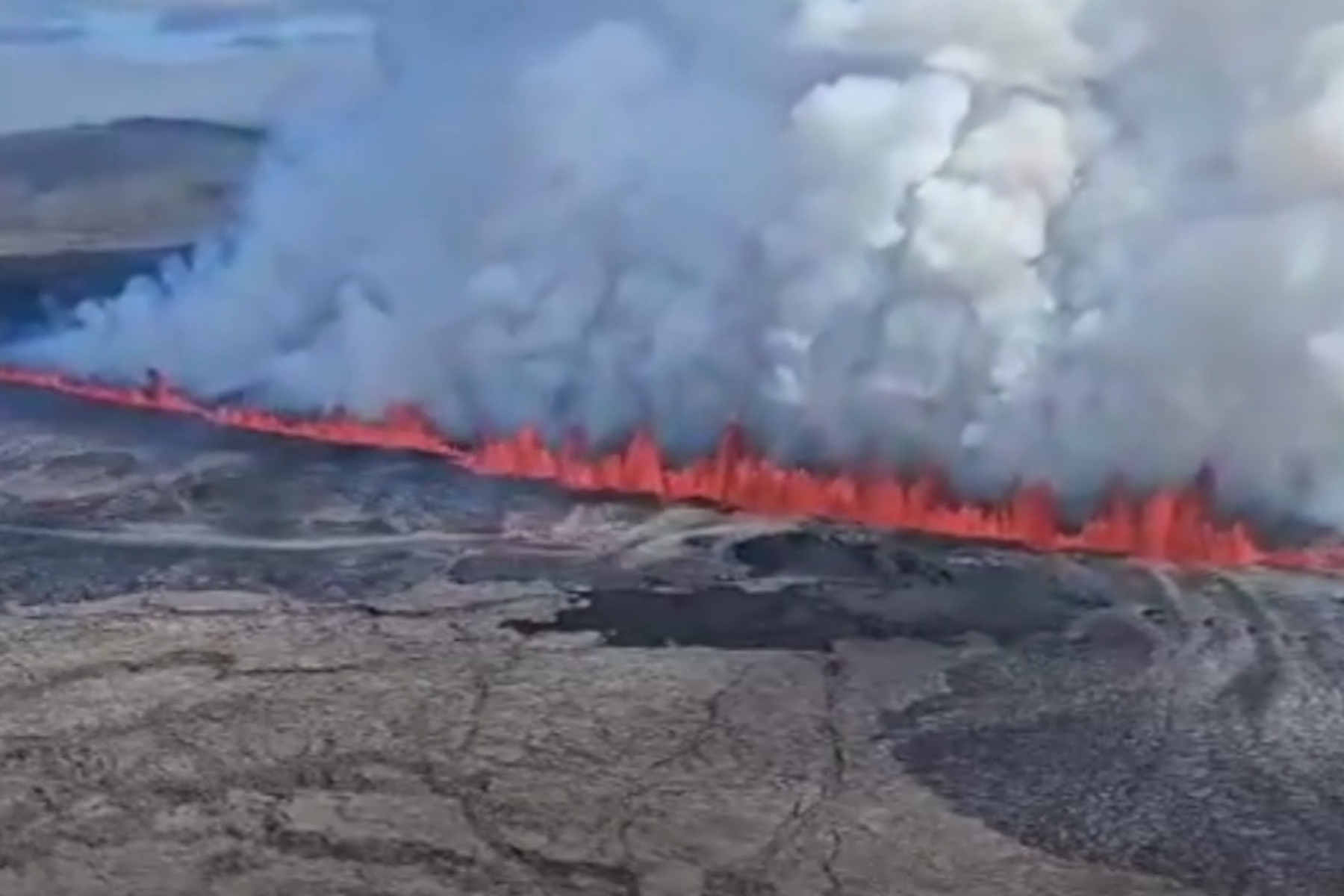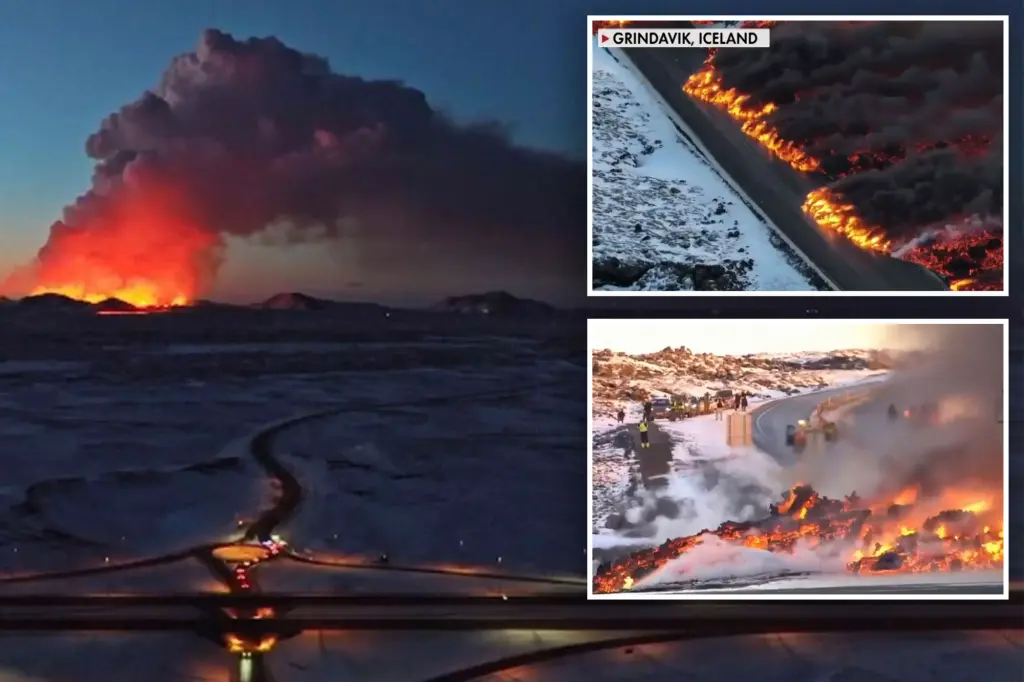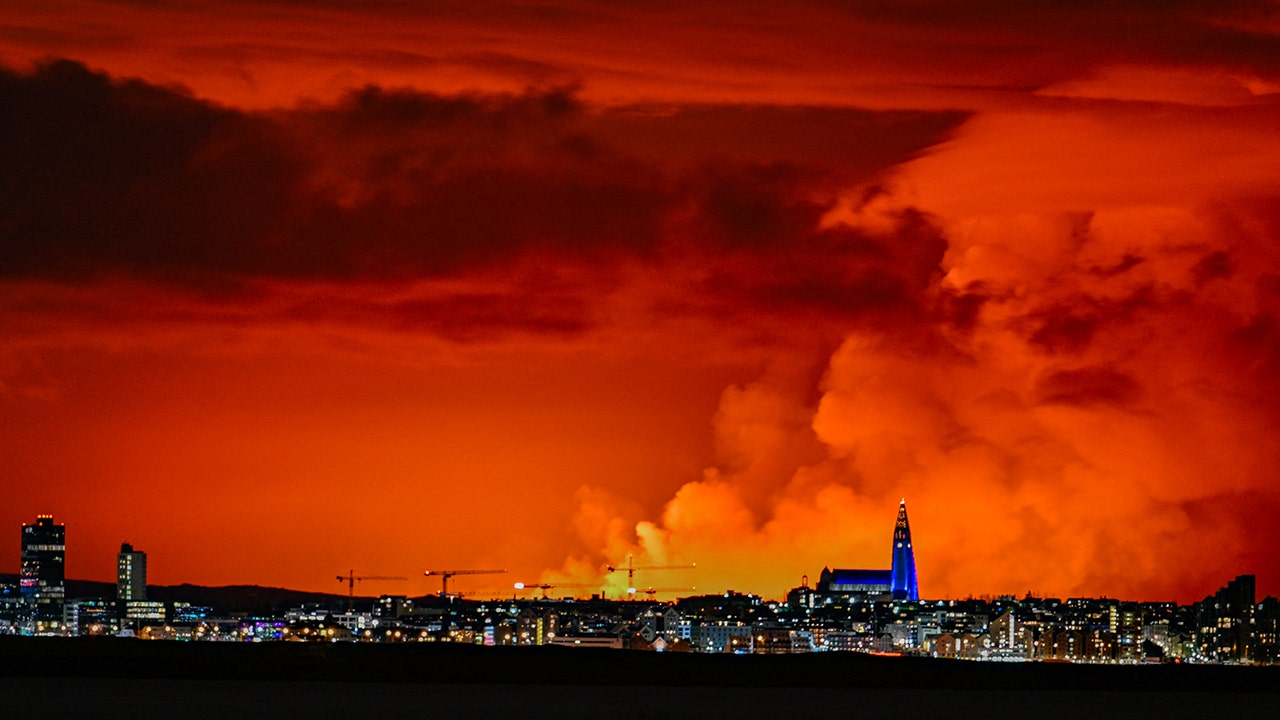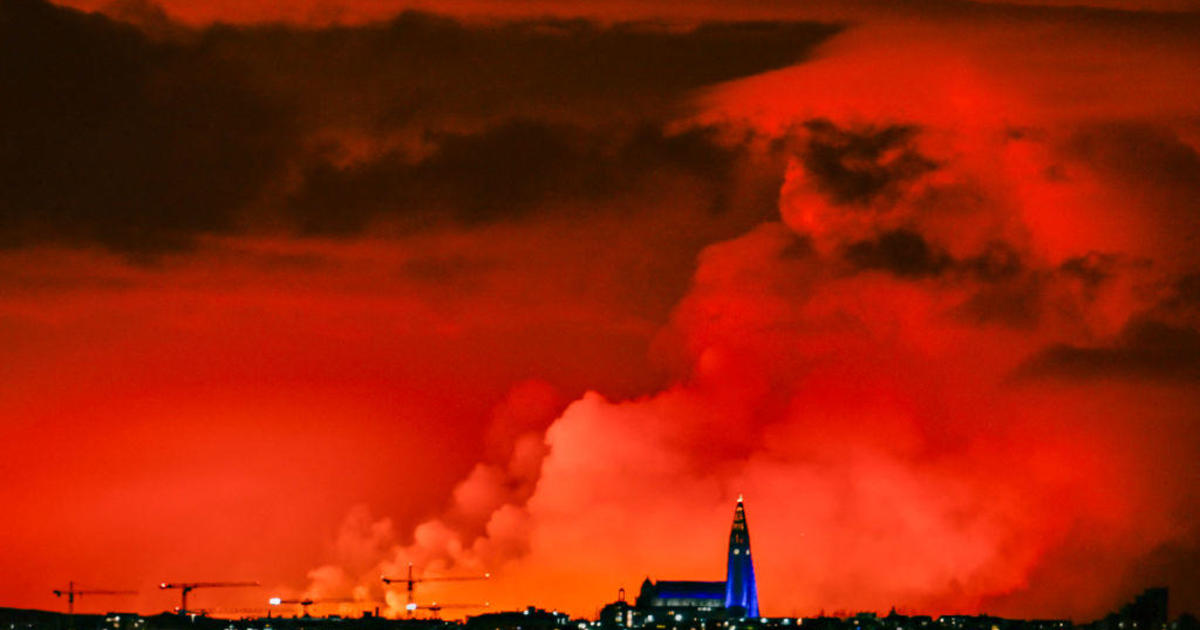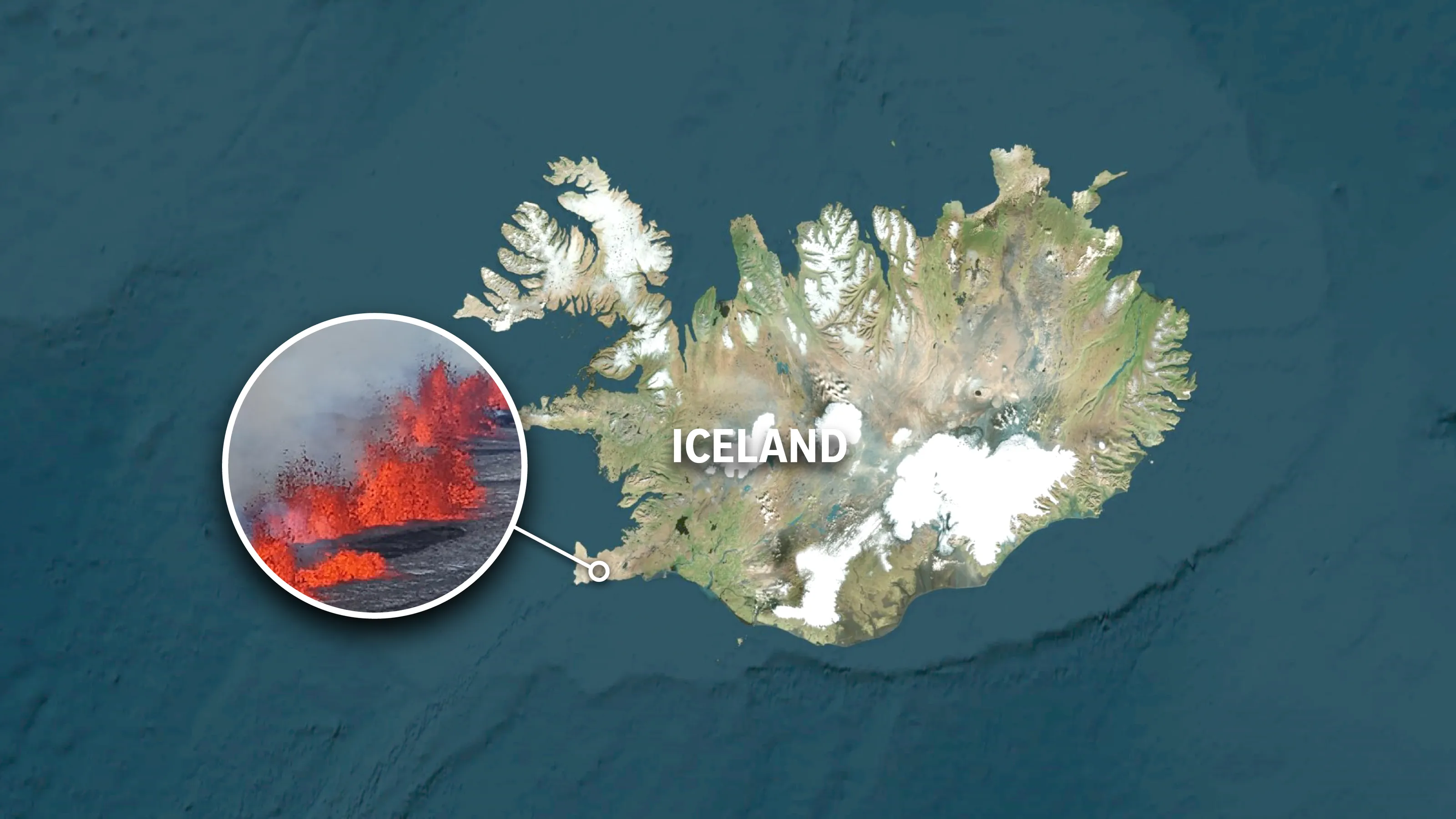
A volcanic eruption has occurred in Iceland's Sundhúksgígar crater row, marking the ninth eruption in the area since 2021, prompting evacuations and causing gas pollution concerns, with spectacular drone footage capturing the event.
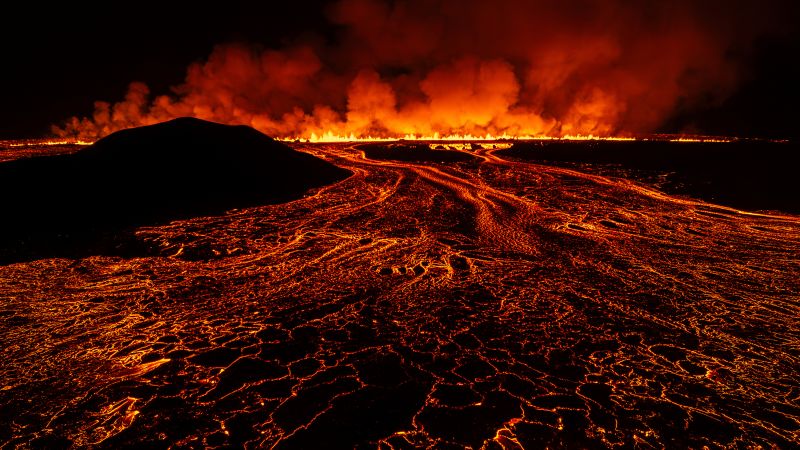
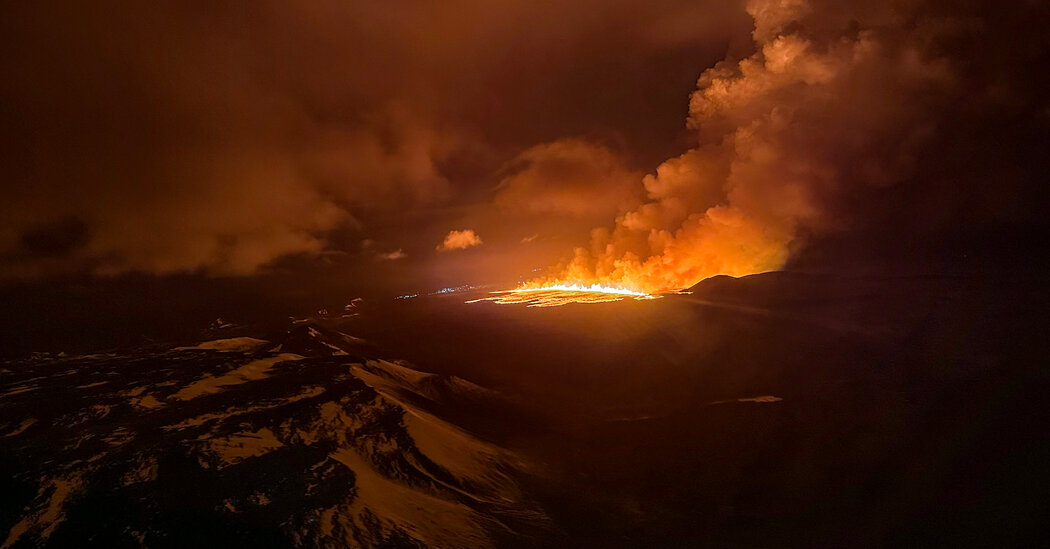
A volcano on Iceland's Reykjanes Peninsula erupted for the seventh time since December, with a 3-kilometer fissure forming. The eruption, which began late Wednesday, did not disrupt air traffic and was smaller than the previous one in August. The Blue Lagoon and nearby facilities were evacuated, but the town of Grindavík remains safe from lava flow. Iceland, located on a geologic border, is one of the world's most active volcanic regions.
A volcano near Iceland's capital Reykjavik erupted for a second day, though at a slower pace, prompting evacuations in Grindavik and the Blue Lagoon spa. This is the fifth eruption since December and the most powerful in the area in three years. Lava flows have reached dykes built to protect Grindavik, but no injuries have been reported.
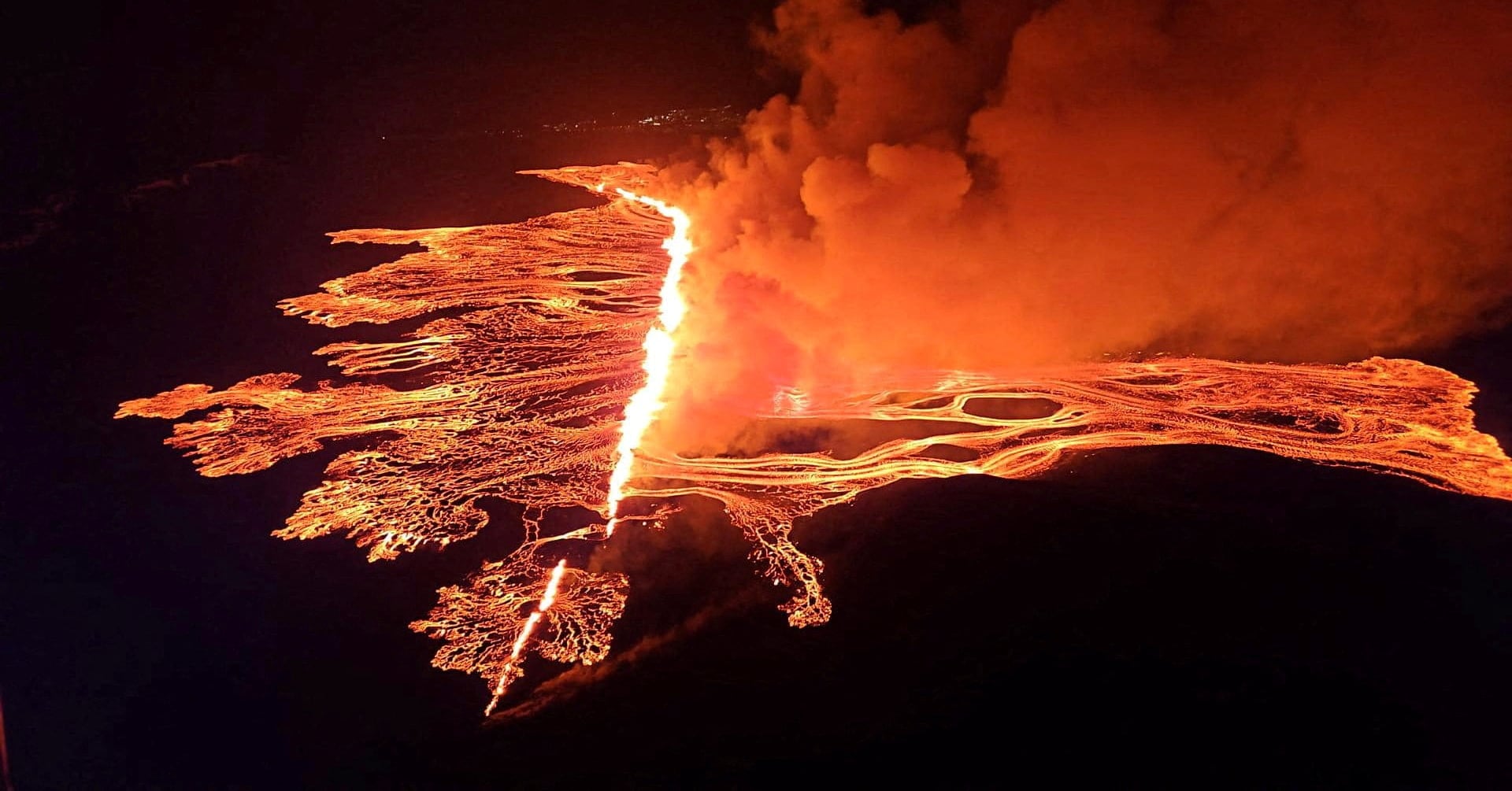
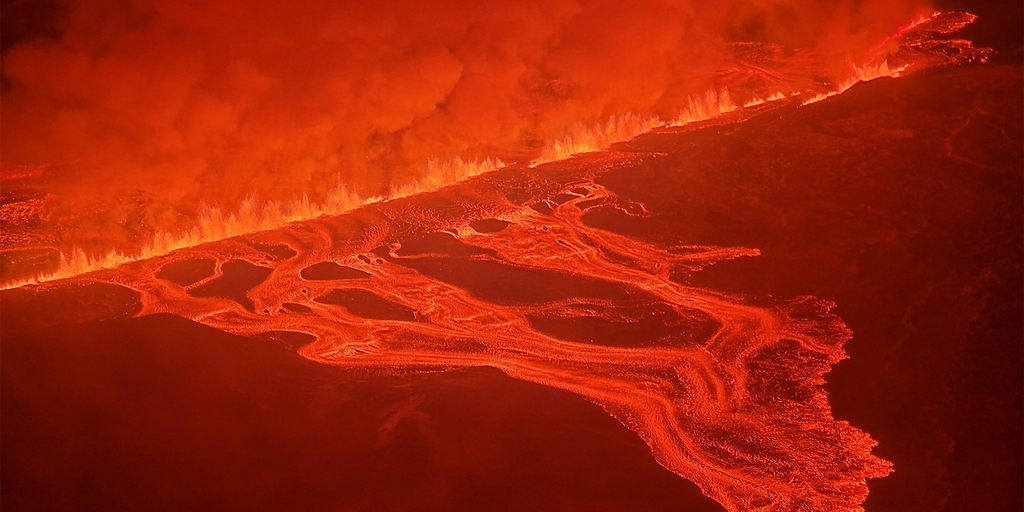
A massive volcanic eruption at the Sundhnúkur crater in Iceland on Wednesday spewed lava over 160 feet into the air, prompting the evacuation of the seaside town of Grindavík and the Blue Lagoon geothermal spa. This is the fifth and most powerful eruption in the region since December, with lava flows reaching 164 feet high and covering a fissure around 2 miles long. Authorities warned of potential gas pollution affecting nearby areas, including Reykjavik.
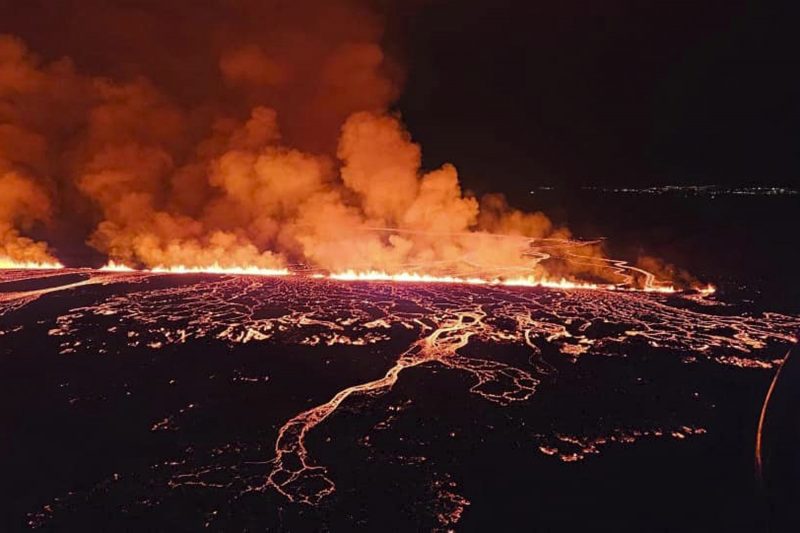
A volcano in southwestern Iceland has erupted, sending lava 50 meters into the air and forcing the evacuation of the Blue Lagoon spa. This is the fifth eruption since December on the Reykjanes peninsula near Reykjavik. The lava flow, described as a "curtain of fire," is approximately 2.5 km in length, and the fissure appears to be growing.
A new volcanic eruption at the Sundhnúks crater in Iceland's Reykjanes Peninsula has led to significant lava flows and the evacuation of hundreds of people, including residents of Grindavík and visitors to the Blue Lagoon. This marks the fifth eruption in the region since December, with lava jets reaching heights of over 150 feet and a plume of smoke rising 2.17 miles into the air. The Icelandic Meteorological Office and Coast Guard are closely monitoring the situation.
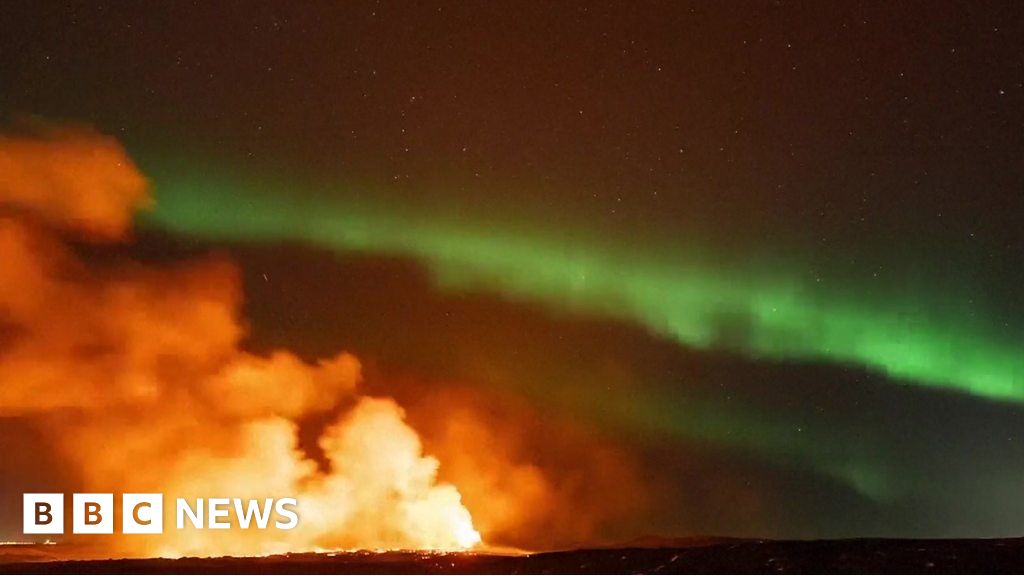
A timelapse video captures the eruption of a volcano in Iceland on the Reykjanes peninsula, with the Northern Lights glowing in the background. The volcano has erupted multiple times this year, leading to a state of emergency being declared in southern Iceland in March. The Northern Lights, also known as aurora borealis, is caused by the interaction of the solar wind and Earth's magnetic field and atmosphere.
Iceland has declared a state of emergency after a massive volcano erupted for the fourth time in three months, opening a nearly 2-mile-long fissure on the Reykjanes Peninsula. The volcanic eruptions had slowed but had not ended, with a 9-mile-long magma tunnel beneath the ground causing long and narrow fissures to release lava, ash, and smoke. No flights have been disrupted, and no deaths have been confirmed, but one worker is reported missing after walking near the volcanic fissure.
A volcano in Iceland's Reykjanes peninsula erupted for the fourth time since December, spewing smoke and bright orange lava into the air. The eruption, which occurred with only 15 minutes' warning, has not posed an immediate threat to infrastructure or the nearby fishing town of Grindavik. Man-made barriers have successfully directed the lava away from the town and a geothermal power plant. The volcanic activity has been relatively stable, and hazardous gases are unlikely to reach the capital, Reykjavik, due to strong winds.
A volcano erupted in southern Iceland on Saturday night, with lava fountains bursting out of the ground and a nearly two-mile-long fissure opening up on the Reykjanes Peninsula, prompting the authorities to declare a state of emergency. The eruption occurred near the town of Grindavik, the Svartsengi Power Plant, and the Blue Lagoon, leading to evacuations and concerns about the impact on local infrastructure. The Icelandic Meteorological Office received indications of a possible eruption only about 40 minutes before it happened, and meteorologists have expressed concerns about the potential impact of the lava flow reaching the North Atlantic.
Iceland has declared a state of emergency after a volcano erupted for the fourth time since December, leading to the evacuation of residents and the closure of the Blue Lagoon luxury geothermal spa. The Icelandic Meteorological Office had warned of an imminent eruption following a rise in seismic activity on the Reykjanes Peninsula. This is the latest in a series of eruptions in recent months, with the country averaging an eruption every four to five years due to its location above a volcanic hot spot in the North Atlantic.
Iceland has declared a state of emergency after a volcano erupted for the fourth time since December, spewing orange lava into the air. The Reykjanes Peninsula has been experiencing increased seismic activity since October, leading to the latest eruption. The Blue Lagoon luxury geothermal spa has been temporarily closed, and residents of the area have been evacuated as a precautionary measure. This marks the fourth eruption in recent months, with Iceland averaging an eruption every four to five years due to its location above a volcanic hot spot in the North Atlantic.
Lava spewed from a new volcanic fissure on Iceland's Reykjanes peninsula, marking the fourth eruption in the area since December. The nearby fishing town of Grindavik has been evacuated, with residents receiving urgent messages to leave quickly. This comes after previous evacuations and damage caused by seismic activity and volcanic fissures in the region. Iceland, home to 33 active volcano systems, is experiencing heightened seismic activity, indicating the start of a new era of volcanic eruptions in the area.
Dozens of earthquakes shook Iceland's Reykjanes Peninsula, prompting an Orange alert for the region due to a magma intrusion, with evacuations ordered for the towns of Grindavík and Svartsengi. However, by Saturday evening, officials stated that the threat of an eruption had diminished, although the Orange alert remained in effect as they continued to monitor the situation. If an eruption were to occur, it would be the fourth since the end of 2023, with previous evacuations and some homes destroyed by lava flows.
Prime Minister Katrín Jakobsdóttir addressed Parliament about the challenges posed by recent volcanic activity on the Reykjanes Peninsula, emphasizing that Iceland is facing its most significant natural disaster challenges since its founding. She highlighted the need for a comprehensive hazard assessment, led by the Icelandic Meteorological Office, to be completed by 2025, covering earthquakes, lava flow, and the impact of ash and gases in the atmosphere.