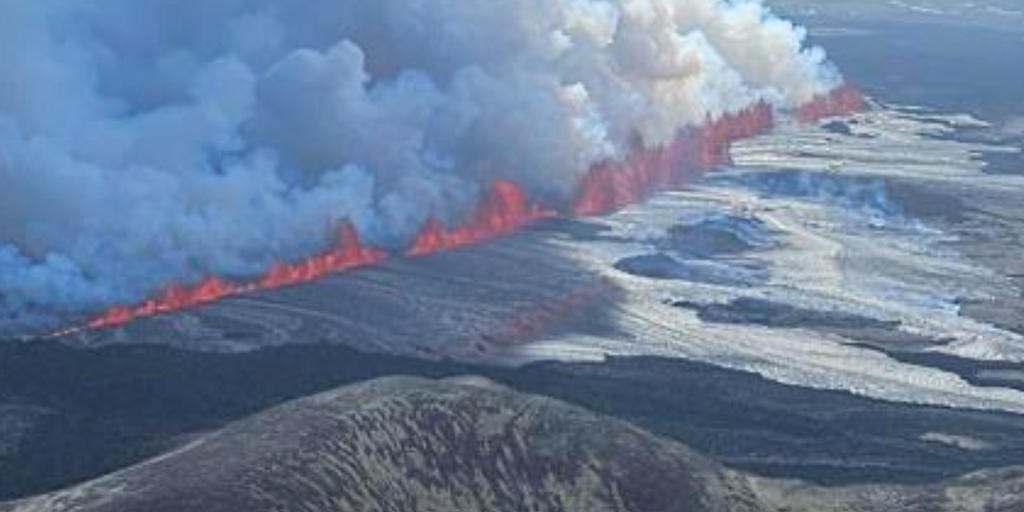
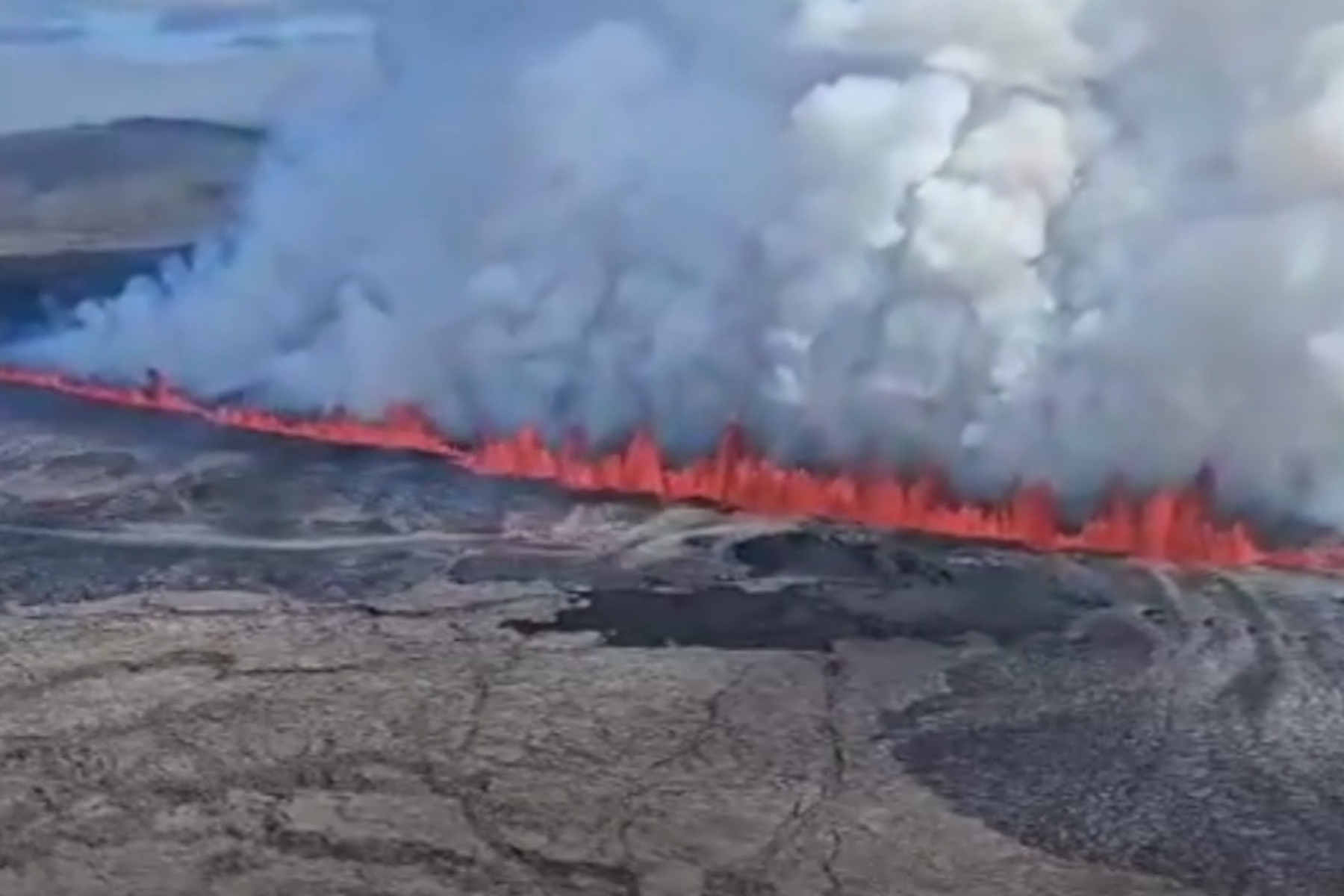
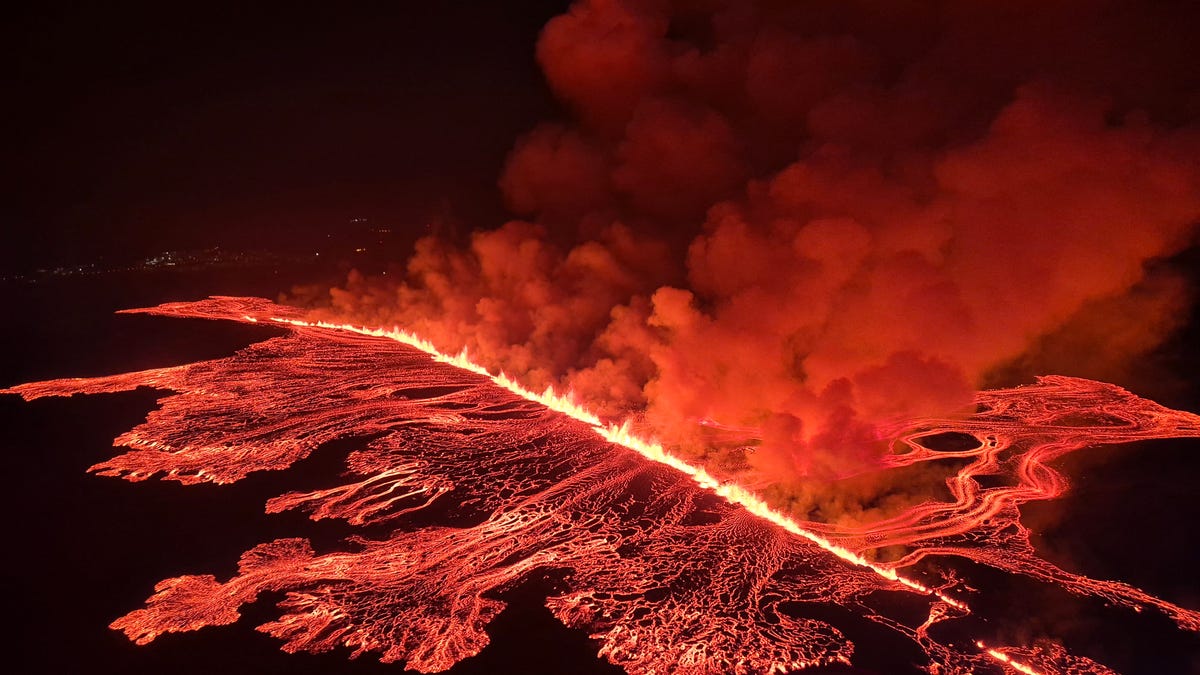
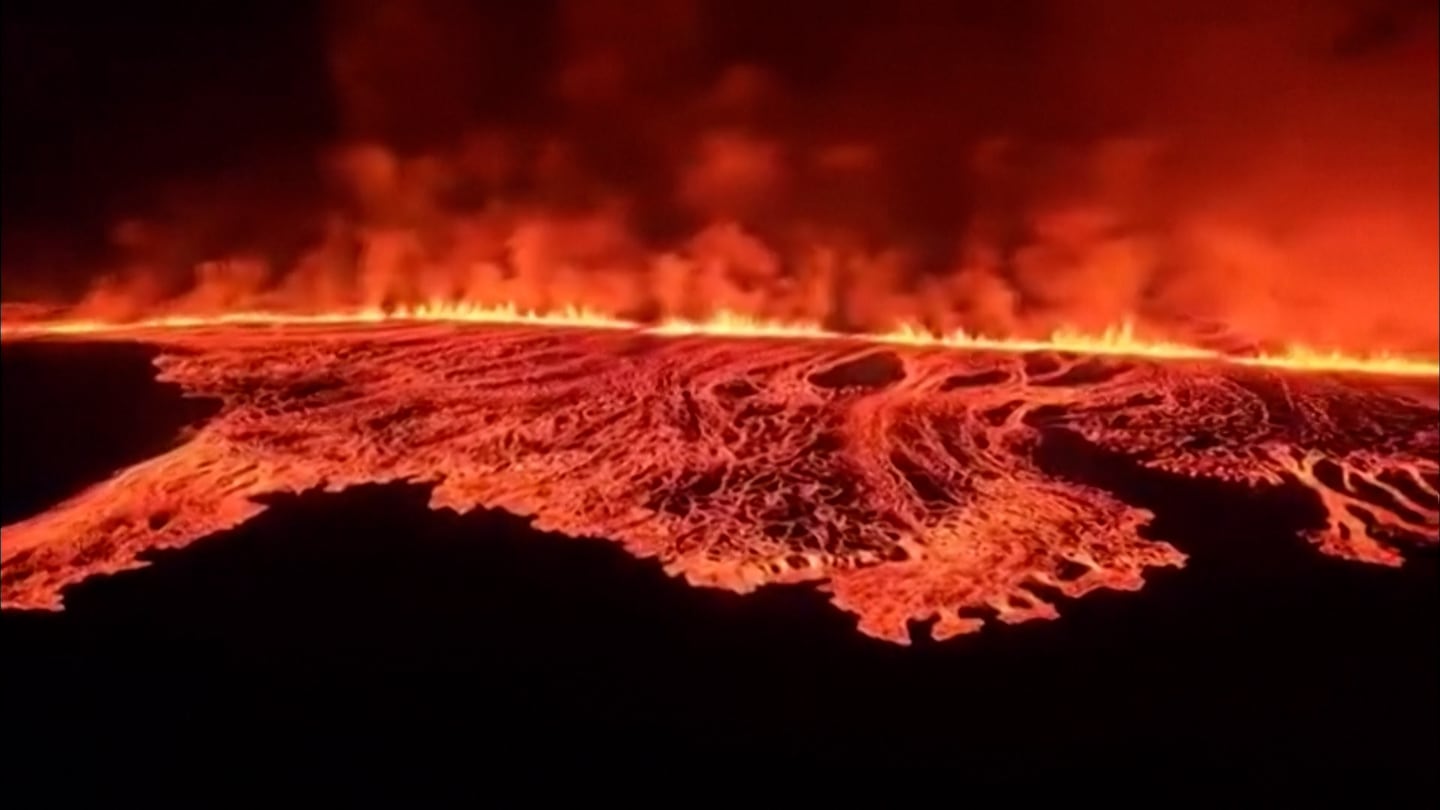
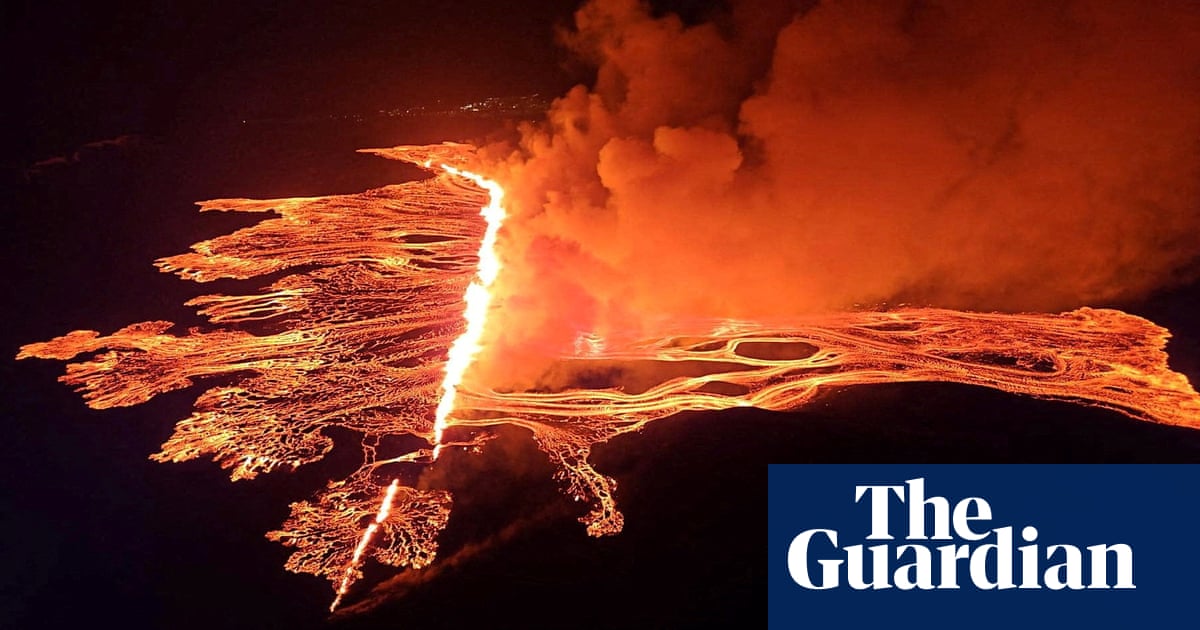
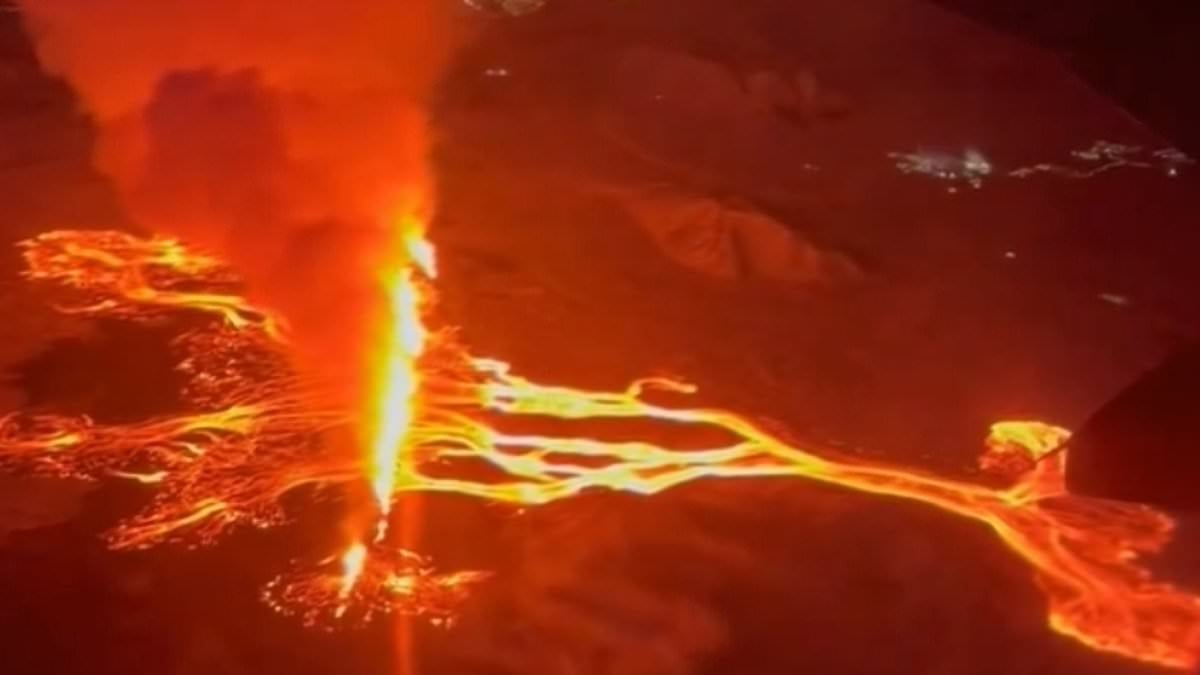
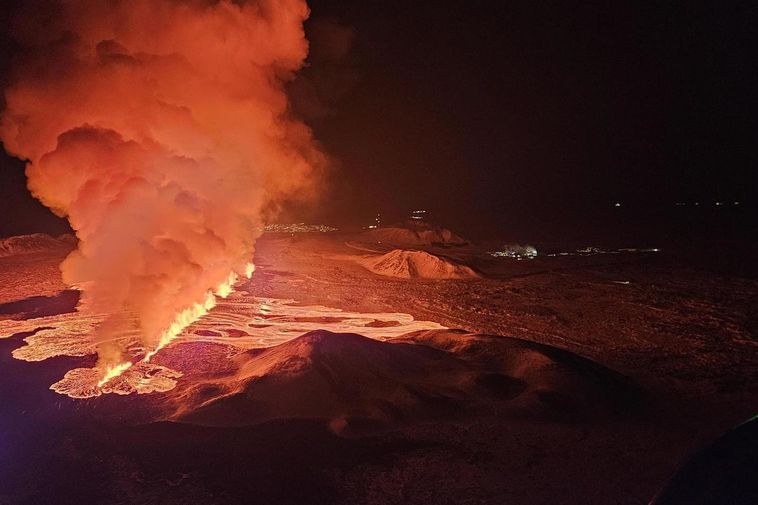
Iceland's latest volcanic eruption, the 12th since 2021, features a 2.4 km fissure spewing lava, captured dramatically by drone footage, with ongoing lava flows and minor seismic activity, posing local risks from wildfires and toxic gases.
A volcano erupted in Iceland's Reykjanes peninsula, leading to evacuations, road closures, and explosions. The eruption caused massive lava flows and gas pollution, prompting a state of emergency. The famed Blue Lagoon spa was evacuated and will remain closed until at least Friday. The lava, which flowed from a 2.1-mile long fissure, extended to defensive walls near Grindavík, and officials hope these will hold. The eruption has caused significant disruptions, including the shutdown of electricity in Grindavík to prevent damage to a power plant.
A powerful volcanic eruption near Grindavík, Iceland, forced evacuations and caused significant disruptions, including the closure of the popular Blue Lagoon tourist site. Although the initial lava flow was rapid, it has since slowed, and defense walls have protected the town from major damage. Precautionary measures, such as shutting off electricity, were taken to prevent further hazards.
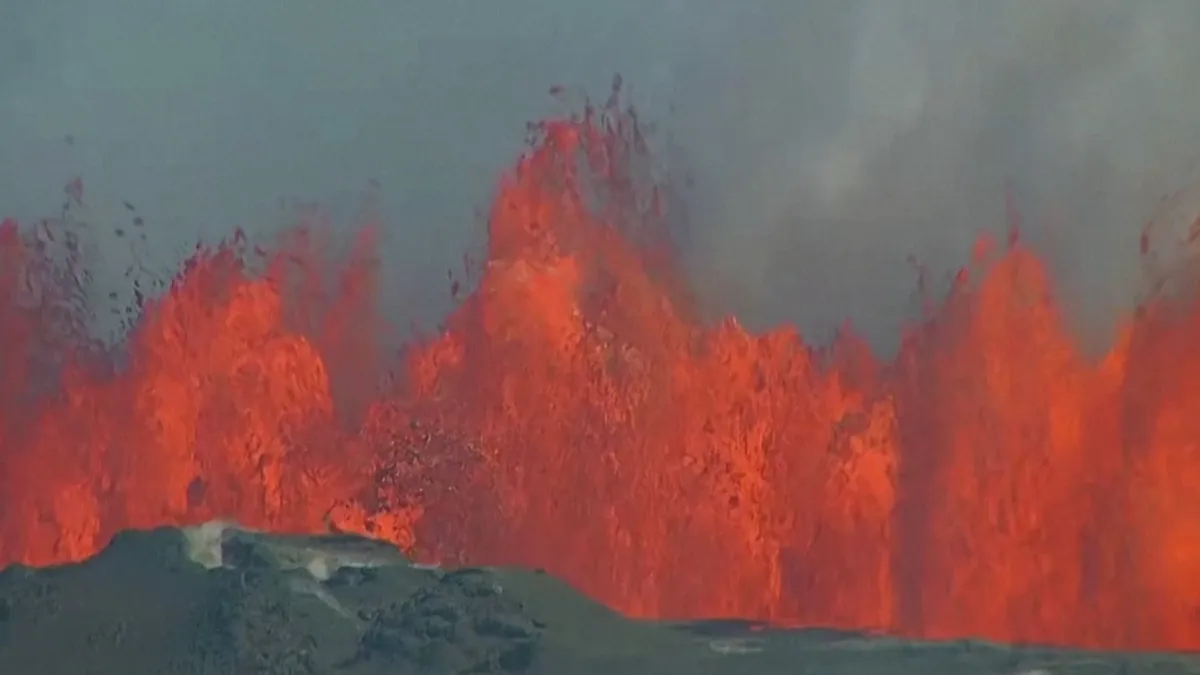
A new volcanic eruption at the Sundhnúks crater in Iceland's Reykjanes Peninsula has led to significant lava flows and the evacuation of hundreds of people, including residents of Grindavík and visitors to the Blue Lagoon. This marks the fifth eruption in the region since December, with lava jets reaching heights of over 150 feet and a plume of smoke rising 2.17 miles into the air. The Icelandic Meteorological Office and Coast Guard are closely monitoring the situation.
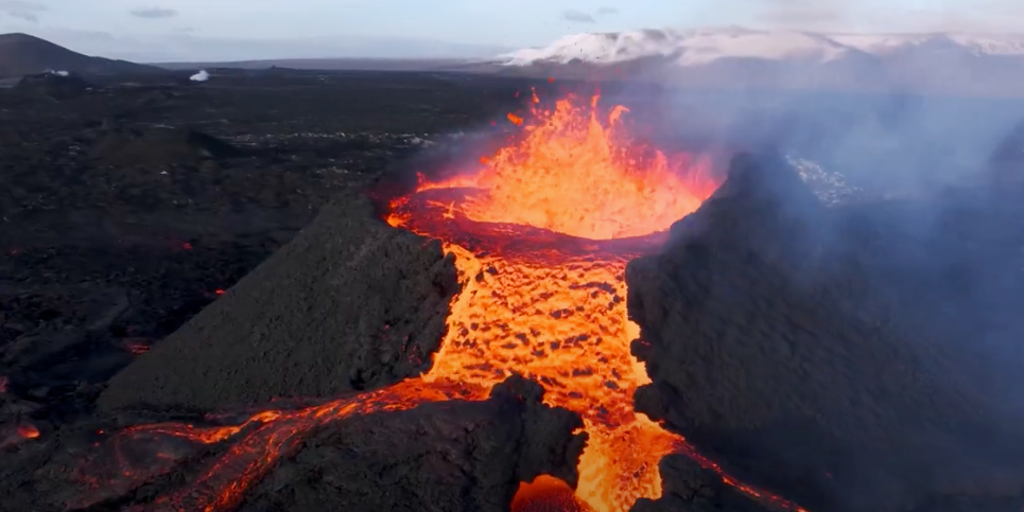
A drone video captured the increasing activity of the Icelandic volcano, with more lava seen overflowing from the Sundhnúkur crater, marking the fourth eruption in the area since December. The Icelandic Met Office stated that this eruption is likely the largest since 2021, with two active craters and most of the lava flow coming from the larger Sundhnúkur crater. While the lava flow has not progressed past the barriers built to protect the town of Grindavik, volcanic gas has spread throughout Iceland due to southeast winds at the eruption site, and dry weather poses a risk of vegetation fires around the lava field.
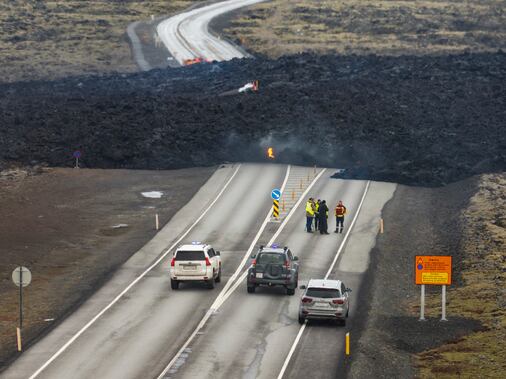
Iceland has declared a state of emergency after a volcano erupted for the fourth time in three months, with a fissure almost 2 miles long opening on the Reykjanes Peninsula. Lava continues to flow from the fissure, moving at an average speed of about 39 feet per hour and threatening the main road on the southern coast. The eruption has led to the evacuation of the popular Blue Lagoon thermal spa and the temporary closure of all operational units. No flights have been disrupted, and no deaths have been confirmed, although one worker is reported missing after falling into a volcanic fissure.
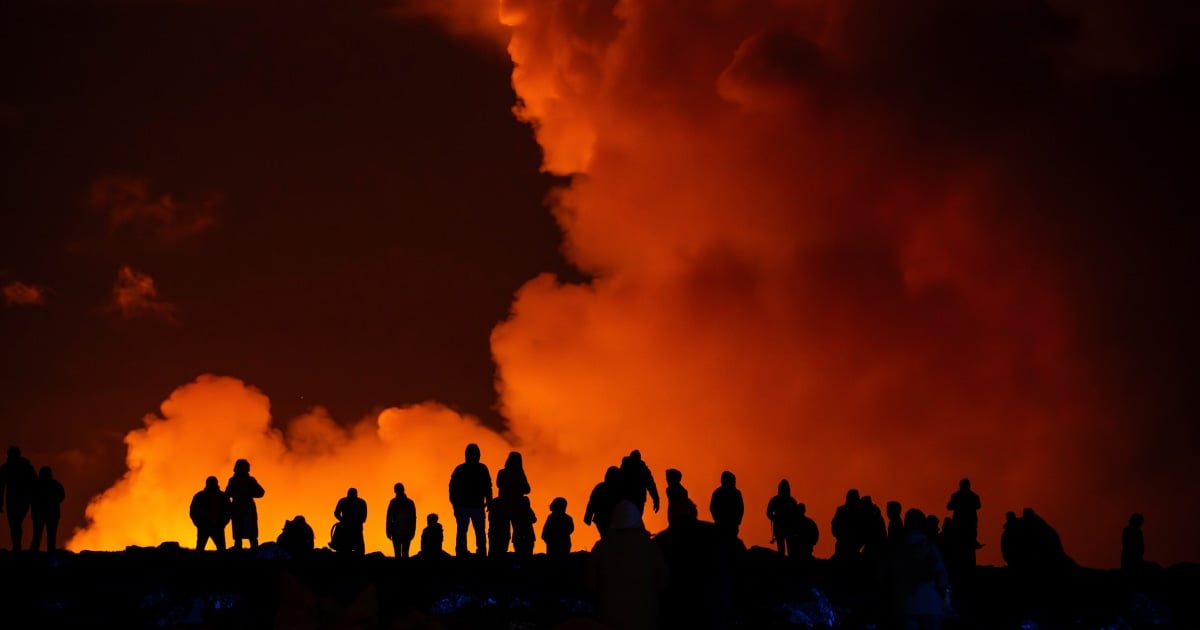
A volcano erupted in southwestern Iceland, prompting evacuations and turning the sky orange as destructive lava flowed toward the town of Grindavik. The eruption, the largest of four recent ones in the area, opened a fissure about 2 miles long and sent lava flowing south and southeast at about 0.6 miles an hour. The popular Blue Lagoon geothermal spa resort was evacuated, and defensive barriers were built to stop the lava from reaching the main road. The closest airport remained open, and flights were not disrupted, as this eruption was not generating ash.
A volcano erupted in southwestern Iceland, prompting evacuations and causing destructive lava to flow towards the town of Grindavik. The eruption, the largest of four recent ones in the area, led to the evacuation of the popular Blue Lagoon geothermal spa resort and a local state of emergency declaration. Lava was still flowing towards the ocean, and the eruption did not disrupt air traffic. No information about damage or casualties was immediately available.
A volcanic eruption on Iceland's Reykjanes peninsula has prompted emergency teams to reinforce defensive barriers around the town of Grindavik as lava flows towards it. The eruption, the fourth in the region since December, has opened a nearly 3km-long fissure, with lava flowing mainly south and south-east at a rate of about 1km an hour. While flows appeared to be slowing somewhat, they still pose a danger to infrastructure in and around Grindavik. The town's 3,800 inhabitants were evacuated, and nearby attractions, such as the Blue Lagoon thermal spa, were also affected. Iceland, home to 33 active volcano systems, is experienced in dealing with frequent eruptions, with the most recent disruptive event being the 2010 Eyjafjallajökull eruption.
A volcano in Iceland has erupted for the fourth time in three months, sending lava into the night sky and prompting the evacuation of hundreds of people from the Blue Lagoon thermal spa. No flight disruptions were reported at the nearby airport, and no confirmed deaths have been reported from the recent eruptions. Iceland, experienced in dealing with volcanic activity, is now facing the most powerful eruption so far, with lava flowing towards defensive barriers around the town of Grindavik.
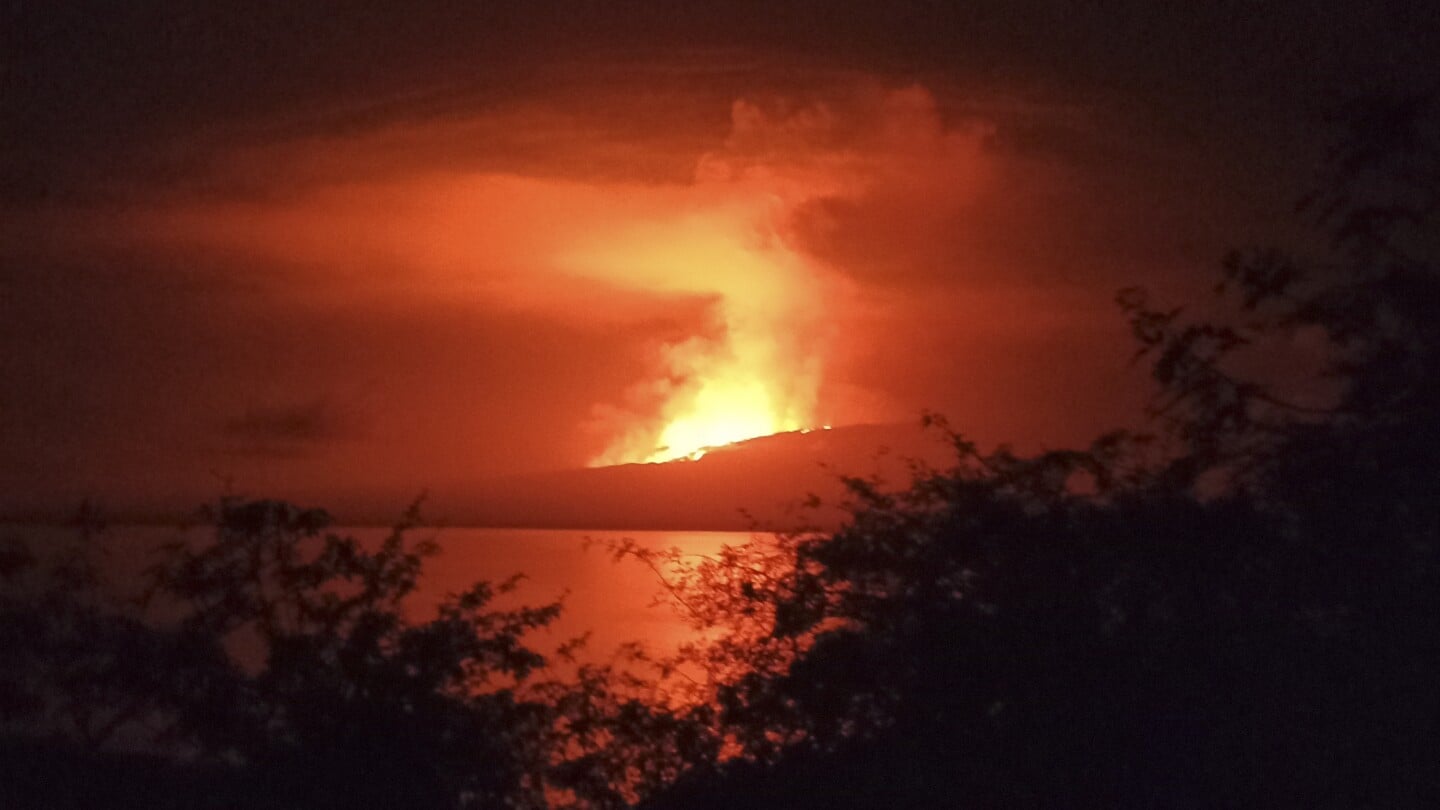
The La Cumbre volcano on Fernandina island in the Galapagos has erupted, sending lava flowing down its sides toward the sea. While posing no risk to humans, the eruption threatens the island's unique wildlife, including iguanas, penguins, and flightless cormorants. The Galapagos Islands are famous for their role in Charles Darwin's theory of evolution.
The La Cumbre volcano on Fernandina island in the Galapagos has erupted, sending lava flowing down its sides toward the sea. While posing no risk to humans, the eruption threatens the island's unique wildlife, including iguanas, penguins, and flightless cormorants. The Galapagos Islands are famous for their role in Charles Darwin's theory of evolution.
Passengers on a plane witnessed the eruption of the Grindavik volcano in Iceland, with lava flowing across the land as workers struggled to restore hot water supplies to thousands of homes. The eruption, the third in two months, disrupted the hot water network and heating system, leading to repair challenges in freezing temperatures. The volcanic activity is reportedly decreasing, but the impact on the region, including evacuations, infrastructure damage, and uncertainty for residents, remains significant.
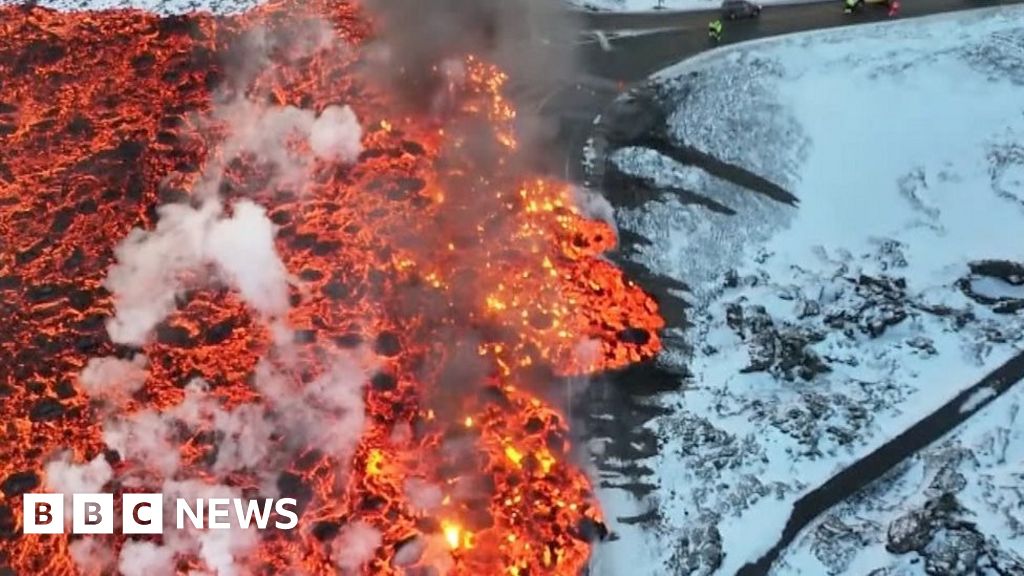
More than 20,000 people in Iceland have been affected by disrupted hot water supply after lava from the recent volcanic eruption burst key water pipes, leading to a state of emergency being declared. The Department of Civil Protection and Emergency Management is working to ensure water supply as the lava continues to spread over roads in the Reykjanes peninsula.
A 3 km long eruptive fissure has been reported in the same area as the December 18 eruption in Iceland, with lava flowing mostly to the west and reaching heights of 50-80 meters. The volcanic mass has risen to about 3 km, and a small-quake swarm preceded the eruption.