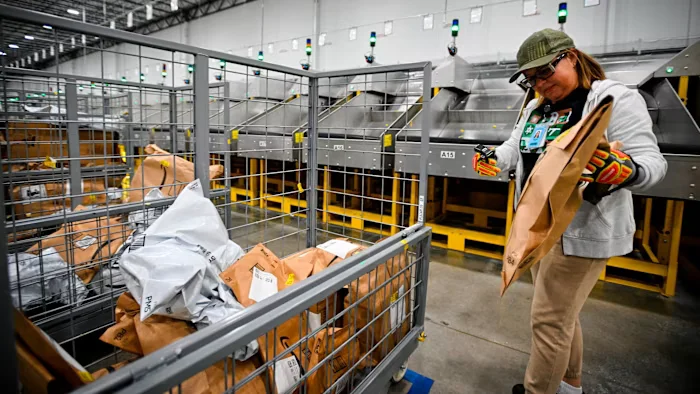
Amazon is pressing suppliers to cut what it pays for tariffed goods, reversing last year’s concessions and asking them to shoulder tariff duties and marketing costs, with negotiations accelerated ahead of a Supreme Court ruling on the legality of Trump-era tariffs.
Gap's first quarter sales surged across all four of its brands, driven by innovative marketing strategies and value pricing. CEO Richard Dickson emphasized that while the company is pleased with the progress, it views the journey as a marathon rather than a sprint. Dana Telsey of Telsey Advisory Group highlighted that compelling marketing and new products are resonating with cautious consumers, a trend also seen in other brands like Birkenstock and Abercrombie & Fitch.
Family Dollar and Dollar Tree are planning to close around 1,000 stores due to operational struggles, a penalty, and challenges in the retail sector, leading to a significant stock price drop for Dollar Tree. The closures are expected to boost profits but leave a gap in low-cost shopping options. Investors may seek alternative investment avenues amidst the retail turmoil, such as startup crowdfunding.
Walmart is set to conduct its first 3-for-1 stock split in 50 years, aiming to make shares more affordable for employees, following a series of employee-friendly initiatives including stock grants and higher starting base pay rate. CFO John David Rainey emphasized the company's commitment to investing in its associates, linking employee ownership to shareholder value, and highlighting the positive impact of stock splits on Walmart's stock price in the past.
Macy's rejected a $5.8 billion takeover bid from Arkhouse Management and Brigade Capital, stating that it "lacks compelling value," but expressed openness to opportunities. The bid, which valued the struggling department store chain at roughly 20 percent above its closing share price on Friday, has raised questions about the bidders' ability to finance the deal and potential for additional suitors to emerge. With pressure to improve its business amid declining sales, Macy's remains open to potential offers, but faces challenges in the retail sector and concerns about the financial feasibility of such deals.
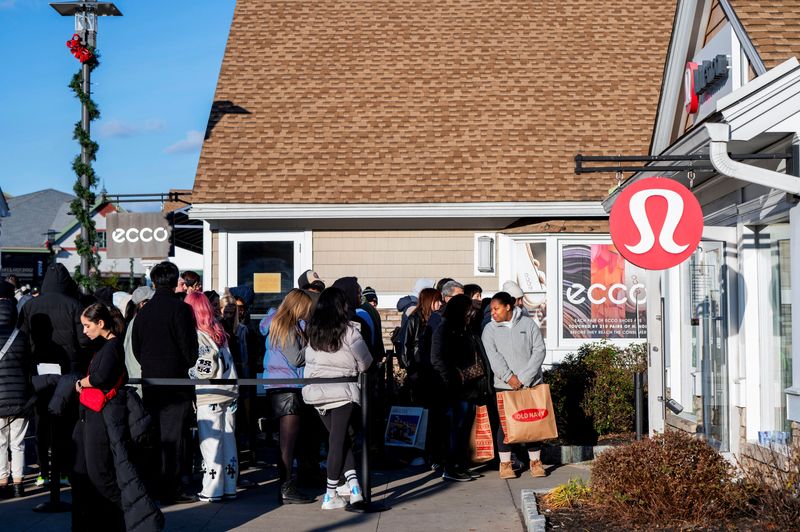
Lululemon and Abercrombie & Fitch have raised their holiday quarter forecasts, indicating strong demand despite budget constraints. Both companies saw success with fresher styles and limited inventory, leading to higher full-price sales. Lululemon now expects fourth-quarter revenue to be between $3.17 billion and $3.19 billion, while Abercrombie forecasts a high teens percentage range increase in net sales. Other retailers, such as Crocs and American Eagle Outfitters, also saw positive stock movements after raising their holiday-quarter revenue forecasts.
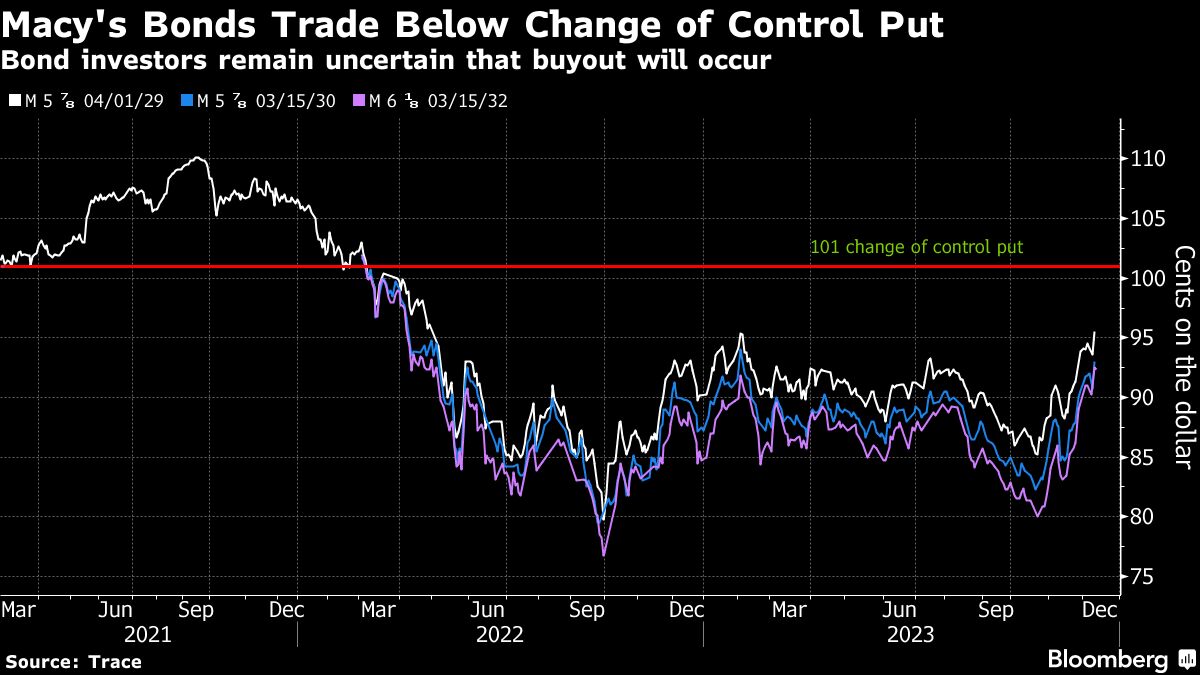
Macy's Inc. has received a $5.8 billion buyout bid from Arkhouse Management and Brigade Capital Management, highlighting the challenges faced by private equity in the retail sector. Many retailers that were taken private in recent years have seen their debt fall to distressed levels, with unsustainable leverage. While investors see Macy's real estate assets as attractive, the high-yield and leveraged loan markets remain cautious about retail leveraged buyouts. Macy's bonds rallied initially but later reversed some gains, indicating investor skepticism about the deal's completion. The retail sector has seen a boom in LBO debt issuance, but several companies, including Michael Cos., At Home Group Inc., and Staples Inc., now have triple-C ratings and trade below 80 cents on the dollar.
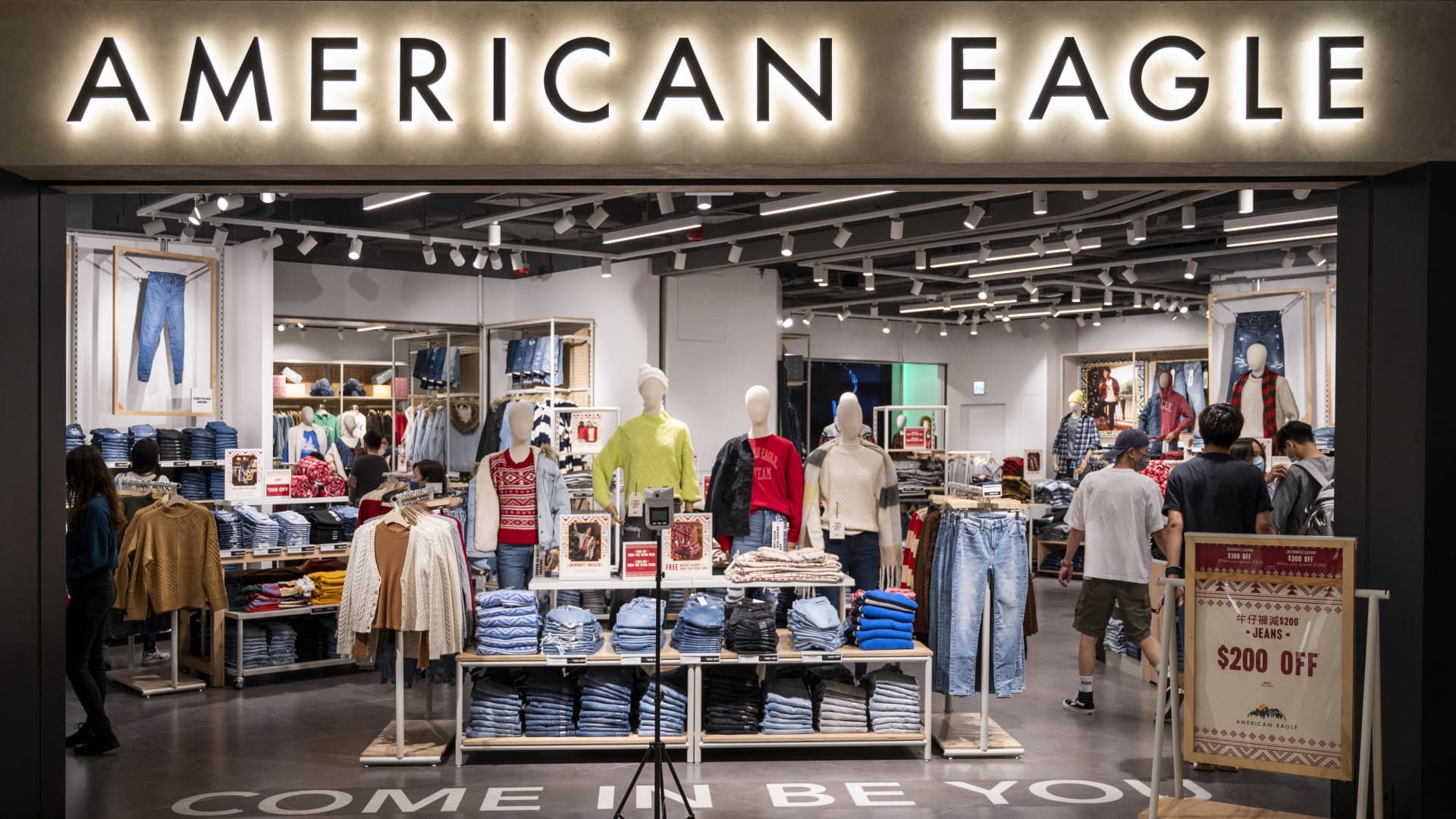
Shares of American Eagle dropped by 17% after the company issued a holiday forecast that failed to impress investors. While the retailer expects sales to be up high-single digits for the holiday quarter, its operating income is projected to be mostly below expectations due to an anticipated increase in selling and administrative expenses. American Eagle's third-quarter earnings per share and revenue exceeded analysts' expectations, but its gross margin fell short. The company, along with rival Abercrombie & Fitch, joins other retailers in expressing concerns about tepid demand and cutting forecasts for the crucial holiday shopping season.
CNBC's Jim Cramer suggests that the retail sector may be emerging from a slump following Gap's strong earnings report, which caused the stock to surge over 30%. Cramer acknowledges that it has been challenging for retail stocks to see gains this year, but positive reports from Gap and Target indicate a potential shift. Despite Gap's impressive earnings, the company remains cautious about the holiday quarter due to concerns about inflation, high interest rates, and reduced disposable income. Cramer believes that if Gap and Target continue to lead the way, it could signal a broader bull market in retail, not just in tech stocks.
As federal student loan borrowers prepare to resume their monthly payments in October, retailers are expected to face headwinds, particularly in the apparel, accessories, restaurant, and footwear sectors. A survey suggests that consumer spending will be curtailed, with concerns about affording monthly expenses due to student loan payments. Companies like Lululemon Athletica, Foot Locker, and Urban Outfitters are identified as the most exposed to spending cutbacks. However, discount retailers like Walmart, Costco, and TJX Companies may navigate the headwinds effectively. The specialty apparel and footwear sector is likely to face challenges, with respondents indicating a reduction in spending on these items. Policy developments offer some borrower protections, but hopes for student loan forgiveness were dashed by a Supreme Court ruling.
Organized cargo theft has seen a significant increase, with a 57% surge compared to last year, as thieves target shipments and divert them away from their intended recipients. Thieves use stolen credentials or falsified pickup addresses to carry out elaborate schemes, sometimes stealing entire loaded trailers. The average value per theft has also risen, with an average loss of $260,703 per incident. Nike shipments have been particularly targeted, with thieves stealing products at various stages of the supply chain. Limited edition Air Jordans and other high-value items are especially sought after. The surge in cargo theft has led to retailers closing stores and navigating a new consumer landscape with increased e-commerce.
Foot Locker's shares dropped by over 25% in premarket trading after the company reported disappointing Q1 results and lowered its outlook. The footwear retailer missed on both the top and bottom lines and said it has had to increase markdowns to drive sales. CEO Mary Dillon said that sales have softened meaningfully due to the tough macroeconomic backdrop, causing the company to reduce its guidance for the year. The poor report could signal trouble ahead for other names in the retail sector as a range of companies report earnings over the next few weeks.