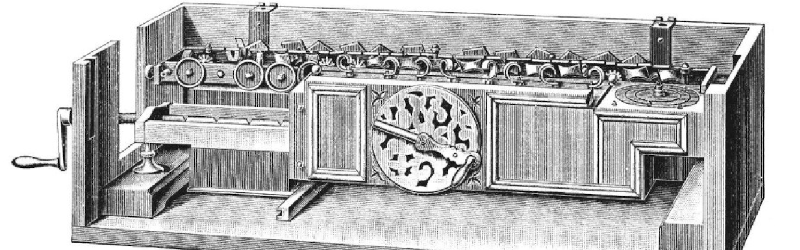
This article discusses the fascination with analog computers, slide rules, and other old tech used for calculations before the digital era. It covers various historical devices such as the Pascalina, Ishango's bone, abacus, and Quipu, as well as lesser-known ones like Consul the Educated Monkey and the French Abaque Compteur Universelle. The author expresses a desire for vintage calculators like the IBM 223-3168 and the Curta, and shares personal anecdotes about engineers carrying slide rules on their belts.
Researchers have built a proof-of-concept computer that uses running water instead of traditional logical circuitry processors to forecast future events via an approach called "reservoir computing". In benchmark tests, the analog computer did well at remembering input data and forecasting future events, and in some cases, it even outperformed a high-performance digital computer. The researchers plan to miniaturize the computer as a microfluidic processor, which could produce reliable long-term forecasts in areas such as climate change, bushfires, and financial markets, with much lower cost and wider availability than current supercomputers.
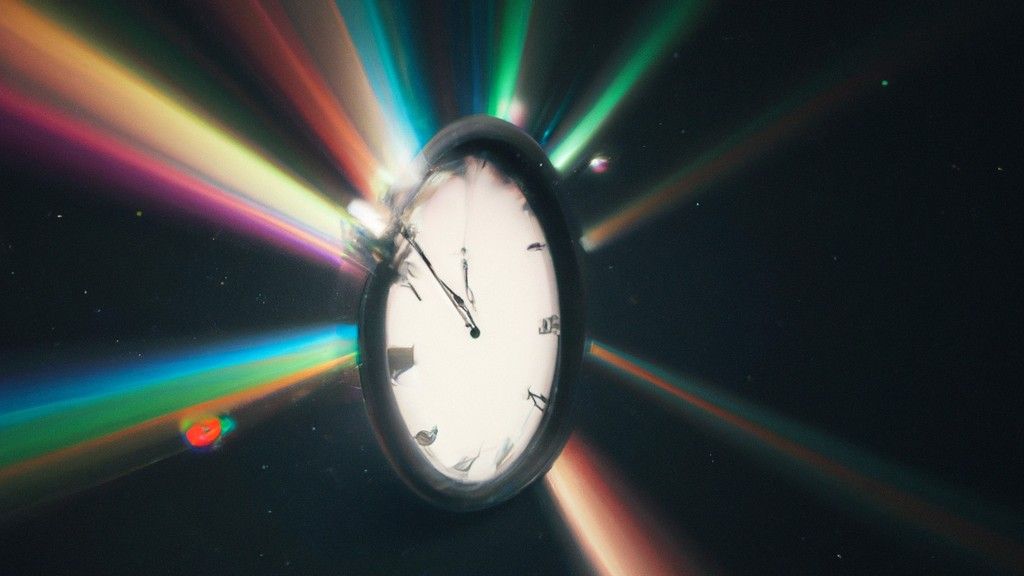
Scientists have created "slits" in time using lasers, allowing them to send light through the slits and change the color of an ultra-brief laser pulse. The findings lay the foundation for advances in analog computers, which may be able to read and write data imprinted on beams of light instead of relying on digital bits. The experiment could also deepen our understanding of the nature of light and its interactions with materials. The researchers utilized indium tin oxide (ITO), a material found in most smartphone screens, to create the slits in time.
Scientists have created "slits in time" by sending light through a material that changes from transparent to reflective in response to light, creating a unique diffraction pattern across time. The findings pave the way for advances in analog computers that manipulate data imprinted on beams of light instead of digital bits and deepen our understanding of the fundamental nature of light and its interactions with materials. The researchers hope to use these phenomena to create metamaterials, or structures designed to alter the path of light in specific and often sophisticated ways.
Scientists have created an interference pattern in time by shining a "pump" laser pulse at a screen coated in indium tin oxide (ITO), the material found in most phone screens. The light from the laser changed the properties of the electrons within the material so that the ITO reflected light like a mirror. A subsequent "probe" laser beam hitting the ITO screen would then see this temporary change in optical properties as a slit in time just a few hundred femtoseconds long. The findings pave the way for advances in analog computers that manipulate data imprinted on beams of light instead of digital bits and deepen our understanding of the fundamental nature of light and its interactions with materials.