

Tag

Relativistic Heavy Ion Collider

All articles tagged with #relativistic heavy ion collider

science1 year ago

"Unleashing a Magnetic Monster: Scientists Smash Atom into Atom"

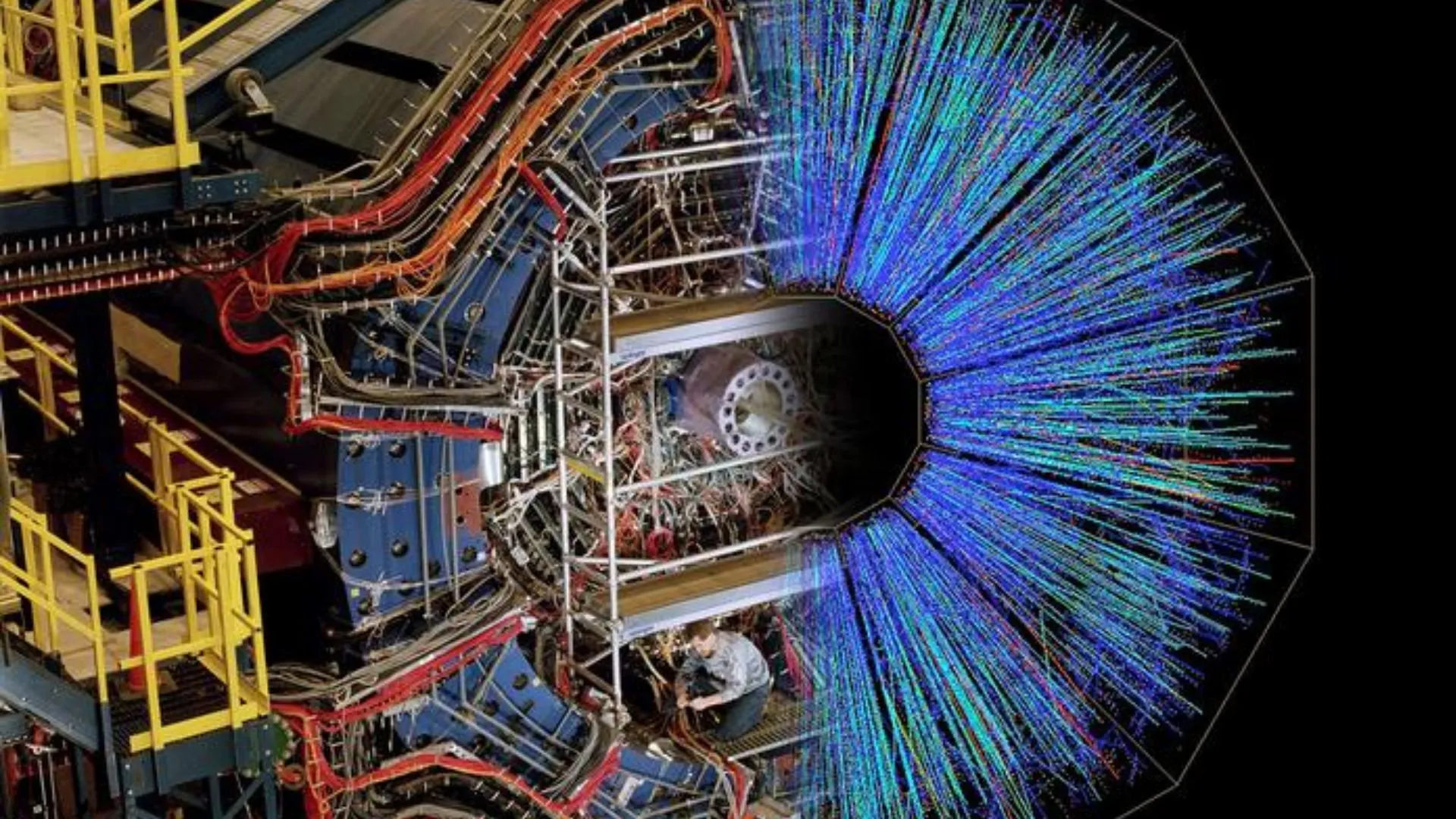
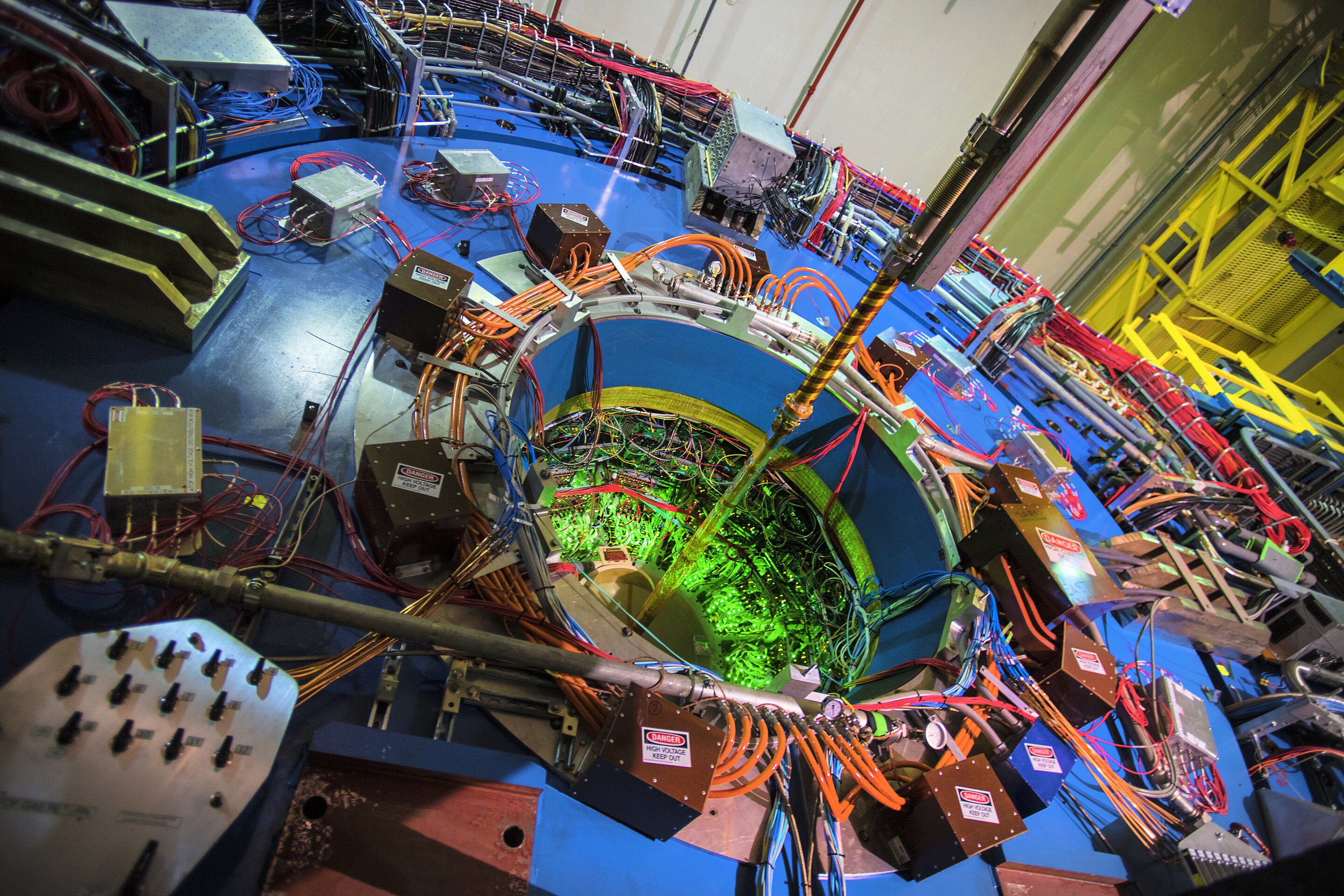
Scientists at the Brookhaven National Laboratory used the Relativistic Heavy Ion Collider to create and measure an incredibly strong magnetic field within quark-gluon plasma resulting from off-center heavy nuclei collisions, which was found to be 10,000 times stronger than a magnetar. This breakthrough could help physicists understand the universe moments after the Big Bang and explore the properties of quark-gluon plasma, shedding light on the ultimate puzzle of how matter came to dominate the universe.
science1 year ago

"Unprecedented Discovery: Strongest Magnetic Fields Found in Nuclear Matter"

Scientists at the Relativistic Heavy Ion Collider have discovered the strongest known magnetic fields inside nuclear matter, generated by the electric current induced in quarks and gluons. These fields surpass the strength of those found in neutron stars, previously considered the strongest, and are significantly stronger than Earth's magnetic field.

physics2 years ago

"Unveiling the Mystery: Exploring the Shape Dynamics of Small Quark-Gluon Plasma Drops with a Fresh Perspective"

New measurements from the Relativistic Heavy Ion Collider (RHIC) shed light on the shape of quark-gluon plasma (QGP), a form of matter that existed just after the Big Bang. The analysis of data from RHIC's STAR detector suggests that the shape of QGP droplets created in collisions of small nuclei with large ones may be influenced by the internal arrangement of quarks and gluons inside the smaller nucleus. This finding contradicts previous results from RHIC's PHENIX detector, which suggested that the QGP shape was determined by the larger-scale positions of individual nucleons. The differences in results may be due to the different perspectives of the two detectors. Further analysis and experiments are planned to explore these findings and understand the role of subnucleon fluctuations and longitudinal variations in QGP shape.