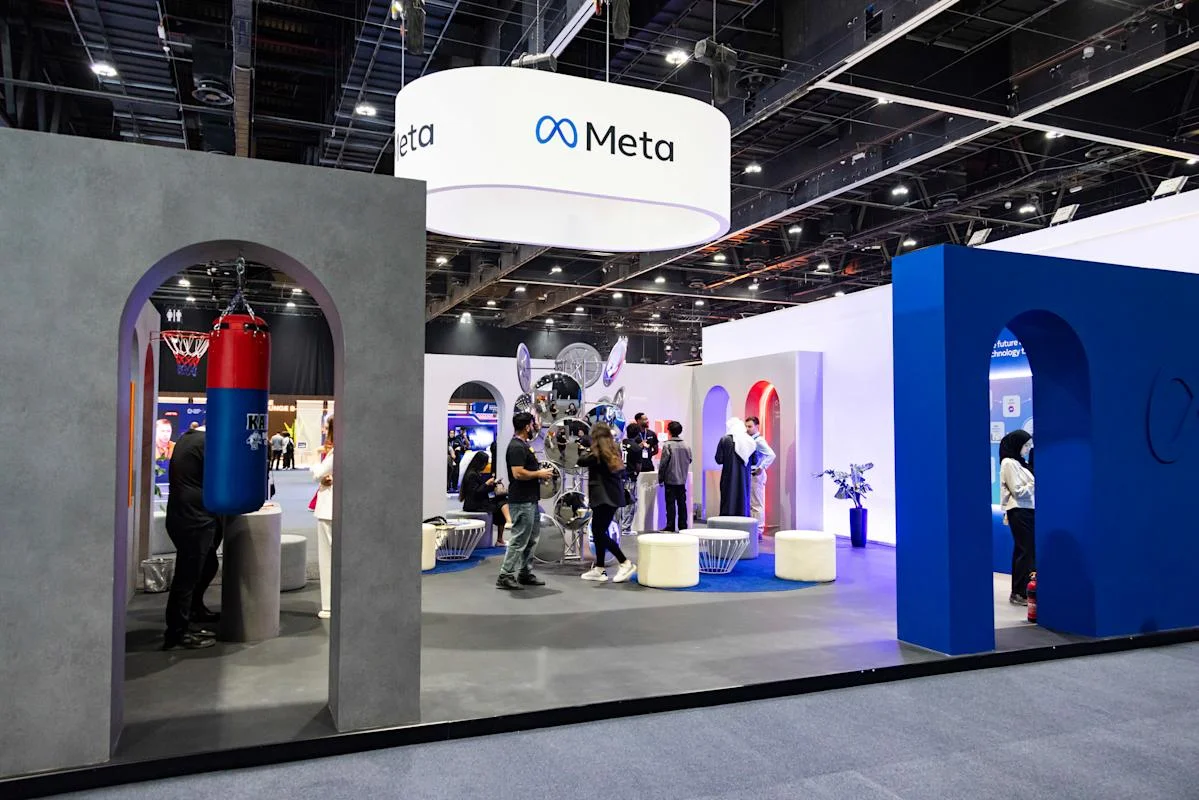
Meta's CTO Andrew Bosworth is calling the most important all-hands meeting of the year for Reality Labs, urging in-person attendance amid ongoing financial losses and strategic shifts towards AI, following significant cuts and a focus away from the metaverse.
Google reports strong earnings, especially from GCP, justifying increased investment, while Meta faces criticism for lacking clear AI product applications, highlighting differing strategic focuses in the tech industry.
Meta teases the release of its first AR glasses, which will merge AR and VR capabilities, and are expected to be demoed at this year’s Meta Connect conference. The glasses are anticipated to offer AI upgrades, a sleek design, and the potential for new AR software development. While the release date is uncertain, Meta's AR glasses are generating excitement as a potential game-changer in the tech industry.
Meta Platforms' shares surged over 16% following strong earnings, a stock buyback increase of $50 billion, and the initiation of a quarterly dividend of $0.50 per share. The company reported better-than-expected fourth-quarter earnings, with revenue of $40.11 billion and adjusted EPS of $5.33. Despite losses in its Reality Labs division, Meta's advertising revenue exceeded expectations, and it anticipates strong revenue for the current quarter. The company also revealed plans to invest in generative AI and expects expenses of $94 billion-$99 billion in 2024.
Meta Platforms (META) reported fourth quarter earnings that surpassed analyst estimates, with adjusted EPS of $5.33 on revenue of $40.11 billion, and announced a $50 billion stock buyback and a $0.50 per share dividend. The company anticipates revenue of $34.6 billion-$37 billion for the current quarter. Despite a $4.65 billion loss in its Reality Labs division, Meta's shares soared by 17% in premarket trading. The company's long-term strategy involves developing general artificial intelligence and making it open source, with expenses expected to total $94 billion-$99 billion in 2024.
Meta's Reality Labs division, responsible for developing the metaverse, has reported losses of $46.5 billion since 2019, surpassing the revenue of major companies like Best Buy, Bristol-Myers Squibb, and United Airlines. Despite this, Mark Zuckerberg's net worth has increased by 130% this year, reaching $105 billion, largely due to the rise in Meta stock. The company remains committed to the metaverse, aiming to integrate its innovations into its existing apps. While Meta's overall business is profitable, the Reality Labs division is expected to incur higher operating losses in 2022.
Meta's Reality Labs unit, responsible for developing metaverse-related technologies, reported a $3.74 billion operating loss in the third quarter, with revenue in the virtual reality and augmented reality division dropping 26% to $210 million. Despite pouring billions into VR and AR, the market remains nascent, and analysts believe Apple's upcoming entry into the VR market could catalyze the industry. Meta recently launched the Quest 3 VR headset, positioning it as a more affordable alternative to Apple's Vision Pro mixed reality headset. The company also introduced the Meta Quest+ VR subscription service for users.
Meta, formerly known as Facebook, is reportedly planning to lay off employees in its metaverse-oriented Reality Labs division, specifically in the unit focused on creating custom silicon. The extent of the cuts to the silicon unit, called Facebook Agile Silicon Team (FAST), is unknown. The layoffs could potentially impact Meta's efforts to build augmented and virtual reality products, including AR glasses. The FAST unit, which has around 600 employees, has been working on developing custom chips for Meta's devices. Meta has struggled to compete with external chip providers and has turned to Qualcomm for chip production. A restructuring of FAST has been expected since the spring, and a separate chip-making unit in Meta's infrastructure division has also faced challenges. Meta has been cutting jobs to rein in costs and address concerns about revenue growth.
Meta Platforms Inc has started the final round of a three-part layoff plan, which was announced in March to eliminate 10,000 roles. The cuts are expected to hit ad sales, marketing, and partnerships teams most heavily. The layoffs followed months of waning revenue growth amid high inflation and a digital ad pullback from the pandemic e-commerce boom. Meta CEO Mark Zuckerberg pledged to restructure business teams "substantially" and return to a "more optimal ratio of engineers to other roles."
Meta's Reality Labs unit, responsible for building VR and AR technologies for the metaverse, recorded a $3.99 billion operating loss in Q1 2023, with $339 million in revenue. This is a slowdown from last quarter when the unit lost $4.28 billion on $727 million of revenue. Despite major cost-cutting initiatives, Meta is still investing billions of dollars into the metaverse. Sales of VR headsets in the US declined 2% YoY in 2022, and Meta cut the price of its Quest 2 and Quest Pro headsets in March.