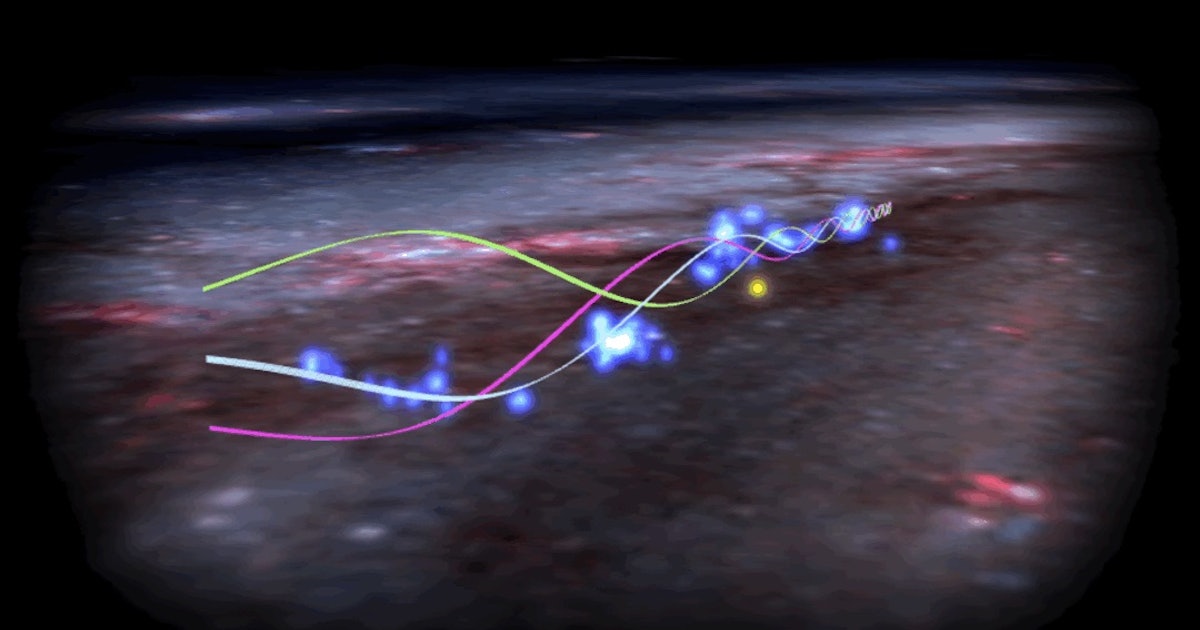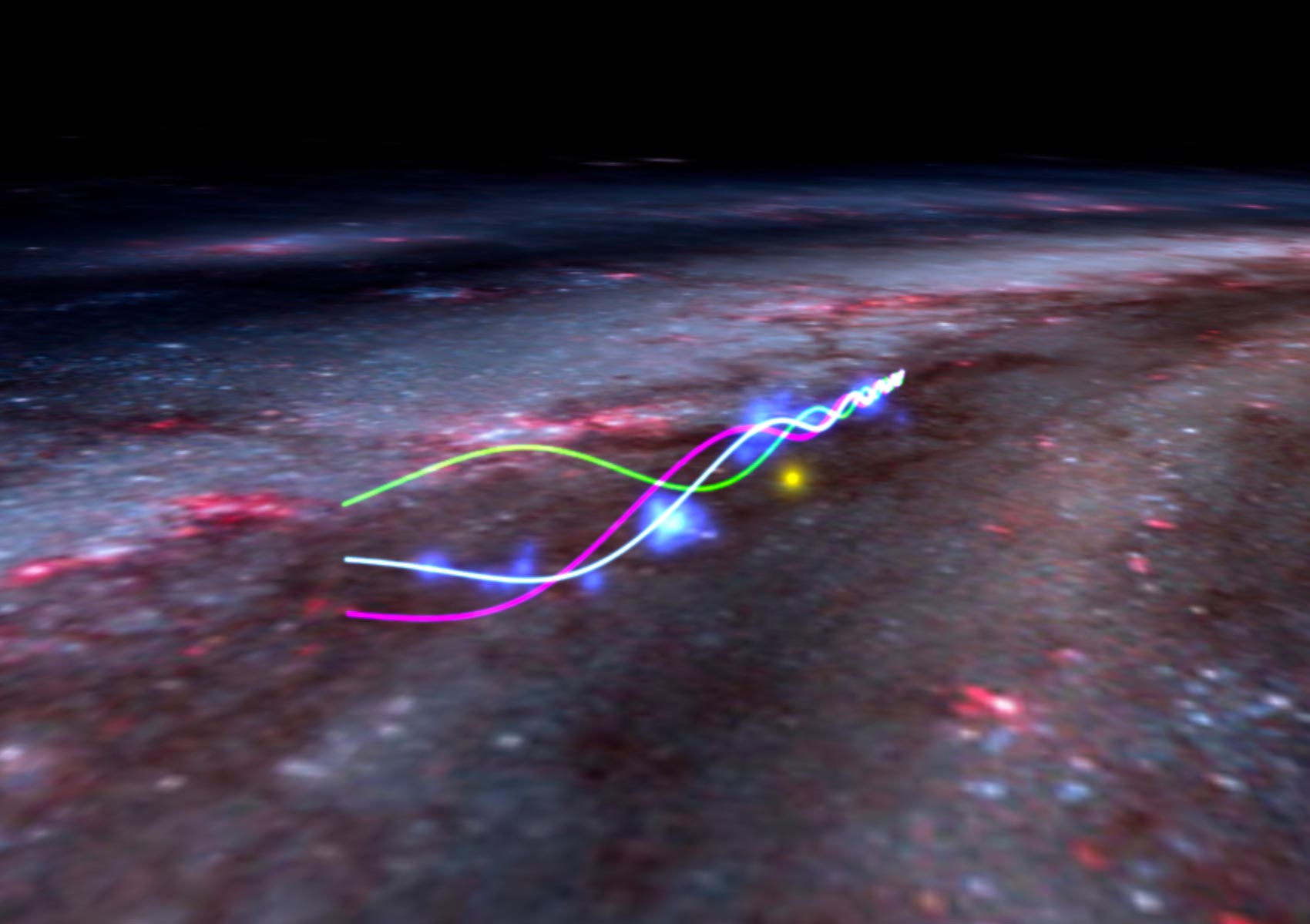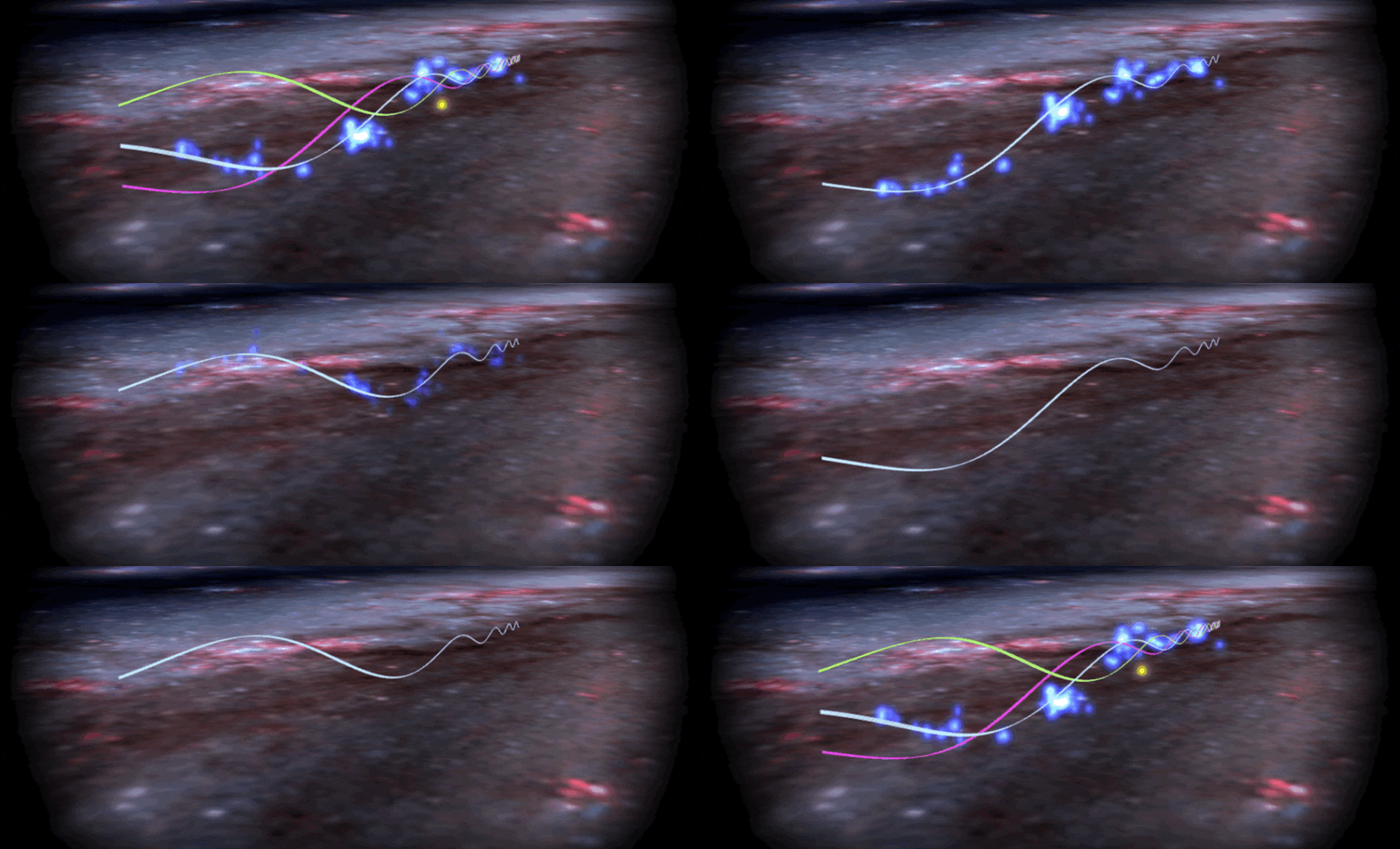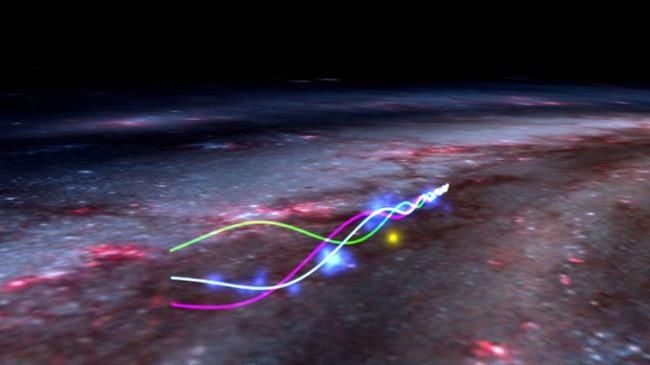
Astronomers have discovered a colossal chain of gas clouds in the Milky Way called the Radcliffe Wave, housing around 800 million stars and actively seeding more. In a new paper, researchers present evidence that the Wave is a literal oscillating wave, with stars rising and falling through the galaxy's disk. The Wave, up to 400 light-years deep and 9,000 light-years long, is the largest known structure of gas in astronomy and is radiating away from the galaxy's center. Understanding the Wave can provide insights into the galaxy's operations, including its potential role in forming the Local Bubble around our solar system.
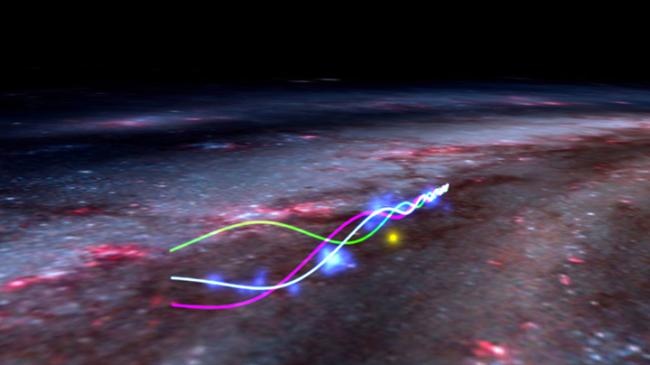
Astronomers have discovered the Radcliffe Wave, a massive chain of gas clouds in the Milky Way containing 800 million stars, and have now found evidence that it is a literal wave, oscillating over time with stars rising and falling through the galaxy's disk. The Wave, up to 400 light-years deep and 9,000 light-years long, is radiating away from the galaxy's center and may have contributed to the formation of the Local Bubble around our solar system. This discovery provides insight into the dynamics of our galaxy and was published in the journal Nature on Feb. 20.
A new study published in Nature reveals that the Radcliffe Wave, a wave-shaped chain of stars and gas in our galactic neighborhood, is oscillating like a wave and may have passed over Earth 13 million years ago, potentially exposing our planet to a series of exploding stars. The wave's motion was detected using data from the Gaia project, and researchers speculate that it may have left unique isotopes on Earth. This discovery suggests that galaxies may be more dynamic than previously thought, and the cause of the wave's oscillation remains a mystery.
Astronomers have discovered that the Radcliffe Wave, a chain of dense gas clouds and newborn star clusters stretching 9,000 light years along the Orion Spur of the Milky Way, is oscillating up and down like a wave. Using data from the Gaia space telescope, researchers found that the entire structure is in motion, raising questions about its formation and the forces driving its movement. The discovery challenges previous assumptions about the stability of galactic structures and may provide insights into the dynamics of spiral arms in galaxies.
Astronomers have discovered a massive, wave-shaped chain of gaseous clouds in the Milky Way called the Radcliffe Wave, which not only looks like a wave but also moves like one, oscillating through space-time. This structure, located near our sun, is 9,000 light years long and just 500 light years away at its closest point. The discovery raises questions about the cause of the wave and its implications for understanding galactic dynamics, with researchers suggesting theories ranging from supernovae explosions to out-of-galaxy disturbances. The study also indicates that ordinary matter alone is enough to drive the wave's motion, and the oscillation of the Radcliffe Wave could imply that spiral arms of galaxies oscillate in general.
Astronomers have observed the Radcliffe Wave, an enormous wave-shaped chain of gaseous clouds in the Milky Way, oscillating through space-time like a stadium wave, using the motion of baby stars born in the gaseous clouds to trace its movement. This discovery, made possible by combining data from the European Space Agency's Gaia mission and the "3D Dust Mapping" technique, raises questions about the wave's origin and its implications for understanding galactic dynamics, as well as the role of dark matter in its motion.
Astronomers have discovered the Radcliffe Wave, a wave-shaped chain of star-forming clouds stretching across the Milky Way, and believe that our solar system passed through it about 13 million years ago. This structure, which is the largest coherent structure ever seen in our galaxy, is oscillating like a traveling wave. The wave's origin remains a mystery, with possibilities including a dwarf galaxy collision or a sequence of supernovae causing the disturbance. Scientists are now investigating the geological and biological records for signs of Earth being affected by supernova explosions during its transit through the Radcliffe Wave.
Scientists have discovered that the Radcliffe Wave, a massive wave-shaped structure in the Milky Way, is not static but is actually oscillating like a traveling wave. Using data from the Gaia spacecraft, researchers have found that the wave is slowly undulating through the galaxy, influenced by the gravity of normal matter. This discovery raises questions about the origins and prevalence of such wave-like structures in galaxies, with theories ranging from supernova explosions to gravitational interactions with other galaxies. The findings provide new insights into the dynamics of the Milky Way and could lead to the discovery of more wave-like structures in the future.