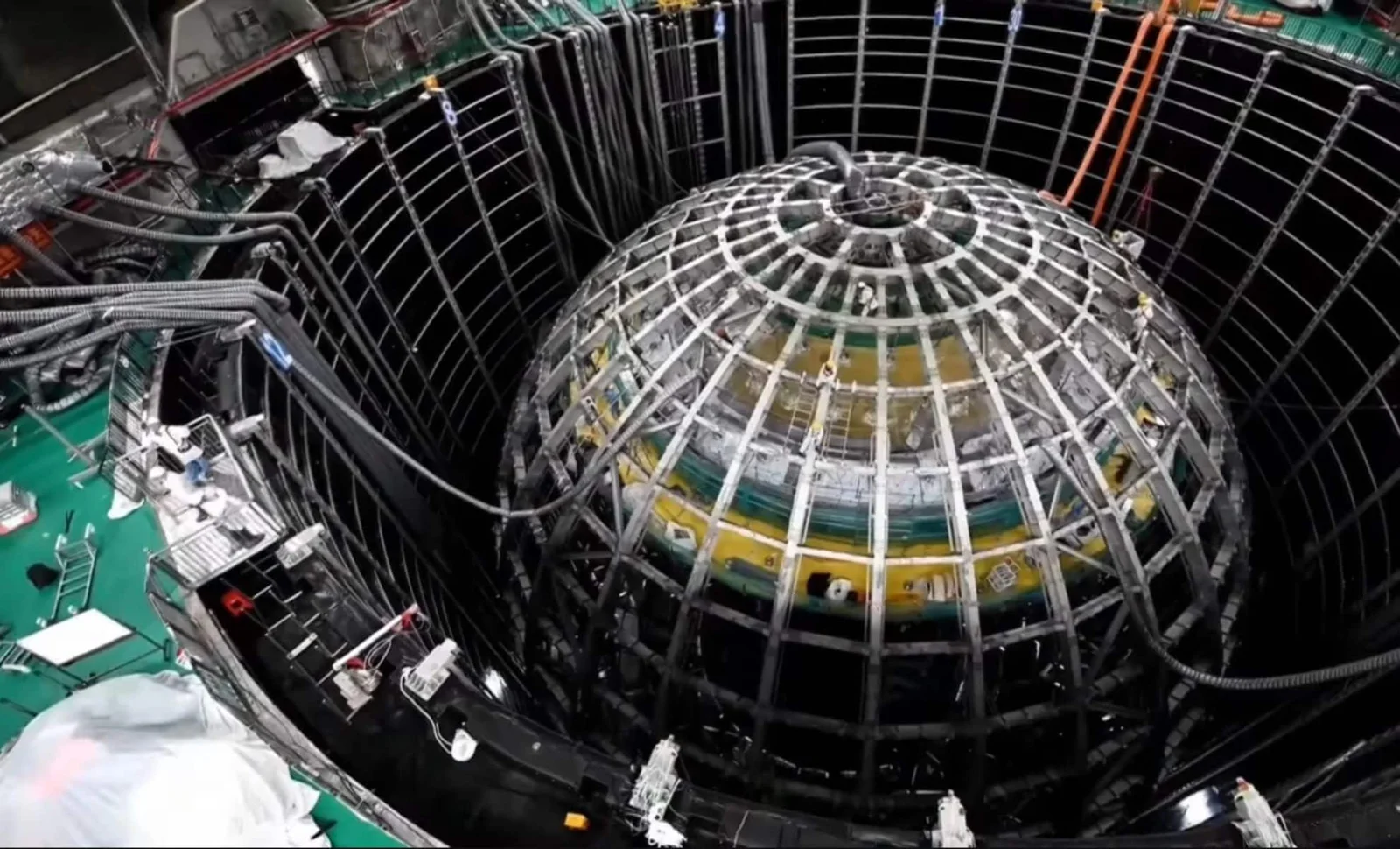
China's Jiangmen Underground Neutrino Observatory (JUNO), after 17 years of development, has begun operations and achieved unprecedented precision in detecting neutrinos, potentially solving key questions about their mass hierarchy and advancing our understanding of fundamental physics.
Mathematicians have revived a class of overlooked particles called neglectons, which, when combined with Ising anyons, could overcome their limitations and enable universal quantum computation through braiding, potentially advancing the development of more stable and powerful quantum computers.
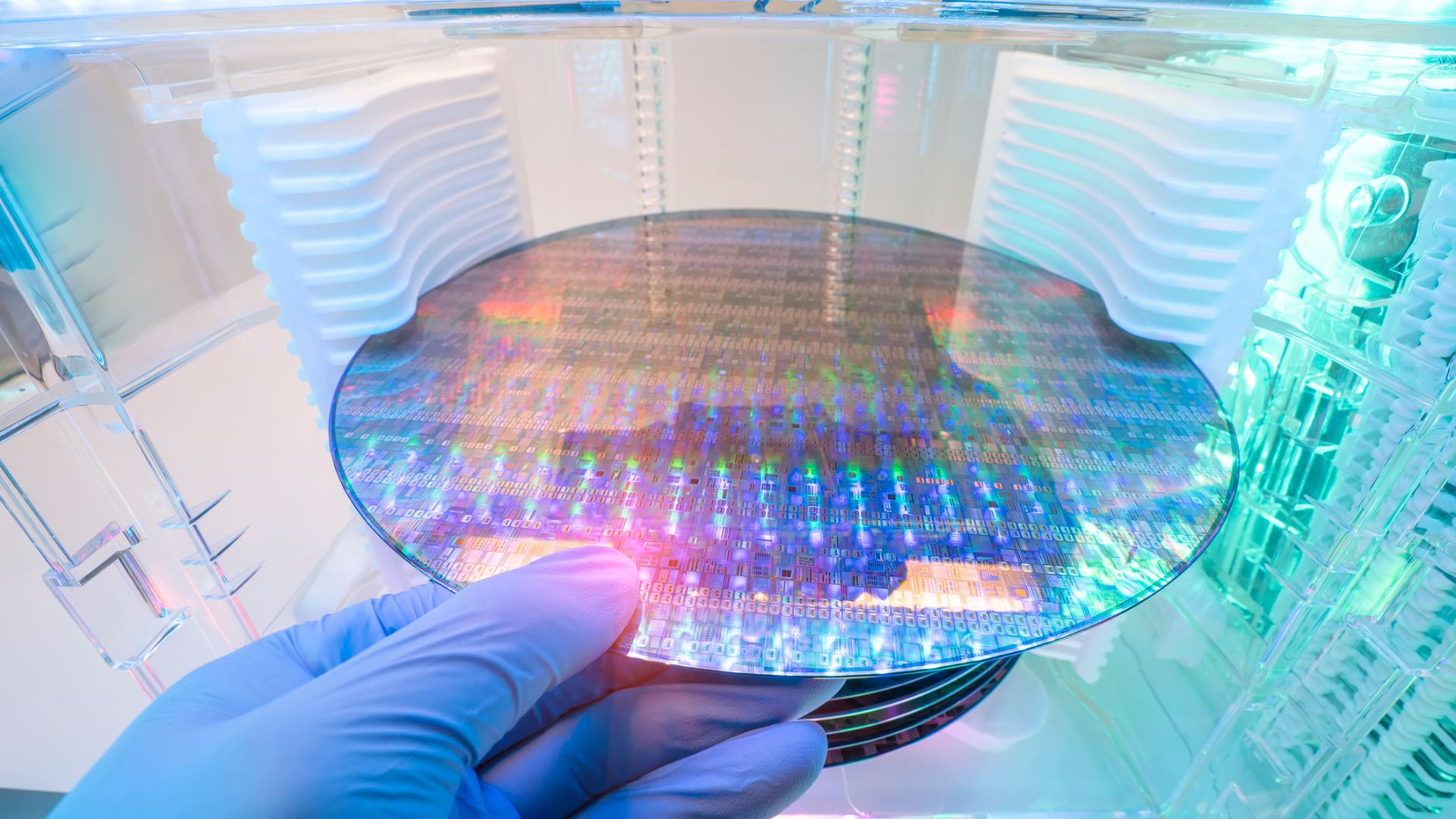
Researchers at Columbia University have developed a superconductor made of a superatomic material that operates at room temperature, making it the fastest and most efficient semiconductor. The superconductor, known as Re6Se8Cl2, overcomes the limitations of silicon by minimizing heat generation and improving information transfer speeds by reducing energy loss caused by phonon scattering.
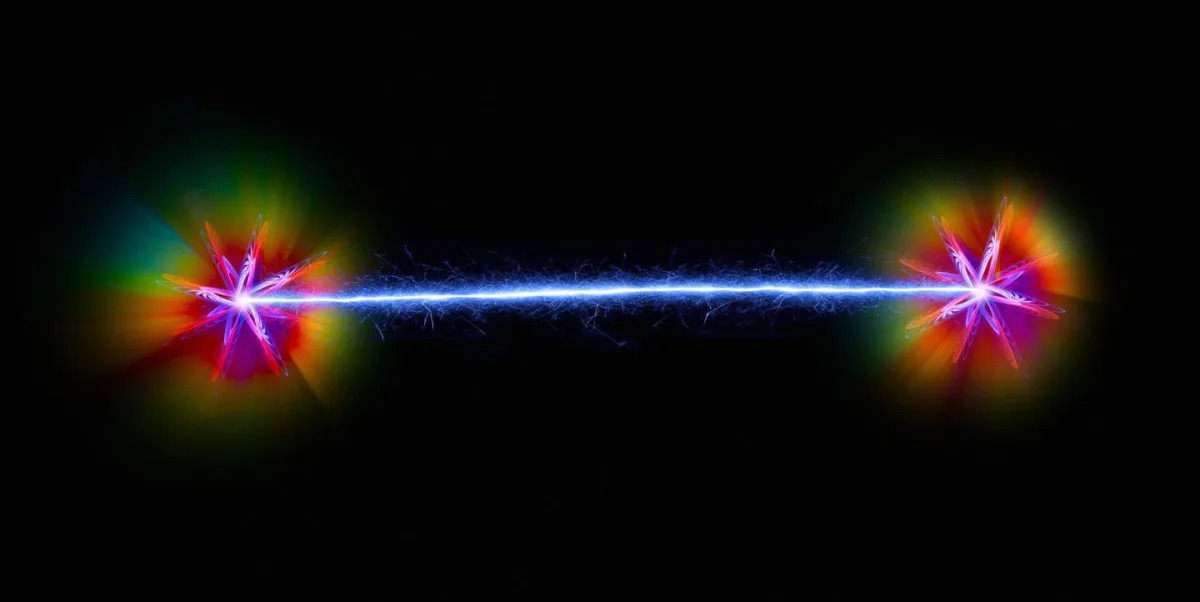
Researchers have observed unusual waves of charge within uranium ditelluride crystals, shedding light on a new aspect of the crystal's superconductivity. The findings contribute to the understanding of superconductivity and highlight the complex behavior of quantum particles. The charge density waves observed in the crystals are linked to a previously unseen facet of the crystal's superconductivity, providing insights into the types of order that occur in the material. This discovery could lead to the identification of a fundamentally new phase in materials with strong electron interactions.
Researchers have proven that the principle of least action, a fundamental law of physics, applies in the quantum realm. The principle of least action dictates that objects will always move along the route that requires the least amount of action. The research team from South China Normal University used a combination of a wave function and a propagator to describe the behavior of quantum particles. They sent individual photons through a maze and compared their behavior to the behavior predicted by the principle of least action and found that reality agreed with theory, proving that quantum particles do in fact follow the principle.
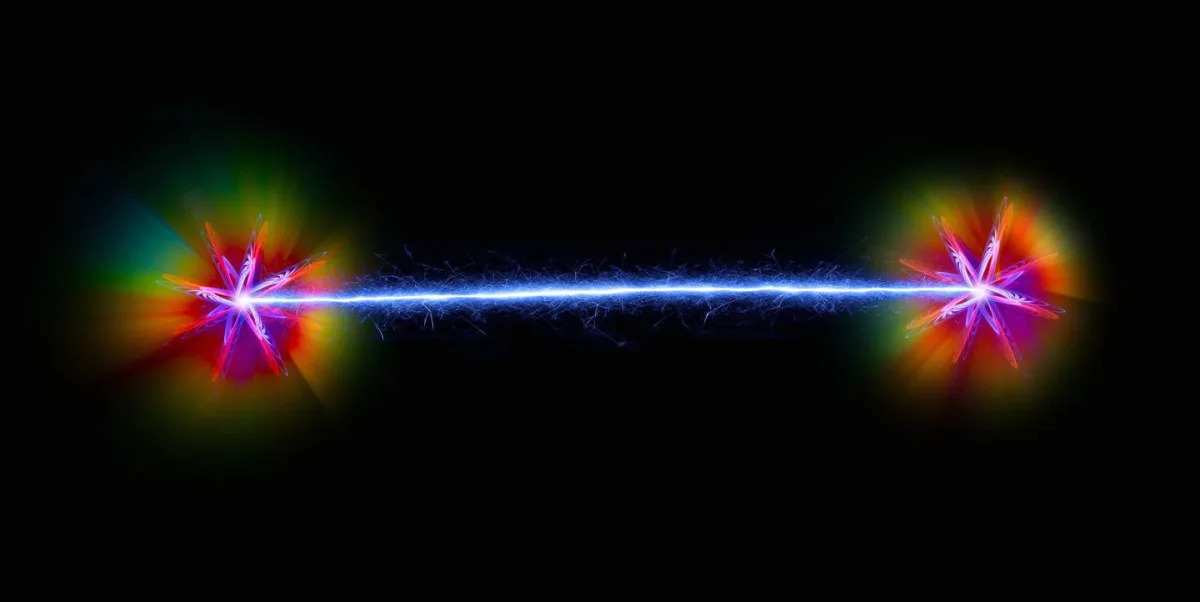
Researchers have proven that the principle of least action, a fundamental law of physics, applies in the quantum realm. The principle of least action dictates that objects will always move along the route that requires the least amount of action. The research team from South China Normal University used a combination of a wave function and a propagator to describe the behavior of quantum particles. They sent individual photons through a maze and compared their behavior to the behavior predicted by the principle of least action and found that reality agreed with theory, proving that quantum particles do in fact follow the principle.