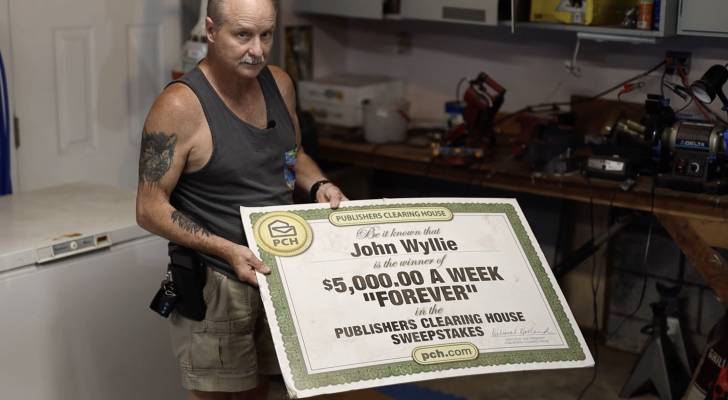
John Wyllie, an Oregon man who won $5,000 a week for life from PCH in 2012, is at risk of losing his home after the company filed for bankruptcy and stopped paying out winnings, highlighting the risks of relying on lottery or sweepstakes winnings without proper financial planning.
Publishers Clearing House, facing bankruptcy, has announced it will no longer pay out 'forever' prizes to some past winners, causing disappointment and raising concerns about the company's financial stability and future prize commitments.
Publishers Clearing House, known for its 'forever' prize winners, has filed for bankruptcy, leading to the cessation of payments to past winners, causing financial distress for some and eroding a part of American popular culture. The company's assets were insufficient to cover its liabilities, and the new owner, ARB Interactive, has stated it will not honor previous prizes, leaving many winners uncertain about their financial futures.
Publishers Clearing House has agreed to an $18.5 million settlement with the Federal Trade Commission (FTC) for deceiving consumers and using "dark patterns" to mislead them. The FTC claims the company failed to disclose the true price of goods, deceived customers about "no risk" purchases, used misleading email subject lines, and had misleading statements in its privacy policy. Publishers Clearing House denies any wrongdoing but agreed to settle to avoid ongoing litigation. As part of the settlement, the company must overhaul its user interface, compensate consumers, stop surprise fees and deceptive emails, and destroy customer data.
Publishers Clearing House has agreed to pay an $18.5 million settlement for deceptive and unfair sweepstakes practices, according to the Federal Trade Commission. The company will need to make substantial changes to its sweepstake drawings and entries online. The complaint alleges that the company lures older and lower-income consumers with catchy language and misleading tactics, such as requiring product purchases to enter or increasing odds of winning. The settlement fund will be used to refund consumers and implement promised changes to business practices, including clear disclosures, stopping surprise fees, and ending deceptive emails.
Publishers Clearing House (PCH) has agreed to pay $18.5 million to consumers and make significant changes to its online business practices as part of a settlement with the Federal Trade Commission (FTC). The FTC accused PCH of using "dark patterns" to mislead consumers about sweepstakes entries, making them believe that a purchase was necessary to win or increase their chances of winning. The company also added surprise fees to product costs, used deceptive emails, and misrepresented its data-sharing policies. The settlement requires PCH to overhaul its user interface, compensate affected consumers, and implement measures to prevent deceptive practices in the future.
Publishers Clearing House has agreed to pay $18.5 million to settle a lawsuit brought by the Federal Trade Commission, which accused the company of using "dark patterns" to trick customers into paying for products or giving up their data. The company coerced customers through false suggestions that making a purchase was the only way to enter its popular sweepstakes or that doing so would increase their chances of winning, the complaint says. The company is also accused of charging customers hidden fees during purchases, sending deceptive marketing emails, and misleading customers about how their data was being used.